
CBP Requires Pre-Arrival Review for Chinese Metal Structures
On August 15, 2026, a new U.S. Customs and Border Protection requirement takes effect for metal structural products originating in China. Following an emergency directive issued by CBP on August 7, all covered steel structures, aluminum building components, and industrial metal frame products must complete a CBP-recognized third-party compliance review before reaching a U.S. port. For importers, North American distributors, EPC contractors, and supply chain service providers, the immediate issue is not only compliance itself, but how this pre-arrival step may alter customs timing, storage exposure, and procurement lead times.
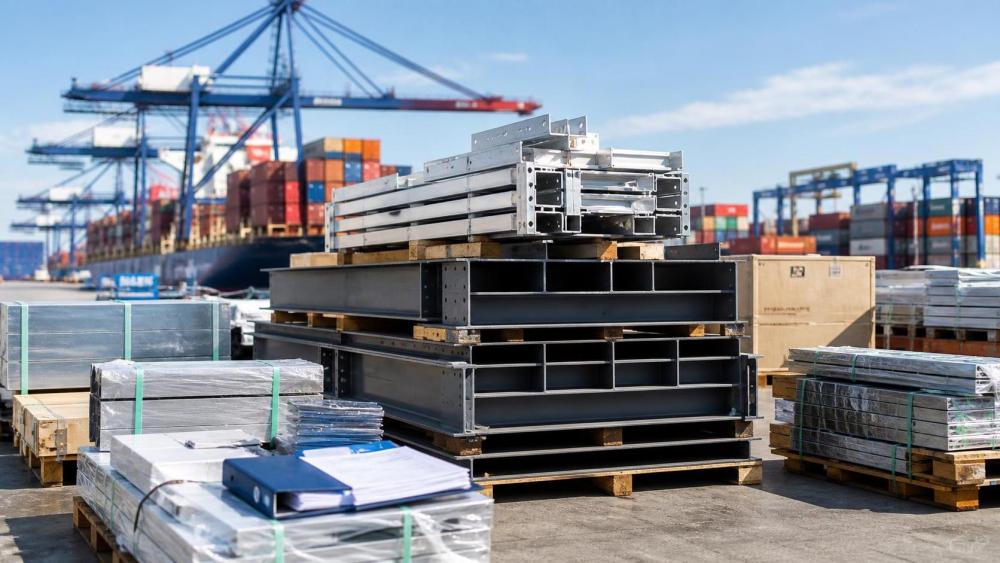
What the emergency directive confirms
The confirmed facts are limited but clear. CBP issued an emergency directive on August 7, 2026, and set August 15, 2026 as the effective date for the new requirement. The measure applies to all Chinese-origin steel structures, aluminum construction components, and industrial metal frame products covered by the directive.
Before these goods arrive at a U.S. port, they must complete a third-party compliance pre-screening recognized by CBP. According to the information provided, that review includes material traceability, prepayment of antidumping duty deposits, and declarations of conformity with UL and ASTM standards.
The stated operational effect is a direct impact on customs clearance timing, warehousing costs, and procurement cycles, with particular pressure on project delivery rhythms for North American distributors and EPC contractors.
Where the disruption may be felt first
Import operations face a front-loaded compliance step
From an industry perspective, direct importers are likely to feel the change first because the compliance burden is moved forward to the pre-arrival stage. That can affect document readiness, filing coordination, and shipment scheduling. What deserves closer attention is whether internal procurement and logistics teams are prepared to assemble the required traceability, duty-related, and standards-conformity materials before cargo reaches port.
Distributors may see pressure on inventory flow and fulfillment timing
For North American distributors, the issue is less about policy interpretation in the abstract and more about inventory continuity. Analysis shows that when pre-arrival review becomes mandatory across all covered Chinese-origin products, even routine replenishment can become more timing-sensitive. The business impact is likely to show up in warehouse planning, order commitment windows, and customer communication around lead times.
EPC contractors could face tighter project delivery coordination
EPC contractors are specifically identified as a group likely to be hit by delivery disruptions. Observably, structural and frame-related products often sit close to installation schedules and broader project sequencing. If pre-arrival approval adds friction, contractors may need to watch handoff timing between procurement, logistics, and site execution more closely than before.
Supply chain service providers may need to adjust documentation workflows
Customs brokers, freight coordinators, and other trade service providers may also be affected because the rule shifts part of the compliance process upstream. The practical issue is whether shipment files, declarations, and supporting materials can be gathered and validated early enough to avoid port-side delays and added storage exposure.
What companies should watch now
The exact operational language from CBP
Analysis shows that firms should pay close attention to how CBP and any recognized third parties describe the review process in practice. The headline requirement is clear, but day-to-day execution often depends on documentation standards, filing sequence, and review acceptance criteria. The difference between the policy signal and the operational workflow will matter for shipment planning.
Products and orders closest to delivery deadlines
What deserves closer attention is not every shipment in the same way, but the orders tied to strict construction, distribution, or installation timelines. Companies handling steel structures, aluminum building components, and industrial metal frames should review which active or near-term orders are most exposed to delay if pre-arrival compliance is incomplete.
Supplier readiness and document completeness
Because the required review includes material traceability, antidumping duty deposit prepayment, and UL/ASTM conformity declarations, supplier-side preparation becomes a practical concern. Importers and buyers may need to confirm whether upstream partners can provide complete and timely support materials, especially where delivery schedules leave little room for rework.
Customer communication and contingency planning
Observably, the rule’s commercial effect may appear first in expectations management. Distributors, contractors, and procurement teams may need to update lead-time discussions, contract execution assumptions, and shipment milestones. The immediate task is not to assume a fixed outcome, but to prepare for the possibility that clearance-related timing becomes less predictable in the short term.
Why this looks like more than a routine filing change
Analysis shows that this development is better understood as an operational compliance shift rather than a minor customs formality. The rule does not merely add a declaration at the port; it requires review before arrival and ties together origin-related traceability, trade remedy deposits, and standards declarations in one pre-entry checkpoint.
At the same time, it is too early to treat every downstream consequence as settled fact. It is more appropriate to understand this as a confirmed regulatory action with immediate procedural impact, while the full commercial effect on cycle times and project execution still needs continued observation.
How the market may need to interpret this development
The industry significance of this measure lies in where it places risk and timing pressure. For companies sourcing covered Chinese-origin metal structural products into the United States, compliance is being pushed earlier in the shipment lifecycle. That alone can change planning assumptions for customs preparation, procurement sequencing, and delivery commitments.
From an editorial standpoint, this is best read as a near-term operational change with broader signaling value. The rule is already specific enough to require action, but its longer-term impact on sourcing behavior, project scheduling, and distribution practices should still be treated as a developing matter rather than a concluded outcome.
Basis of this article and points for follow-up
This article is based on the user-provided news title, event date, and event summary regarding the CBP emergency directive and its August 15, 2026 effective date. The specific official source link was not provided in the input, so the underlying notice and any subsequent clarifications still require ongoing verification.
For this type of development, relevant source categories typically include official agency notices, company compliance communications, trade association updates, authoritative media reporting, and standards-related documents. Further attention should remain on any additional CBP wording, implementation guidance, and practical interpretations affecting pre-arrival review procedures for covered imports.
Tags
Weekly Insights
Stay ahead with our curated technology reports delivered every Monday.
Recommended News
 Supply ChainSep 22, 2026How heavy equipment lifecycle data can reduce unexpected downtime
 Supply ChainSep 21, 2026How export regulations affect logistics lead times and delivery risk
 Industry StandardsSep 20, 2026What evidence is needed to pass a carbon reporting audit?
 Industry StandardsSep 19, 2026When does manufacturing compliance consulting reduce audit risk?