
CBP Entry Rules for Chinese Goods Take Effect July 15
On July 15, 2026, U.S. Customs and Border Protection will begin applying revised entry requirements to goods from China, turning customs filing accuracy and pre-shipment data readiness into immediate operational issues for importers, distributors, and supply chain partners. The update matters because it covers all HTS chapters and directly touches customs clearance timing, bond usage, and audit exposure, which means the change is not limited to a narrow product segment but reaches across sourcing and import workflows tied to China-origin goods.
What CBP Has Confirmed for July 15
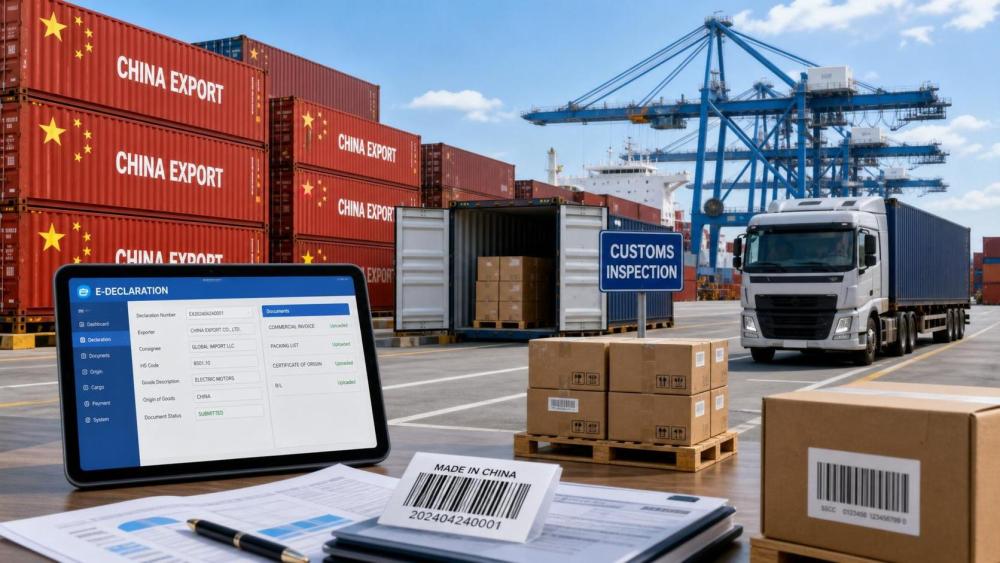
According to the information provided, CBP has officially confirmed that revised entry requirements for goods from China take effect on July 15, 2026. The confirmed changes include mandatory electronic submission of origin documentation, enhanced validation of tariff classification, and pre-arrival risk scoring.
The rules apply across all HTS chapters rather than to a limited set of categories. The same confirmed information also indicates that these changes will affect clearance timelines, bond usage, and audit exposure. In addition, overseas importers and distributors sourcing from China are required to align supplier data flows with ACE 3.0 protocols before shipment.
Where the Pressure Will Likely Appear First
Importers handling customs entry execution
From an industry perspective, importers are likely to feel the impact first because they sit at the point where origin records, tariff classification, and filing timing must come together in a usable entry submission. The immediate pressure point is whether shipment data from suppliers is complete, consistent, and available early enough to support compliance under the revised process.
Distributors sourcing from China
Distributors that buy from China for onward sale may be affected through planning and inventory flow rather than manufacturing activity itself. Analysis shows that any added friction in entry preparation or review could affect expected release timing, making supplier coordination and documentation discipline more important in routine replenishment cycles.
Suppliers and upstream data providers
Although the confirmed rules are framed around U.S. entry requirements, the operational burden extends upstream to suppliers that provide origin documents and product data. What deserves closer attention is whether supplier-side information can move in a structured way that supports ACE 3.0 alignment ahead of shipment, because that data flow now becomes part of practical customs readiness.
Customs and supply chain service providers
Service providers involved in customs filing, trade compliance support, or shipment coordination may also face workflow adjustments. Observably, the areas to watch are document intake, classification review, and timing control before cargo arrival, since the confirmed changes explicitly connect compliance quality with clearance timelines and audit exposure.
What Companies Should Watch in Practice
Whether origin records are submission-ready before shipment
Companies should focus on whether origin documentation can be submitted electronically in the required form and within the required timing. The practical issue is not only having documents on file, but having them available in a format and sequence that supports pre-shipment entry preparation.
How tariff classification is being validated internally
Because enhanced tariff classification validation is part of the confirmed change, businesses should pay closer attention to how HTS classifications are reviewed before filing. Analysis shows that classification quality is no longer just a technical customs detail; it is directly linked to processing efficiency and potential scrutiny.
Whether supplier data flows match ACE 3.0 needs
The confirmed requirement for alignment with ACE 3.0 protocols makes supplier data exchange a near-term operational checkpoint. What deserves closer attention is the gap between having supplier information in principle and having it structured in a way that can support compliant entry filing ahead of arrival.
How bond usage and audit exposure are being monitored
The provided information confirms that bond usage and audit exposure are part of the impact area. Companies should therefore track not only shipment release outcomes, but also whether revised entry handling changes the way they monitor customs compliance risk over time. This is especially relevant for organizations managing repeated imports from China across multiple product lines.
Why This Looks Bigger Than a Filing Adjustment
Analysis shows that the July 15 change is better understood as an operational compliance signal rather than a minor documentation update. The fact that the rules apply to all HTS chapters suggests broad administrative reach, while the combination of origin submission, classification validation, and pre-arrival risk scoring points to a more data-dependent entry environment.
At the same time, it would be premature to treat this as a fully settled long-term outcome beyond the confirmed rule start date. Observably, the immediate result is a higher need for shipment-ready data coordination. The longer-term implications for workflow design, supplier management, and customs review intensity still require continued observation based on actual implementation.
How the Market May Need to Read This Now
For the industry, the most reasonable reading at this stage is that CBP has moved a compliance expectation into immediate execution for China-origin imports. This is already a concrete short-term operating change because the effective date is confirmed and the scope covers all HTS chapters.
At the same time, it is more appropriate to understand the broader market impact as an evolving signal rather than a final conclusion. The confirmed facts support close attention to clearance timing, documentation readiness, and upstream data discipline, while the full effect on day-to-day trade flows will need to be assessed through continued observation after implementation begins.
Basis of This Article and What Still Needs Verification
This article is based on the user-provided news title, event date, and event summary concerning CBP's revised entry requirements for goods from China effective July 15, 2026. It is written as an industry news analysis and does not rely on additional unverified facts beyond that provided input.
For this type of development, source categories that are usually relevant include official government notices, company compliance updates, industry association information, authoritative media reporting, and trade or standards-related documentation. A specific official source link was not provided in the input, so the exact underlying notice and any later clarifications still need ongoing verification. Follow-up attention should focus on any additional official wording, implementation guidance, and market feedback on how the rules affect actual entry processing after the effective date.
Weekly Insights
Stay ahead with our curated technology reports delivered every Monday.
Recommended News
 Supply ChainOct 15, 2026How to choose a supply chain strategy for unpredictable demand
 Supply ChainOct 14, 2026How to assess an industrial equipment supplier's spare parts support
 Supply ChainOct 14, 2026EU Updates CSDDD Guidance on Global Supply Chain Due Diligence
 Global SourcingOct 13, 2026How to assess industrial automation suppliers for legacy integration