
CBP ACE Filing Rules Tighten for July 15 Imports
On July 15, 2026, a new U.S. customs filing requirement takes effect as U.S. Customs and Border Protection updates the ACE system for import entries. The change centers on additional origin verification, tariff classification justification, and supplier traceability information, with non-compliant submissions facing rejection or clearance delays. For exporters, import-facing suppliers, and supply chain service providers serving the U.S. market, this is worth close attention because the adjustment reaches beyond data entry and into shipment readiness, document preparation, and delivery timing.
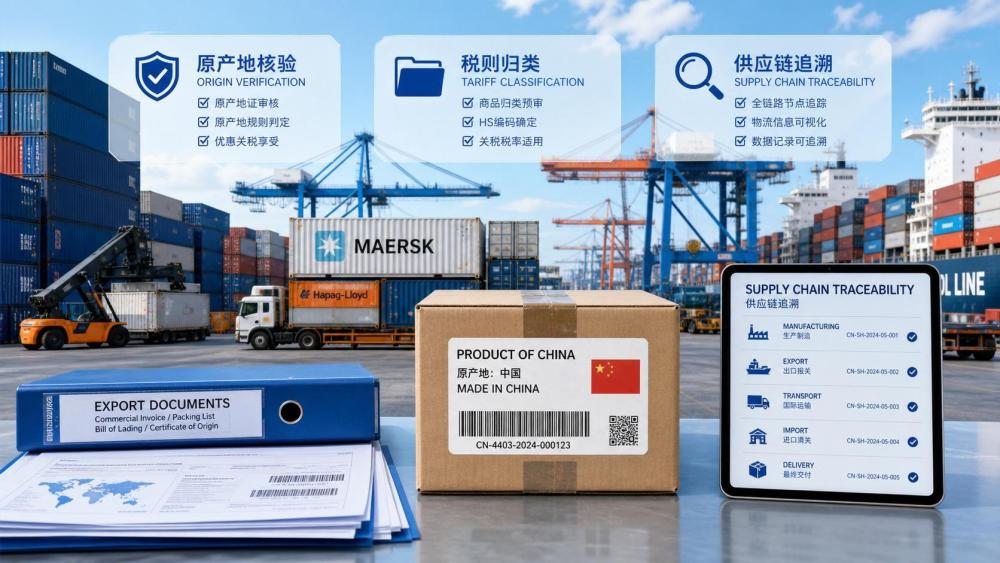
What the ACE update now requires
According to the information provided, CBP has announced mandatory ACE system updates effective July 15, 2026. The updated filing requirements apply to all import entries and add new data fields covering origin verification, justification for tariff classification, and supplier traceability.
The scope specifically includes imports supplied from China and ASEAN suppliers, and the consequence of non-compliant filing is stated clearly: entries may be automatically rejected or delayed. The stated operational effect is a direct impact on shipment readiness, documentation workflows, and customs clearance timelines for overseas exporters entering the U.S. market.
Where the operational pressure is likely to appear first
Export shipment preparation moves closer to compliance review
For export enterprises shipping to the United States, the immediate pressure is likely to appear before cargo departure rather than only at the clearance stage. Because ACE filings will require additional origin-related and traceability-related information, shipment readiness may depend more heavily on whether internal teams and customers can assemble consistent supporting data in time. From an industry perspective, what deserves closer attention is the handoff between commercial documents, product information, and filing preparation.
Suppliers may face deeper document requests from buyers
Manufacturers and upstream suppliers, especially those serving U.S.-bound orders through overseas trading chains, may see buyers ask for more detailed origin support, clearer tariff classification explanations, and more complete supplier traceability records. The impact is not limited to customs brokers. It may extend into procurement confirmation, supplier onboarding, and document retention practices where importers or trading partners need stronger support for filing accuracy.
Service providers in the filing chain will need cleaner inputs
Freight forwarders, customs filing support teams, and other supply chain service providers may be affected because the filing outcome now appears more sensitive to missing or incomplete data fields. Analysis shows that when rejection or delay becomes an explicit consequence, the operational focus shifts toward document completeness, consistency across submission materials, and earlier coordination with exporters and importers.
What companies should watch in day-to-day execution
Check whether origin support can withstand filing review
Companies involved in U.S.-bound shipments should closely review whether their existing origin-related documentation is organized in a way that can support ACE filing requirements. The information provided does not define the detailed evidentiary standard, so this should be treated as an area requiring continued attention rather than a settled checklist.
Review how tariff classification support is documented
The added requirement for tariff classification justification means businesses should pay attention to how product classification decisions are recorded and communicated across sales, compliance, and logistics functions. Observably, even where a classification decision already exists, the new issue may be whether that decision is documented in a form usable for filing.
Traceability expectations may affect supplier communication
Supplier traceability fields suggest a more structured need for upstream information. Companies should therefore watch whether purchase documentation, supplier records, and shipment files can be connected without contradiction. This is particularly relevant where multiple suppliers, intermediaries, or production arrangements are involved in a U.S.-bound order.
Delivery planning may need more buffer around filing readiness
Because non-compliant entries may be rejected or delayed, exporters and import-facing partners should pay attention to how filing readiness affects delivery schedules. The provided information does not specify average delay length or enforcement patterns, so the practical point at this stage is to monitor timeline risk rather than assume a fixed operational outcome.
Why this should be read as an execution signal
Analysis shows that this update is more appropriately understood as a concrete execution signal rather than a distant policy direction. The effective date is specified, the filing fields are described as mandatory, and the consequences of non-compliance are explicit. At the same time, the current information does not include detailed implementation guidance, review thresholds, or field-level interpretation, so part of the market response will still depend on how the requirement is applied in practice.
From an industry perspective, the significance lies in the fact that customs compliance is being pushed further upstream into documentation discipline and supplier information management. That does not automatically mean a broader regulatory conclusion beyond the provided facts, but it does indicate that filing quality is becoming a more immediate operational issue for U.S.-bound trade.
How to understand the current stage of the change
At this stage, the development is best understood as a rule change with real operational effect already defined at a high level, especially for filing completeness and shipment timing. A cautious reading is more appropriate than a dramatic one: the requirement is not merely symbolic, yet the full market impact will still depend on execution details, filing practice, and how quickly companies adjust their documentation workflows.
For industry participants, the practical meaning is straightforward. Any business involved in preparing, supporting, or depending on U.S. import entries should treat the July 15, 2026 ACE update as a near-term compliance and delivery issue, while continuing to watch for clearer guidance on implementation and market response.
Basis of this article and what still needs verification
This article is generated based on the user-provided news title, event date, and event summary. For developments of this type, relevant source categories typically include official announcements, releases from regulatory authorities, customs or trade administration updates, industry association notices, standards-related documents, and reporting by established professional media.
A specific official source link was not provided in the input, so the precise original publication path still requires follow-up verification. Observably, the areas that remain worth tracking include later official clarification, enforcement interpretation, filing practice adjustments, changes in customer or tender documentation requirements, industry feedback, and how companies implement the new ACE data requirements in day-to-day trade operations.
Weekly Insights
Stay ahead with our curated technology reports delivered every Monday.
Recommended News
 Supply ChainOct 15, 2026How to choose a supply chain strategy for unpredictable demand
 Supply ChainOct 14, 2026How to assess an industrial equipment supplier's spare parts support
 Supply ChainOct 14, 2026EU Updates CSDDD Guidance on Global Supply Chain Due Diligence
 Global SourcingOct 13, 2026How to assess industrial automation suppliers for legacy integration