Supplier Qualification Management Audit: Key Risks and Control Points
Supplier Qualification Management Audit: Key Risks and Control Points
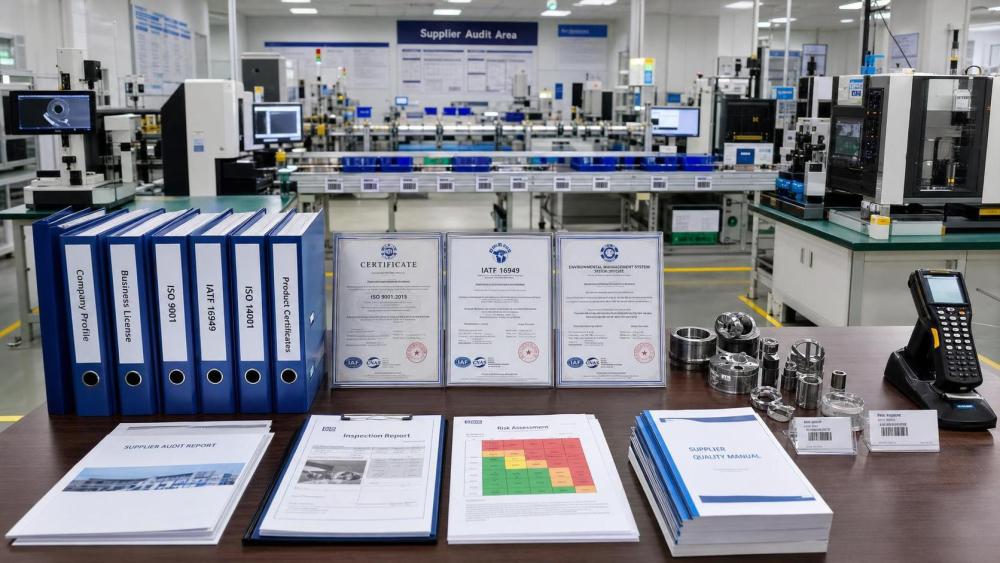
A supplier qualification management audit is more than a compliance checklist. It is an early warning system for quality drift, safety gaps, and hidden sourcing risk.
When supplier approval is weak, problems rarely stay isolated. They spread into incoming defects, production delays, recalls, and contract disputes.
That is why a strong supplier qualification management audit matters. It connects procurement, quality, safety, compliance, and business continuity in one working process.
In cross-border sourcing, the stakes are higher. Documentation quality, regulatory alignment, and operational consistency can vary sharply across regions and supplier tiers.
For teams using GTIIN-style market intelligence, the audit should not stop at certificates. It should test whether the supplier can keep performing under real operating pressure.
What a Supplier Qualification Management Audit Should Cover
A practical supplier qualification management audit checks both capability and control. It asks whether the supplier can meet requirements today and sustain them tomorrow.
In most industries, the audit scope should include five core areas:
- Legal and business legitimacy
- Quality management system maturity
- Safety, environmental, and regulatory compliance
- Operational capacity and process control
- Ongoing performance monitoring and corrective action
This sounds straightforward, but the risk sits in the details. Many suppliers pass document review yet fail when demand increases, specifications tighten, or logistics become unstable.
A useful supplier qualification management audit therefore combines desktop review, on-site verification, sample validation, and post-approval tracking.
Key Risks in Supplier Qualification Management
The first major risk is false confidence from paperwork. Certificates, licenses, and audit reports are necessary, but they do not prove day-to-day execution quality.
Another common risk is mismatch between approved scope and actual supply scope. A supplier may be qualified for one product family, then informally expanded into others.
This is where supplier qualification management audit discipline becomes critical. Scope creep often creates hidden process, testing, and safety exposure.
A third risk is weak sub-supplier control. In global supply chains, approved suppliers often outsource plating, packaging, calibration, or special processing.
If that lower-tier chain is not visible, traceability breaks fast. Quality escapes and compliance violations often begin at this hidden layer.
The fourth risk is capacity distortion. A supplier may perform well during pilot orders but fail during peak season, labor turnover, or raw material shortage.
The fifth risk is weak change control. Process changes, equipment replacement, or material substitutions can happen without formal customer notification.
From a safety management angle, one more signal deserves attention. Poor housekeeping, incomplete incident logs, and weak permit control often predict broader system failure.
Control Points Before Approval
Before approval, a supplier qualification management audit should establish a fact-based entry threshold. Approval should be earned, not assumed from price or urgency.
1. Verify legal and commercial legitimacy
Check business registration, ownership structure, tax status, export rights, and litigation exposure. Confirm the operating entity matches the contracting entity.
2. Test system maturity, not only certificates
ISO 9001, ISO 14001, or ISO 45001 can help. Still, the real question is whether procedures are used consistently on the shop floor.
3. Confirm process capability
Review critical equipment, maintenance logs, calibration status, operator skills, inspection plans, and defect containment methods. Ask for evidence tied to actual parts.
4. Check material and traceability control
A reliable supplier qualification management audit traces incoming materials to finished output. Lot control, status labeling, and record retention are basic but decisive.
5. Review safety and compliance readiness
Inspect chemical handling, machine guarding, PPE control, emergency response, waste management, and local regulatory permits. Safety weakness usually signals wider management weakness.
Control Points After Approval
Qualification is not the finish line. A supplier qualification management audit must continue after onboarding, especially for critical materials, safety-related parts, and single-source categories.
Use risk-based supplier segmentation
Group suppliers by product criticality, compliance exposure, spend concentration, and substitution difficulty. High-risk suppliers need deeper surveillance and shorter review cycles.
Track performance with leading indicators
Do not rely only on monthly defect rates. Watch overdue CAPA, audit closure speed, near misses, on-time delivery swings, and unusual complaint patterns.
Control engineering and process change
A disciplined supplier qualification management audit requires formal notice before any material, tooling, software, or subcontractor change affecting fit, function, or safety.
Re-audit when trigger events appear
Trigger events include repeated escapes, serious incidents, ownership change, relocation, major expansion, or sudden workforce instability. Annual timing alone is not enough.
A Practical Audit Checklist for Quality and Safety Teams
In actual operations, teams need a working checklist. The goal is consistency, faster decisions, and fewer blind spots during a supplier qualification management audit.
This checklist becomes stronger when linked to score thresholds, escalation rules, and approval conditions. Without that structure, findings often remain descriptive rather than actionable.
Common Audit Mistakes and How to Avoid Them
One mistake is treating all suppliers the same. A low-risk packaging vendor and a critical process chemical supplier should never receive identical audit depth.
Another mistake is over-scoring presentation quality. Clean slides and polished answers can hide weak control discipline. Evidence must outweigh presentation.
A third mistake is issuing findings without follow-through. A supplier qualification management audit only creates value when CAPA actions are specific, timed, and verified.
It is also risky to separate audit results from market intelligence. GTIIN-style global sourcing insight can reveal tariff shifts, compliance trends, and regional disruption signals early.
That broader view helps teams decide whether to develop, contain, dual-source, or exit a supplier relationship before disruption becomes expensive.
Turning Audit Results Into Better Supplier Decisions
The best supplier qualification management audit does not end with a score. It leads to a clear sourcing decision and an updated control plan.
Use three outcome paths:
- Approve with standard monitoring when risks are low and controls are stable.
- Approve conditionally when gaps exist but can be contained through deadlines, inspection reinforcement, or limited scope.
- Reject or suspend when legal, safety, traceability, or critical process control is not credible.
In practice, this makes the supplier qualification management audit a decision tool, not an administrative formality. That shift is what strengthens resilience.
For organizations managing international suppliers, the next step is clear. Build audit criteria around real product risk, verify execution on site, and review performance continuously.
When the audit is connected to technical standards, operational facts, and market intelligence, supplier decisions become faster, safer, and much harder to regret.
Weekly Insights
Stay ahead with our curated technology reports delivered every Monday.
Recommended News
 Supply ChainOct 15, 2026How to choose a supply chain strategy for unpredictable demand
 Supply ChainOct 14, 2026How to assess an industrial equipment supplier's spare parts support
 Supply ChainOct 14, 2026EU Updates CSDDD Guidance on Global Supply Chain Due Diligence
 Global SourcingOct 13, 2026How to assess industrial automation suppliers for legacy integration