
Shanghai Port Tightens FEU Booking to 72 Hours
On July 5, 2026, Shanghai International Port Group (SIPG) put a mandatory real-time vessel slot booking system into operation, cutting the average berth allocation lead time for container vessels from five days to 72 hours while also requiring exporters to complete slot booking 72 hours before estimated time of berth. For exporters, intermodal operators, and inland transport providers serving peak-season flows to the U.S. and Europe, the change matters because it compresses planning time at the same moment seasonal demand is rising and makes delays in confirmation more costly through automatic demurrage accrual.
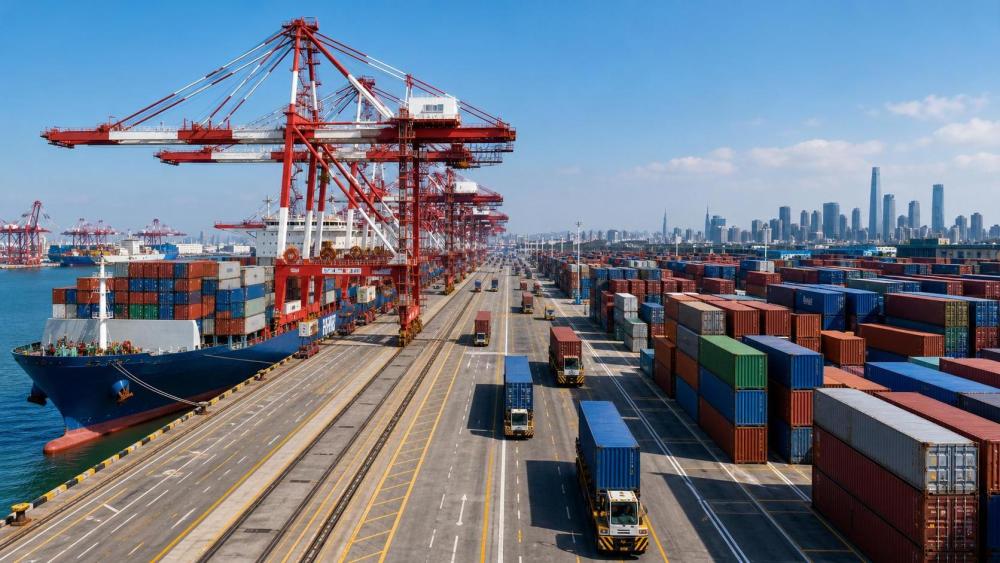
What Has Changed at Shanghai Port
According to the information provided, SIPG launched the real-time slot booking platform on July 5. The system is mandatory. Its implementation reduces the average berth allocation lead time from five days to 72 hours. At the same time, exporters are required to pre-book slots 72 hours before ETB. The change comes as demand is increasing ahead of the U.S. and EU back-to-school and holiday shipping season. The provided information also states that delays in slot confirmation now lead to automatic demurrage accrual.
Where the Immediate Pressure Is Likely to Appear
Export scheduling becomes less forgiving
From an industry perspective, direct trading companies and export-oriented manufacturers may feel the impact first because their shipment planning now has to match a firmer 72-hour pre-booking requirement. The main pressure point is the handoff between cargo readiness, documentation timing, and slot confirmation. What deserves closer attention is whether internal production and dispatch schedules can consistently support booking before ETB without last-minute changes.
Intermodal operators face a narrower coordination window
Analysis shows that air-ocean intermodal shippers are exposed to a tighter operating window because the booking rule change coincides with stronger peak-season demand. The issue is not only vessel access but also the synchronization of multiple transport legs. Operators will need to watch for knock-on effects when one segment of the route shifts and the vessel slot must still be confirmed within the required timeframe.
Inland transport planning carries more execution risk
Observably, inland trucking and related transport coordination may come under greater strain because the new booking discipline leaves less room for timing mismatches between port-side arrangements and inland cargo movement. For service providers and cargo owners, the practical concern is whether pickup, drayage, and terminal delivery schedules can stay aligned closely enough to avoid missed confirmation timing.
Cost control becomes more sensitive to confirmation delays
For cargo owners and supply chain service providers, the explicit trigger for automatic demurrage accrual raises the financial importance of timely slot confirmation. The operational effect is that scheduling errors are no longer only a timing issue; they can now convert directly into additional cost exposure if confirmation is delayed.
What Companies Should Watch Now
Track whether operational rules are clarified further
Companies involved in Shanghai export flows should follow any further wording or procedural clarification around the mandatory platform, especially where booking timing, confirmation steps, and exception handling are concerned. The current information confirms the main rule change, but day-to-day execution often depends on how the process is interpreted in operations.
Review cargo readiness against the 72-hour booking requirement
Exporters should compare production completion, packing, document preparation, and handoff timing against the new 72-hour pre-booking threshold. This is particularly relevant for time-sensitive cargo and for shipments tied to seasonal retail demand in the U.S. and Europe, where delays in one step can affect the entire export chain.
Recheck inland transport and port coordination routines
What deserves closer attention is the connection between inland transport booking and port slot confirmation. Companies relying on third-party logistics providers may need tighter communication on cargo cutoff timing, vehicle dispatch, and terminal delivery arrangements so that inland movement does not fall out of sync with berth-related booking requirements.
Prepare customer communication around timing and cost exposure
From a practical standpoint, shippers and service providers should review how they communicate timing commitments and potential demurrage exposure to customers and counterparties. The provided information indicates that delayed slot confirmation now has an automatic cost consequence, which makes early expectation-setting more important in contract execution and shipment updates.
Why This Looks More Like an Operational Signal Than a Final Outcome
Analysis shows that this development is best read first as an operational tightening at a major port during a peak shipping period, rather than as a fully settled long-term market outcome. The confirmed facts point to faster berth allocation in principle, but also to stricter timing discipline for exporters and service providers. Whether the net effect is smoother throughput or greater execution pressure across the chain will depend on how consistently market participants adapt their planning to the new rule.
Observably, the timing of the rollout matters as much as the rule itself. Because the change overlaps with stronger seasonal demand tied to U.S. and EU retail cycles, the market may treat it as both a short-term execution issue and a signal of stricter digital scheduling control at the port level. That is why the industry still needs to watch implementation closely rather than assume the impact is already fully defined.
How to Read This Development at This Stage
At this stage, the Shanghai Port booking change should be understood as a concrete shift in operating discipline with immediate implications for export planning, intermodal coordination, and cost control. It does not by itself confirm a broader structural outcome, but it clearly raises the importance of timing accuracy across the shipment chain. A neutral reading is that the change is already material for current peak-season execution, while its longer-term significance still requires continued observation.
Basis of This Article
This article is based on the user-provided news title, event date, and event summary concerning Shanghai Port's real-time vessel slot allocation system and the 72-hour FEU booking requirement. For this type of industry update, relevant source categories typically include official port announcements, company notices, industry association releases, authoritative media coverage, and other formal operating guidance. A specific official source link was not provided in the input, so the exact wording and any subsequent rule clarification still require ongoing verification. Continued attention should focus on possible updates to operating procedures, implementation details, and how the rule affects peak-season shipment execution.
Tags
Weekly Insights
Stay ahead with our curated technology reports delivered every Monday.
Recommended News
 Supply ChainOct 15, 2026How to choose a supply chain strategy for unpredictable demand
 Supply ChainOct 14, 2026How to assess an industrial equipment supplier's spare parts support
 Supply ChainOct 14, 2026EU Updates CSDDD Guidance on Global Supply Chain Due Diligence
 Global SourcingOct 13, 2026How to assess industrial automation suppliers for legacy integration