Shanghai Port Delays Stretch to 12.4 Days
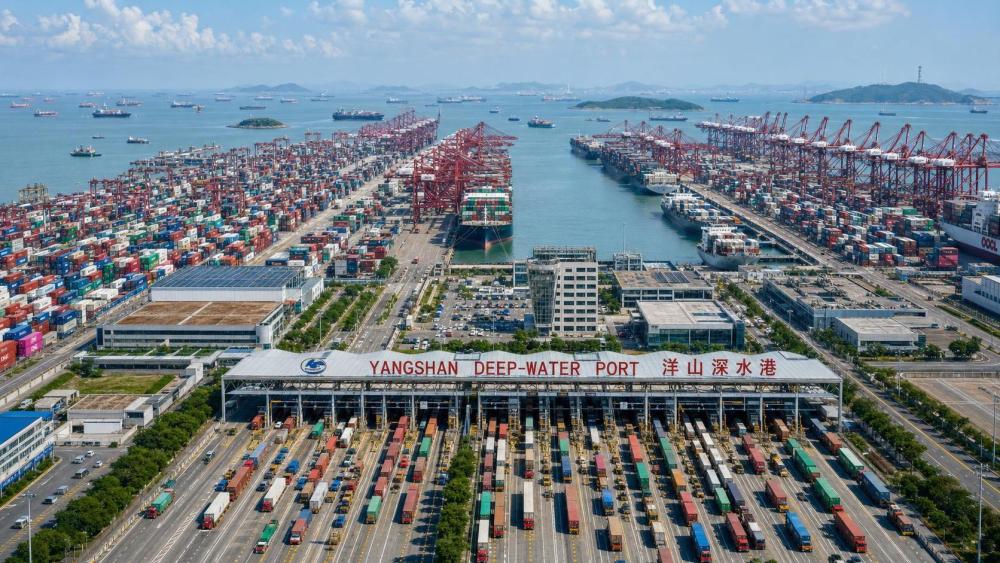
On July 1, 2026, congestion at Shanghai’s Yangshan Terminal drew renewed attention after SIPG indicated vessel waiting time had climbed to 12.4 days, the highest level since 2022. Combined with rail and truck gate delays of more than 36 hours and a week-on-week rise in Shanghai-to-Rotterdam spot container rates, this development matters most for importers, manufacturers, forwarders, and procurement teams that depend on China-origin industrial cargo moving into EU and US markets, because it directly affects delivery timing, landed cost assumptions, and inventory planning.
What has been confirmed at Yangshan Terminal
According to the information provided, Shanghai International Port Group (SIPG) reported that average vessel waiting time at Yangshan Terminal reached 12.4 days. The stated causes were the residual impact of Typhoon Kompasu and localized labor shortages in logistics operations. The same update indicates that rail and truck gate delays exceeded 36 hours. Freight forwarders also confirmed that spot container rates from Shanghai to Rotterdam increased 22% from the previous week.
Where the immediate pressure is likely to appear
Import scheduling and purchase-side planning
From an industry perspective, EU and US importers relying on China-sourced industrial goods are among the first to feel the effect. The likely pressure point is not only ocean transit timing, but also the reliability of shipment release, departure sequencing, and inbound planning. What deserves closer attention is whether purchase schedules and expected arrival windows were built around normal port flow assumptions that no longer hold under current congestion.
Factory shipment coordination and export execution
For manufacturers and direct trading companies shipping through Shanghai, the issue may extend beyond the vessel queue itself. Analysis shows that rail and truck gate delays can affect container handoff, cargo staging, and booking execution. In practice, that means production completion may no longer translate cleanly into shipment readiness, especially where delivery commitments were tied closely to booked sailings.
Freight forwarding and logistics service delivery
For freight forwarders and related supply chain service providers, the main challenge is operational predictability. With spot rates from Shanghai to Rotterdam already moving up week on week, service teams need to watch both pricing volatility and schedule disruption. Observably, customer communication, booking validity, and cost pass-through discussions become more sensitive when congestion is affecting multiple transport nodes at once.
Inventory-dependent downstream operations
For distributors, industrial users, and other downstream buyers, the most relevant risk is timing uncertainty in replenishment. Analysis shows that even without adding new demand-side assumptions, a longer wait at origin can alter reorder timing, warehouse coverage calculations, and buffer stock decisions. The effect is especially relevant where imported industrial goods are tied to fixed production or fulfillment windows.
What companies should watch right now
Changes in port-side operating conditions
Companies should closely monitor whether SIPG or related operating parties issue updated statements on queue conditions, labor availability, or gate flow. The key practical point is that congestion, inland gate delays, and vessel waiting time interact with one another, so a single improvement indicator may not mean the full bottleneck has eased.
Rate movement versus total landed cost
What deserves closer attention is the distinction between spot freight movement and full landed cost exposure. A 22% week-on-week increase on the Shanghai-Rotterdam route is already material for budgeting, but firms should also assess how delay-driven storage, rescheduling, or customer service costs may alter shipment economics if cargo timing shifts.
Lead-time commitments already made to customers
For sales, procurement, and account teams, the immediate task is to recheck delivery promises already communicated to EU and US customers. Analysis shows that the main business risk is often not the headline delay itself, but the gap between original lead-time assumptions and the port conditions now being reported.
Inventory and replenishment assumptions
Companies with recurring inbound flows from China should review whether current safety stock and replenishment rules still reflect workable arrival timing. It is more appropriate to understand this as a supply chain planning issue as much as a freight issue, particularly for businesses whose inventory models are sensitive to short disruptions at major export gateways.
How this development should be interpreted
Observably, this update points to a concentrated logistics disruption rather than a fully defined long-term shift. The confirmed facts show a combination of weather-related residual effects, labor constraints, inland gate delays, and higher spot rates, which together signal that shipment planning assumptions can change quickly when several bottlenecks align. At the same time, the information provided does not establish how long the current pressure will last, so it is more appropriate to understand this as an active supply chain signal that still requires close monitoring rather than a settled structural conclusion.
Why the market is paying attention
The broader significance of this development lies in its effect on execution quality across the trade chain. For companies linked to China-origin industrial shipments, the issue is not only slower port movement, but also weaker certainty around cost, timing, and inventory decisions. From an industry perspective, this is best read as a short-term but operationally important disruption with potential knock-on effects for planning and customer commitments, while the medium-term direction still needs further observation.
Basis of this article and what still needs verification
This article is based on the user-provided news title, event date, and event summary. For this type of industry update, commonly relevant source categories may include official port operator statements, company announcements, industry association updates, and reporting from established trade or logistics media. A specific official source link was not provided in the input, so the underlying details should continue to be verified against subsequent official disclosures and market updates. Follow-up attention should focus on whether vessel waiting time, gate delays, and spot rate changes begin to ease or continue affecting shipment planning for EU and US importers.
Tags
Weekly Insights
Stay ahead with our curated technology reports delivered every Monday.
Recommended News
 Supply ChainOct 15, 2026How to choose a supply chain strategy for unpredictable demand
 Supply ChainOct 14, 2026How to assess an industrial equipment supplier's spare parts support
 Supply ChainOct 14, 2026EU Updates CSDDD Guidance on Global Supply Chain Due Diligence
 Global SourcingOct 13, 2026How to assess industrial automation suppliers for legacy integration