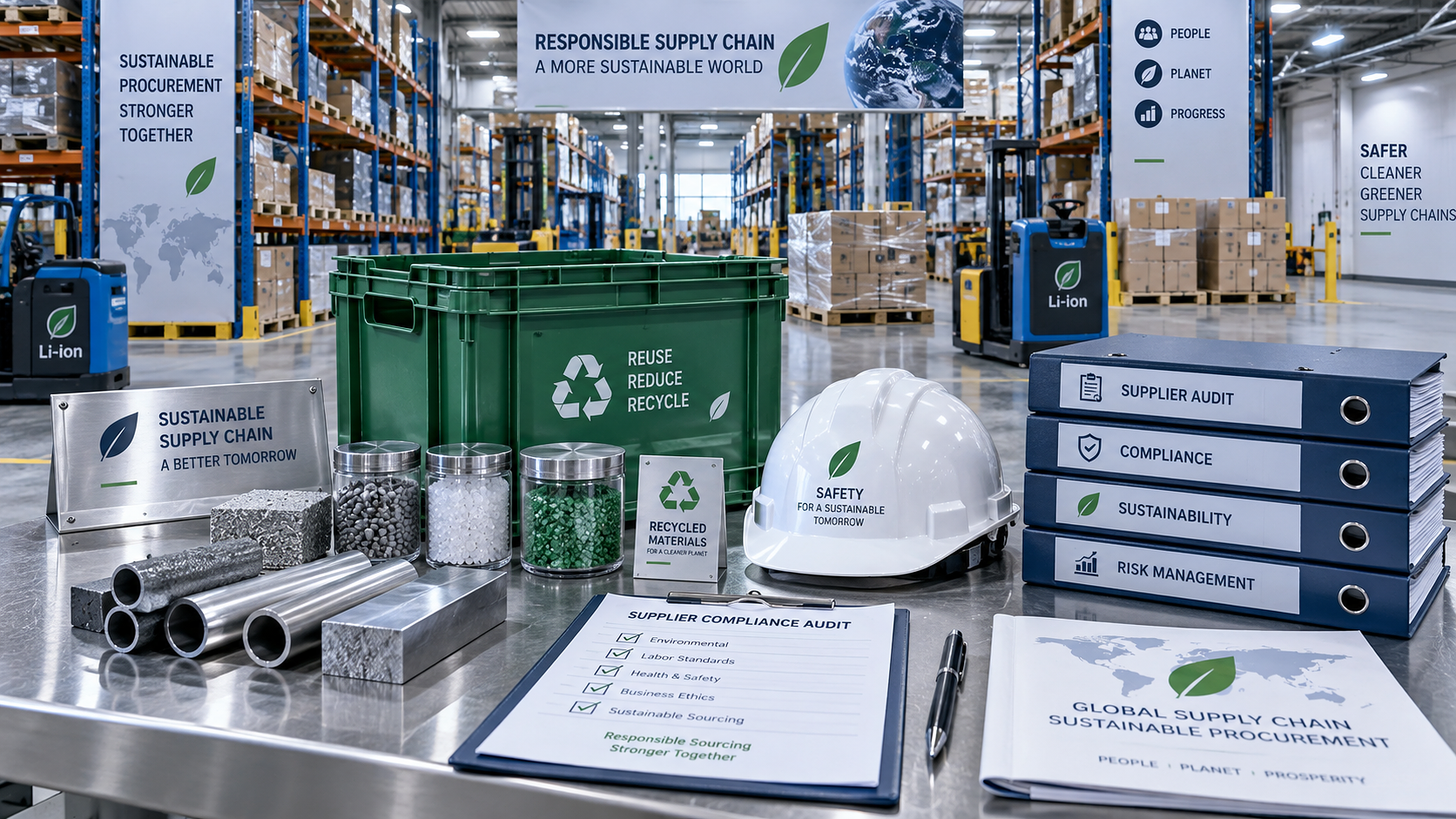
Supply Chain Decarbonization: Practical Steps That Lower Emissions
Why supply chain decarbonization now starts with operational reality
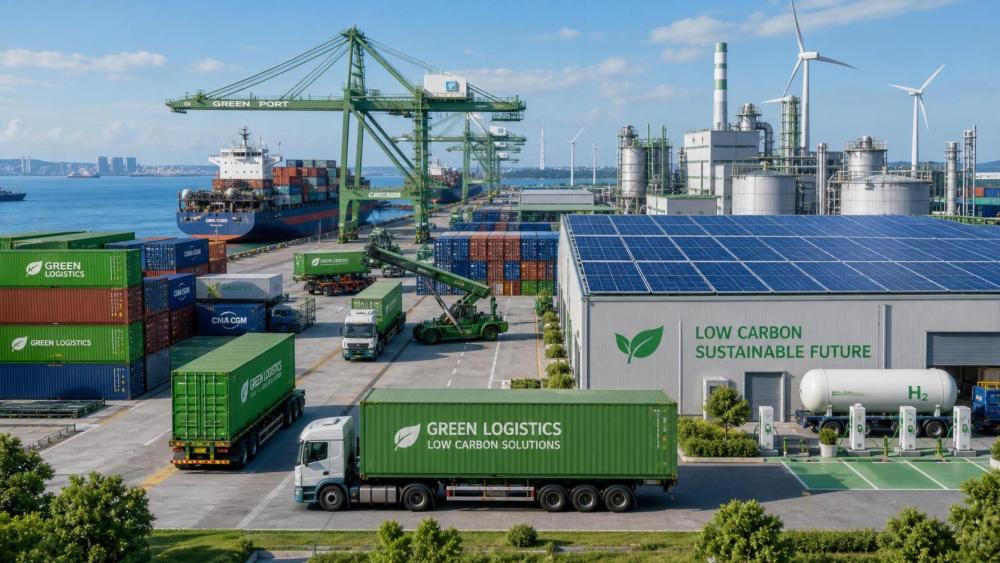
Supply chain decarbonization has moved from policy language into day-to-day operating decisions.
In cross-border trade, carbon exposure now affects landed cost, sourcing flexibility, and compliance timing.
That shift matters because emissions rarely come from one obvious source.
They build across materials, energy inputs, transport modes, packaging choices, and customs-related delays.
In practical terms, supply chain decarbonization works best when it is tied to procurement, logistics, and supplier decisions.
The most useful question is not whether to decarbonize.
It is where emissions concentrate, which trade lanes amplify them, and what changes remain commercially realistic.
GTIIN has tracked this pattern across global industrial sourcing, freight benchmarks, export shifts, and resilience analysis.
Viewed through that lens, supply chain decarbonization becomes a mapping exercise before it becomes a reporting exercise.
Different supply networks create different carbon priorities
Not every value chain faces the same decarbonization pressure.
Bulk commodities often carry large embedded emissions from extraction, processing, and ocean shipping.
Engineered components may show lower shipping weight but higher electricity intensity during fabrication.
Regulated exports add another layer because document quality and origin traceability affect both carbon claims and border clearance.
This is why supply chain decarbonization cannot rely on generic supplier scorecards alone.
A network with concentrated upstream smelting needs a different response than one driven by time-sensitive air freight.
In actual deployment, the stronger approach is to separate emissions into three layers.
- Embedded carbon in raw materials, intermediates, and manufacturing energy.
- Movement-related emissions from modal choices, routing, storage, and idle time.
- Administrative carbon risk from poor data, fragmented declarations, and nonaligned standards.
Once those layers are visible, supply chain decarbonization becomes easier to prioritize.
Where upstream sourcing usually shapes the biggest gains
For metals, chemicals, cement inputs, and other industrial basics, upstream sourcing usually dominates the carbon picture.
Here, supply chain decarbonization depends less on warehouse efficiency and more on feedstock origin, process heat, and grid intensity.
Two suppliers may quote similar prices while carrying very different emission profiles.
The difference often sits in furnace technology, recycled content, local power mix, or transport distance to port.
A common misread is treating every low-cost source as equivalent if the specification sheet matches.
In reality, the carbon burden can shift sharply when origin, process route, or regional energy structure changes.
GTIIN’s cross-sector mapping is useful here because commodity performance, export dynamics, and regional policy changes interact.
When carbon border rules tighten, upstream visibility stops being optional.
What to verify before shifting source regions
- Production route and energy mix, not just annual sustainability claims.
- Third-party verification quality for product carbon data.
- Port congestion, inland haulage distance, and customs latency.
- Exposure to CBAM, local disclosure rules, or buyer-specific reporting formats.
Transport-heavy networks need a different supply chain decarbonization playbook
Some supply networks are not especially carbon-intensive in production.
Their emissions rise because the physical flow is unstable.
Expedited shipments, fragmented consolidation, underused containers, and repeated transshipment can erase upstream gains.
In these cases, supply chain decarbonization starts with network discipline rather than supplier replacement.
A slower but predictable ocean schedule may outperform a reactive model built around frequent air recovery.
The same applies to multimodal corridors.
Rail can lower emissions, but only if customs handoffs, packaging durability, and inventory timing support it.
Otherwise, disruption risk pushes emergency trucking back into the system.
That is why supply chain decarbonization should be tested against service reliability, not just route-level carbon estimates.
When supplier collaboration matters more than supplier replacement
In many categories, replacing suppliers is slower and riskier than improving the existing base.
This is especially true where tooling, certifications, or quality consistency create high switching friction.
Here, supply chain decarbonization often advances through joint data standards, packaging redesign, yield improvement, and shared planning.
A supplier with credible energy transition plans may be strategically stronger than a greener-looking source with unstable output.
The judgment is not ideological.
It is about whether emissions can fall without introducing new continuity risks.
In practical review cycles, useful collaboration signals include data traceability, process transparency, scrap reduction history, and willingness to align on measurable milestones.
Supply chain decarbonization becomes more durable when supplier engagement is built into sourcing governance, not left as a side initiative.
Common misjudgments that weaken supply chain decarbonization
Several mistakes appear repeatedly across industrial and trading environments.
- Using annual supplier averages while ignoring product-level variation.
- Counting only transport emissions and missing material intensity.
- Comparing supplier quotes without customs delay and rerouting risk.
- Treating compliance documentation as proof of operational improvement.
- Pursuing low-carbon options that increase scrap, damage, or stockouts.
These errors usually come from looking at isolated metrics.
Supply chain decarbonization is stronger when carbon, service, and resilience are reviewed together.
That broader view is especially important in cross-border procurement, where one delay can trigger mode escalation and higher emissions downstream.
How to adapt the next move to the actual network
The next step should match the structure of the network, not a generic decarbonization checklist.
Where upstream materials dominate, start with origin tracing, process-route comparison, and verified carbon data.
Where logistics dominates, focus on consolidation rules, inventory buffers, and modal feasibility.
Where supplier lock-in is high, build improvement roadmaps around shared milestones and auditable metrics.
A practical sequence often works best.
- Map the top emission hotspots by material, lane, and supplier.
- Identify which hotspots also carry cost or disruption exposure.
- Test two or three interventions with measurable operational impact.
- Standardize data requirements before scaling claims across regions.
Supply chain decarbonization works when it is grounded in trade intelligence, industrial context, and realistic execution windows.
That is where GTIIN’s sector coverage, freight visibility, and full-dimensional supply chain mapping offer practical value.
The immediate priority is to sort carbon decisions by scenario, confirm the limiting conditions, and act where emissions, cost, and resilience intersect most clearly.
Weekly Insights
Stay ahead with our curated technology reports delivered every Monday.
Recommended News
 Supply ChainOct 15, 2026How to choose a supply chain strategy for unpredictable demand
 Supply ChainOct 14, 2026How to assess an industrial equipment supplier's spare parts support
 Supply ChainOct 14, 2026EU Updates CSDDD Guidance on Global Supply Chain Due Diligence
 Global SourcingOct 13, 2026How to assess industrial automation suppliers for legacy integration