
Manufacturing Trends in Europe for 2026: What Is Changing First
Europe enters 2026 with its manufacturing base under a different kind of pressure. Cost still matters, but energy volatility, carbon rules, labor constraints, and strategic sourcing now shape competitiveness just as strongly.
That is why manufacturing trends Europe deserve close attention. The earliest changes are not abstract policy shifts. They are already visible in plant investment, supplier screening, production footprints, and contract risk allocation.
For cross-border industrial decisions, the key question is simple: what is changing first, and which signals point to durable change rather than temporary adjustment? The answer matters for supplier resilience, cost exposure, and long-term market access.
The first moves are happening below the headline level
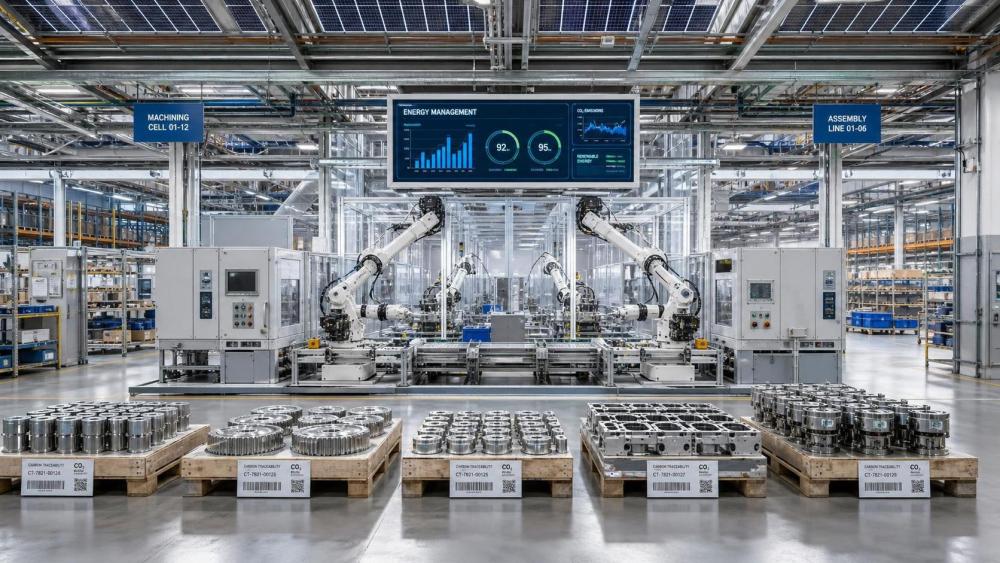
The most important manufacturing trends Europe are emerging inside operating models. Before major output growth returns, manufacturers are redesigning how they buy power, source inputs, document emissions, and qualify vendors.
In practical terms, this means procurement and production are becoming more tightly linked. A supplier is no longer judged only by price, capacity, and lead time. Energy intensity, traceability, and compliance readiness now affect commercial viability.
This shift is especially visible in metals, chemicals, machinery, automotive components, electronics, and building materials. These sectors face direct exposure to energy prices, carbon reporting, and industrial policy incentives.
Energy strategy is becoming a manufacturing decision
Energy remains the fastest-moving pressure point. European factories have spent the last few years learning that short-term price shocks can quickly become strategic constraints.
By 2026, more firms will treat electricity sourcing, gas exposure, and on-site efficiency as core manufacturing choices rather than utility matters. That change comes first because it touches cost, uptime, and investment planning at once.
Facilities with stable power contracts, electrified processes, heat recovery systems, or local renewable integration will hold a clearer advantage. Plants without that buffer may remain technically capable, yet commercially fragile.
For anyone tracking manufacturing trends Europe, the lesson is direct. Compare suppliers by cost structure under different energy scenarios, not just under current quotations.
What to check early
- Share of production cost tied to electricity and gas
- Ability to shift loads across time or production lines
- Evidence of energy-efficiency capex completed in the past three years
- Exposure to local grid congestion or curtailment risk
Carbon accounting is moving from reporting to commercial leverage
Decarbonization in Europe is no longer only a sustainability narrative. It is becoming a pricing, sourcing, and market-entry issue. That makes it one of the defining manufacturing trends Europe for 2026.
The EU Carbon Border Adjustment Mechanism, evolving ESG expectations, and customer disclosure demands are pushing manufacturers to document embedded emissions with greater precision. Weak data systems are starting to create commercial friction.
This affects more than exporters into the EU. It also affects upstream suppliers feeding European value chains. If a vendor cannot support product-level carbon evidence, qualification may slow or fail.
GTIIN has tracked this pattern across industrial sectors. The stronger performers are not always the lowest-emission producers today. Often, they are the ones with auditable data, clearer process mapping, and credible transition plans.
Why this matters in evaluation work
Carbon readiness now acts as a proxy for operational maturity. It reveals how well a supplier understands its own inputs, process losses, and regulatory exposure.
That is why manufacturing trends Europe should be read through both compliance and execution. Good reporting without process control is weak. Strong production without data transparency is also weak.
Regionalization is becoming more selective
Europe is not moving toward simple reshoring. The more realistic pattern is selective regionalization. Critical inputs, sensitive components, and high-compliance items are more likely to be pulled closer. Standardized inputs may remain global.
This is one of the most misunderstood manufacturing trends Europe. The point is not to replace all distant sourcing. The point is to reduce failure points where customs delays, sanctions exposure, shipping instability, or documentation gaps create disproportionate risk.
As a result, supplier portfolios are becoming layered. One source serves cost optimization. Another serves continuity. A third serves compliance-sensitive orders or rapid replenishment.
For cross-border supply chain planning, the practical takeaway is to separate strategic localization from symbolic localization. One improves resilience. The other only raises cost.
Automation spending is being redirected, not paused
Another early signal in manufacturing trends Europe is the changing logic behind automation investment. The old model emphasized scale and labor reduction. The new model adds traceability, flexibility, and quality consistency.
Manufacturers are prioritizing systems that help them run smaller batches, manage variable input costs, and maintain documentation integrity. Sensors, digital twins, predictive maintenance, and line-level analytics fit this need well.
This is important because labor tightness remains uneven across Europe. In some regions, the issue is wage pressure. In others, it is simply the shortage of skilled operators and maintenance staff.
A factory that automates only for speed may still struggle. A factory that automates for visibility and process stability usually becomes easier to evaluate and easier to trust.
Compliance is spreading into day-to-day supplier decisions
Regulation in Europe is broadening from product conformity to value-chain governance. Environmental disclosures, due diligence expectations, and material traceability are moving closer to routine commercial checks.
That makes compliance one of the most actionable manufacturing trends Europe. It is not only a legal concern. It shapes onboarding speed, contract language, audit frequency, and even payment confidence.
This is where GTIIN’s research approach is useful. Looking at trade flows alone is not enough. A stronger view combines freight conditions, customs latency, industrial standards, and supplier process evidence.
When those layers are mapped together, risk becomes easier to compare across countries, plants, and categories.
Signals worth weighing together
- Certification status and renewal discipline
- Raw material origin visibility
- Customs documentation accuracy
- Response quality during technical or regulatory queries
How to read the market without overreacting
Not every movement in manufacturing trends Europe has the same weight. Some changes are cyclical. Others indicate structural repositioning. Separating the two is essential.
A temporary fall in orders may reflect inventory correction. A long-term rise in capital spending on electrification, traceability software, or supplier diversification points to something deeper.
The most reliable reading usually comes from combined indicators rather than headlines. Plant upgrades, regulatory preparedness, freight routing changes, and sourcing contract terms often tell a clearer story together.
In business evaluation, that means asking not only whether a supplier looks competitive today, but whether its operating model remains credible under tighter rules and more volatile inputs.
Where to focus next
The first changes in European manufacturing are already visible in energy strategy, carbon data discipline, selective regionalization, automation priorities, and compliance depth. These are the leading edges of 2026, not side issues.
Anyone reviewing manufacturing trends Europe should build a working framework around three questions. Which costs are truly controllable, which risks are shifting upstream, and which suppliers can still adapt when conditions tighten?
The next step is practical. Recheck supplier assumptions, compare production footprints against regulatory exposure, and update scorecards to include energy resilience, carbon traceability, and documentation reliability.
That kind of structured review does more than explain what is changing first. It helps identify which partners are positioned to remain workable as Europe’s industrial rules, costs, and sourcing patterns continue to evolve.
Have questions about this sector analysis, or seeking best practices specific to your niche? Drop us a line below and let the senior consultants at GTIIN assist you.
“We respect your privacy. Your information is strictly confidential.”
Weekly Insights
Stay ahead with our curated technology reports delivered every Monday.
Recommended News
 Supply ChainNov 08, 2026He Lifeng Holds Trade Talks With Bessent and Greer
 Market TrendsNov 08, 2026How to use industrial commodity market analysis to forecast costs
 Supply ChainNov 07, 2026EU Opens Safeguard Investigation into PET Resin Imports
 Industry StandardsNov 07, 2026Which ISO quality management standard can a company be certified to?



