
Kazakhstan Rail Link Cuts Asia-EU Transit to 14 Days
On July 10, 2026, a new Asia-Europe direct rail freight corridor linking Alashankou, Dostyk, and Warsaw was officially launched, using Kazakhstan’s newly activated Ayaguz hub to enable end-to-end service without transshipment. With standard container transit reduced to 14 days, 32 days faster than traditional sea freight, and pricing 7.3% below the 2026 Q2 average, this development deserves attention from manufacturers, traders, logistics providers, and temperature-controlled cargo operators assessing route choices, delivery planning, and cargo allocation.
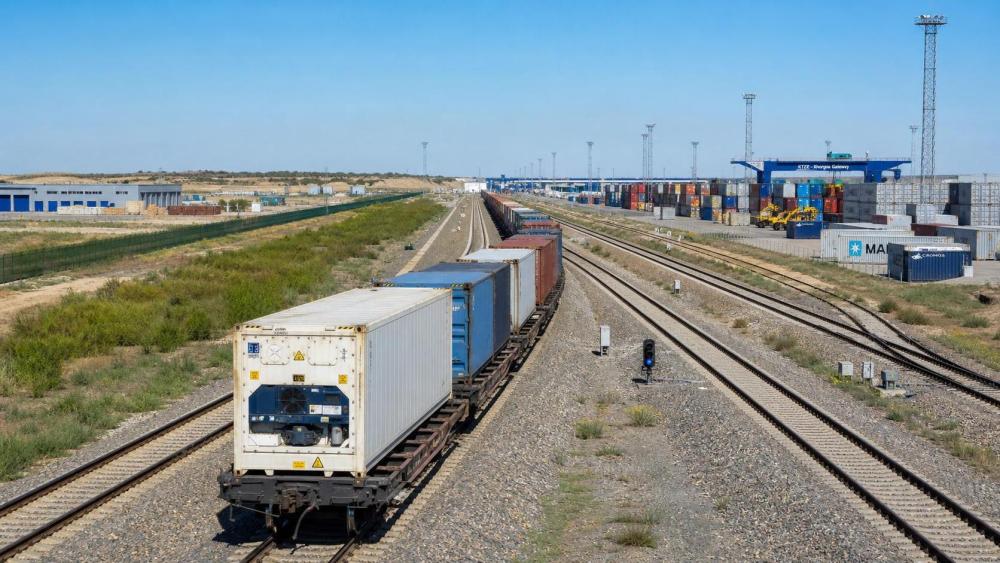
What Has Been Confirmed About the New Route
The confirmed event is the official opening of the Alashankou-Dostyk-Warsaw corridor on July 10, 2026. According to the provided information, the route runs via Kazakhstan and relies on the newly activated Ayaguz hub to provide direct transport without cargo reloading during the full journey.
The reported operating result for standard containers is a 14-day transit time. The same information states that this is 32 days faster than traditional sea freight. It also indicates that freight rates on the corridor are 7.3% lower than the 2026 Q2 average.
The first pilot shipments cover electromechanical equipment, precision instruments, and temperature-controlled logistics cargo. No additional cargo categories, operators, or route expansion details were provided in the source information.
Where the Immediate Business Impact May Appear
Manufacturers balancing speed and delivery certainty
From an industry perspective, manufacturers moving electromechanical equipment and precision instruments may be among the first to evaluate the route because the confirmed pilot categories already align with goods that often depend on tighter delivery windows and lower handling complexity. The most relevant business impact would likely appear in outbound scheduling, customer delivery commitments, and shipment planning between production completion and final dispatch.
What deserves closer attention is whether the shorter transit time and no-transshipment design translate into more predictable execution for specific orders, rather than being treated simply as a faster option on paper.
Traders and buyers managing replenishment cycles
For trading companies and procurement teams, the corridor may affect decisions around replenishment timing and route selection. Analysis shows that a 14-day rail option, together with a reported rate level below the 2026 Q2 average, could alter how some shipments are split across transport modes, especially where lead time has direct commercial consequences.
The practical focus for these market participants is not only transit speed, but also whether the route fits contract timing, receiving plans, and customer-side delivery expectations for the cargo types currently included in the pilot phase.
Logistics providers handling specialized cargo flows
Supply chain service providers, especially those working with temperature-controlled cargo, may see this corridor as operationally relevant because the initial pilot already includes cold-chain freight. In business terms, the impact may be concentrated in routing design, equipment allocation, cargo acceptance standards, and communication with shippers about service scope.
Observably, the inclusion of temperature-controlled shipments makes the route more than a general transit update; it also raises execution questions around service reliability and cargo suitability within the pilot framework.
What Companies Should Watch Next
How official operating language develops after launch
Companies should pay attention to how the route continues to be described in subsequent official communications. Analysis shows that an announced launch and an operating corridor are not always the same as a mature, normalized service pattern. The wording used in follow-up notices may matter for shipment planning, especially for firms considering repeated use rather than one-off trial volumes.
Whether pilot cargo categories remain narrow or start to broaden
The currently confirmed pilot scope covers electromechanical equipment, precision instruments, and temperature-controlled logistics cargo. For businesses outside these categories, the key issue is whether future updates keep the route limited to specific goods or indicate broader commercial applicability. This distinction affects sales planning, customer quoting, and internal mode selection rules.
How to separate price signal from full landed-cost reality
The reported 7.3% rate decline versus the 2026 Q2 average is commercially notable, but companies should evaluate it carefully in operational terms. What deserves closer attention is whether a lower quoted transport rate aligns with the actual shipment profile, service requirements, and execution conditions relevant to the cargo being moved. For logistics and procurement teams, this is a case for disciplined cost comparison rather than a headline-only decision.
Document readiness and customer communication
For shippers, forwarders, and export teams, this launch makes document readiness and delivery communication more important. A shorter transit window can compress internal preparation time across booking, shipment release, and client coordination. Businesses testing the route may need to review whether their current documentation flow, cargo handover timing, and customer notice process can keep pace with a 14-day service model.
Why This Looks More Like a Signal Than a Settled Outcome
Observably, this update carries both an immediate operational message and a broader market signal. The immediate message is straightforward: a newly launched direct rail corridor via Kazakhstan has been presented with shorter transit time, lower pricing than the recent quarterly average, and no-transshipment handling through the Ayaguz hub. That alone is relevant for cargo owners and logistics planners working with time-sensitive or handling-sensitive freight.
At the same time, it is more appropriate to understand this as an early-stage industry signal rather than a final market conclusion. The reason is that the confirmed information centers on launch conditions and first pilot cargo categories. It does not, by itself, establish how widely the route will be used across sectors, how service patterns will evolve, or how durable the pricing and timing advantages will prove in ongoing operations.
How the Market May Best Read This Development for Now
The industry value of this development lies in what it indicates about route design and shipment planning between Asia and Europe: direct rail service without transshipment, a 14-day standard container timeline, and early inclusion of cargo types that tend to be sensitive to handling and delivery speed. For companies active in those shipment profiles, the corridor is relevant now as a practical option worth monitoring closely.
Still, a measured reading is more appropriate than a sweeping conclusion. At this stage, the update is best understood as a concrete operating change with potential strategic implications, but one that still requires continued observation before it can be treated as a fully established long-term market shift.
Basis of This Article and Ongoing Verification
This article is based on the user-provided news title, event date, and event summary concerning the launch of the new Asia-Europe direct rail freight corridor via Kazakhstan on July 10, 2026. The analysis above distinguishes confirmed facts from editorial observation and does not rely on additional unverified data.
For this type of development, commonly relevant source categories may include official announcements, company notices, industry association updates, authoritative media reporting, and standard-setting or transport-related documentation. A specific official source link was not provided in the input, so the underlying details still require continued verification as further public information emerges.
Further attention should be placed on any follow-up disclosures related to operating rules, cargo scope, service continuity, and subsequent route updates.
Tags
Weekly Insights
Stay ahead with our curated technology reports delivered every Monday.
Recommended News
 Supply ChainOct 15, 2026How to choose a supply chain strategy for unpredictable demand
 Supply ChainOct 14, 2026How to assess an industrial equipment supplier's spare parts support
 Supply ChainOct 14, 2026EU Updates CSDDD Guidance on Global Supply Chain Due Diligence
 Global SourcingOct 13, 2026How to assess industrial automation suppliers for legacy integration