Industrial Supplier Audits Process: Steps to Reduce Compliance Risk
Industrial Supplier Audits Process: Steps to Reduce Compliance Risk
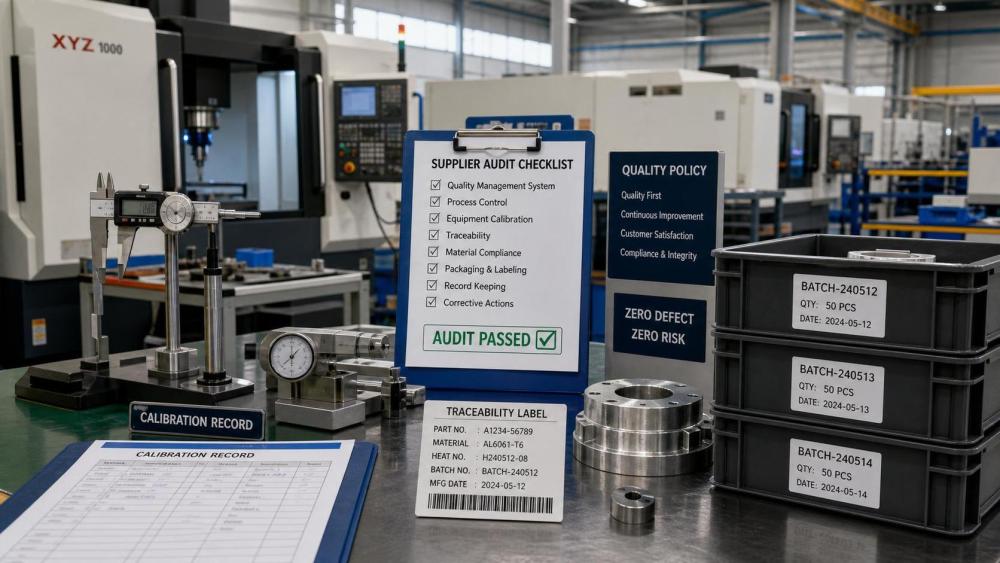
For project managers and engineering leads, the industrial supplier audits process is more than a checklist. It is a practical control system for reducing compliance risk before orders scale.
In global sourcing, audit gaps rarely stay small. A missing permit, weak traceability record, or poor process discipline can quickly turn into delays, claims, or regulatory exposure.
That is why a structured industrial supplier audits process matters. It helps teams confirm capability, validate controls, and identify warning signs before they hit production schedules.
In practice, the best audits do not focus only on documents. They test whether the supplier can repeatedly meet technical, legal, quality, and delivery requirements under real operating conditions.
This article breaks down the industrial supplier audits process into workable steps. It also shows how to lower compliance risk without turning the audit into a slow, box-ticking exercise.
Why Compliance Risk Builds Up Fast in Industrial Supply Chains
Industrial procurement carries layered risk. Product specifications, export controls, labor standards, environmental rules, and customer-specific requirements often overlap in the same project.
The more global the supplier base becomes, the more variation appears in plant discipline, reporting quality, subcontractor control, and local regulatory enforcement.
A supplier may look qualified on paper. Yet the real risk often sits deeper, inside calibration routines, material traceability, change control, training records, or waste handling practices.
This is where the industrial supplier audits process becomes valuable. It turns broad compliance concerns into verifiable checkpoints linked to operations, documents, and management behavior.
From a project execution angle, audits also protect schedule integrity. If a supplier fails late, the cost is rarely limited to replacement sourcing. Requalification, logistics shifts, and client escalation follow.
Step 1: Define the Audit Scope Before You Review Anything
A strong industrial supplier audits process starts with scope discipline. Without it, teams collect too much low-value data and miss the few controls that actually decide compliance risk.
Start by mapping the supplier against the project requirement. Identify product category, critical components, applicable standards, destination market rules, and customer contract obligations.
Then separate the audit into three layers:
- Business legitimacy and regulatory standing
- Operational capability and process control
- Risk areas tied to the specific order or project
This approach makes the industrial supplier audits process more focused. It also avoids treating a low-risk packaging vendor the same way as a critical pressure vessel fabricator.
What to define in the scope
- Products and processes covered by the audit
- Required certifications, permits, and technical approvals
- Key compliance risks by country and end market
- Needed evidence, sample records, and plant access points
- Scoring logic and pass-fail thresholds
Step 2: Run a Pre-Audit Document Review That Looks for Gaps, Not Just Files
Before the site visit, request a targeted document package. The point is not to collect paperwork for its own sake. The point is to find contradictions, missing controls, and weak governance.
Useful records usually include licenses, ISO certifications, organization charts, process flow maps, inspection plans, calibration logs, supplier approval procedures, and recent corrective actions.
In a mature industrial supplier audits process, reviewers compare documents against each other. A valid certificate means little if training records, machine maintenance, and batch traceability do not support it.
This stage also helps prioritize the on-site audit. If the document set shows repeated late calibration, for example, inspection equipment control should receive extra attention during the visit.
Common early warning signs
- Expired permits or incomplete renewals
- Different company names across licenses and invoices
- Missing subcontractor controls
- Corrective actions with no closure evidence
- Quality manuals that do not match shop-floor reality
Step 3: Audit the Factory Floor Where Compliance Risk Actually Lives
The on-site review is the core of the industrial supplier audits process. It reveals whether written controls are active, understood, and repeatable under real production pressure.
Walk the process from inbound materials to final dispatch. Follow product flow, operator movement, inspection points, storage conditions, and nonconforming material handling.
Focus on process evidence, not polished presentations. Ask operators how work instructions are updated, how rejected material is isolated, and how deviations are approved.
In actual projects, this is often where compliance risk becomes visible. Teams find undocumented rework, uncontrolled tooling, mixed material lots, or unapproved secondary suppliers.
Key areas to verify on site
- Material receiving, labeling, and traceability
- Equipment condition, calibration, and maintenance discipline
- Process controls for critical dimensions or properties
- Operator qualification and training refresh cycles
- Environmental, health, and safety practices
- Final inspection, packaging, and shipment release
Step 4: Test Traceability, Change Control, and Subsupplier Management
Many audit failures come from hidden complexity. A supplier may run a clean facility, yet still expose the buyer through weak traceability or poorly managed external processing.
A reliable industrial supplier audits process checks whether every critical input can be traced to source, process batch, inspection result, and outgoing shipment.
Change control matters just as much. Engineering changes, raw material substitutions, tooling updates, and process deviations must follow approval rules that are documented and enforced.
Subsuppliers need similar scrutiny. If coating, heat treatment, electronics assembly, or testing is outsourced, the main supplier must prove oversight rather than simply share a vendor list.
Step 5: Score Findings by Business Impact, Not Just Audit Severity
A practical industrial supplier audits process does more than label findings as major or minor. It connects each issue to delivery, safety, regulatory, financial, and reputation impact.
For example, incomplete housekeeping may be a local issue. Weak material identification on critical alloy components is a much larger compliance risk with possible project-wide consequences.
A simple risk model often works best. Rate findings by likelihood, impact, and detectability. Then define clear triggers for supplier approval, conditional approval, or disqualification.
This helps sourcing, quality, and project teams make the same decision from the same evidence. It also reduces disputes when timelines are tight and commercial pressure rises.
Step 6: Close the Audit with Corrective Actions That Can Be Verified
The industrial supplier audits process does not end with a report. Compliance risk only drops when corrective actions are specific, owned, dated, and backed by objective evidence.
Ask suppliers to provide root cause, containment, permanent correction, and prevention measures. Keep the response format tight so actions are easy to compare and verify.
In real operations, vague commitments cause repeat findings. Phrases like “staff retrained” or “management reminded the team” are not enough without records, revised controls, and follow-up checks.
When the risk level is high, add a re-audit or production release hold. That creates a direct link between compliance closure and commercial continuation.
What a solid closure package includes
- Updated procedures with revision control
- Training evidence and competence records
- Photos, logs, or system screenshots
- Sample production records after correction
- Management sign-off and review timing
How to Make the Industrial Supplier Audits Process More Effective Over Time
Once the basic audit cycle works, the next step is consistency. The industrial supplier audits process improves when findings are compared across plants, regions, and commodity groups.
Look for recurring patterns. Repeated issues in traceability, subcontractor control, or document accuracy usually point to structural weaknesses rather than isolated mistakes.
It also helps to connect audit results with supplier performance data. Late delivery, high defect rates, warranty claims, and compliance findings often tell the same story from different angles.
Organizations such as GTIIN increasingly see value in this wider view. Market intelligence, sourcing benchmarks, and supply chain risk analysis make audits sharper and more decision-ready.
The most effective industrial supplier audits process is not the longest one. It is the one that turns evidence into action early, before compliance risk becomes an expensive project problem.
A Practical Audit Sequence to Use Now
- Classify the supplier by product criticality and regulatory exposure.
- Define the audit scope around actual project and market requirements.
- Review documents for inconsistencies before the visit.
- Audit the production flow, records, and operator practices on site.
- Test traceability, change control, and outsourcing oversight.
- Rank findings by business impact and compliance risk.
- Verify corrective actions before expanding orders or approvals.
Applied well, this industrial supplier audits process gives procurement and project teams a clearer basis for supplier decisions. More importantly, it reduces the chance of discovering critical compliance failures too late.
Weekly Insights
Stay ahead with our curated technology reports delivered every Monday.
Recommended News
 Supply ChainOct 15, 2026How to choose a supply chain strategy for unpredictable demand
 Supply ChainOct 14, 2026How to assess an industrial equipment supplier's spare parts support
 Supply ChainOct 14, 2026EU Updates CSDDD Guidance on Global Supply Chain Due Diligence
 Global SourcingOct 13, 2026How to assess industrial automation suppliers for legacy integration