Asia-Europe Rail Rates Jump 42% as Bookings Tighten
On 2 July 2026, the latest freight update pointed to a sharp shift in the operating conditions for China-Europe rail transport: all-in rates from Yiwu and Chengdu to Duisburg rose 42% month on month, while major terminals reported booking lead times stretching to 18 days. For importers, distributors, manufacturers, and logistics providers handling time-sensitive industrial goods and spare parts, this is not only a transport cost story. It is also a trade execution signal, because longer booking cycles and tighter capacity directly affect procurement timing, delivery commitments, and the practical allocation of risk under existing contract terms.
What the 2 July freight data confirms
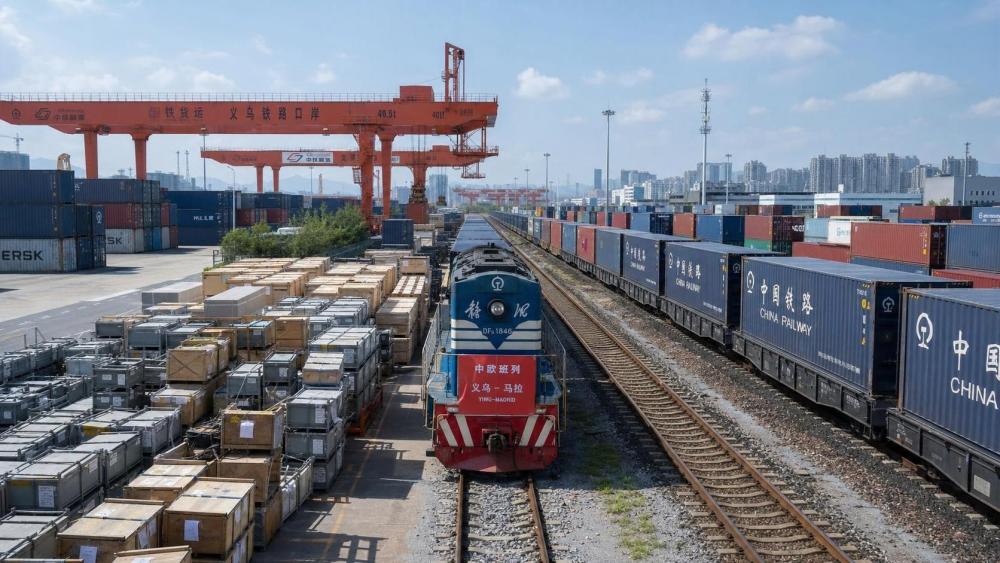
According to Drewry’s Global Freight Index released on 2 July 2026, average all-in rail freight rates on the Yiwu-Duisburg and Chengdu-Duisburg corridors increased 42% compared with the previous month. The reported rise came amid stronger demand for China-Europe rail alternatives after renewed Houthi attacks affected shipping choices.
The same update indicated that major terminals, including Malaszewicze and Khorgos, were showing forward booking lead times of 18 days. The reported effect was a disruption to just-in-time procurement for EU distributors, along with pressure on importers to secure capacity earlier, revisit Incoterms, and reassess multimodal routing plans, particularly for time-sensitive industrial goods and spare parts.
Where the pressure is likely to show first
Importers and distributors facing tighter delivery assumptions
From an industry perspective, the immediate pressure is likely to fall on importers and EU distribution businesses that rely on predictable replenishment windows. When rail booking lead times extend and rates move sharply within a month, the business impact is not limited to freight budgets. It also affects delivery promises, replenishment cycles, and the assumptions used in purchase orders and customer scheduling. What deserves closer attention is whether existing trade terms and delivery clauses still reflect actual transit planning conditions.
Manufacturers dependent on industrial parts and replenishment flow
For processing and manufacturing businesses, the issue is likely to appear in inbound material planning and spare-parts availability. Analysis shows that time-sensitive industrial goods are specifically exposed under the reported conditions, because longer forward booking cycles can weaken just-in-time procurement models. Companies in this position may need to review whether current procurement schedules, internal buffer assumptions, and routing choices remain workable under tighter rail capacity.
Logistics and supply chain service providers under contract pressure
For freight forwarders and multimodal service providers, the reported changes increase the importance of operational transparency and contract alignment. If shippers are being forced to lock in space earlier and reconsider routing, service providers may face more requests for revised booking terms, updated transport plans, and clearer allocation of timing and cost risk. Observably, this is where documentation discipline becomes more relevant, especially where delivery commitments and handover points are tied to specific trade terms.
What companies should review now
Capacity booking and procurement timing
Analysis shows that companies moving goods on these corridors should pay closer attention to booking lead times rather than focusing only on the headline rate increase. An 18-day forward booking window can alter procurement sequencing, internal approval timing, and shipment release planning. Businesses using rail for urgent replenishment may need to examine whether current ordering cycles still match market conditions.
Incoterms and commercial allocation of risk
The event summary explicitly points to renegotiation of Incoterms, which makes contract review a practical priority. It is more appropriate to understand this as a trade execution issue than a purely logistics issue, because changing booking conditions can shift who bears transport cost volatility, timing risk, and route-related disruption. Companies should therefore review whether current sales and purchase agreements still match actual shipping exposure.
Multimodal routing and document consistency
What deserves closer attention is the need to reassess multimodal routing strategies. Where companies consider route adjustments in response to rail congestion, they should watch for knock-on effects in shipping instructions, delivery documentation, and internal compliance records. The provided information does not set out a new formal regulatory rule, but the operating environment itself is changing in a way that can affect how firms document, approve, and execute cross-border deliveries.
Priority goods and after-sales support exposure
For businesses handling spare parts and other time-sensitive industrial shipments, after-sales service commitments may become harder to maintain if transport planning assumptions are not updated. Observably, companies in this category should track whether urgent service parts, warranty replacements, or customer support inventory depend too heavily on one corridor or one booking rhythm.
Why this reads as an execution signal, not just a freight headline
Analysis shows that the main significance of this update lies in execution conditions across trade and supply chain management. No new law, certification rule, or official standard text is set out in the provided information. However, the reported rise in rail rates and longer terminal booking queues function as a real operating constraint that can force earlier capacity commitment, contract review, and route reassessment. It is more appropriate to understand this as a market-driven execution signal with compliance and trade-term implications, rather than as a completed regulatory change.
From an industry perspective, continued attention should focus on whether these transport conditions begin to influence tender documents, delivery clauses, supplier scheduling requirements, or documentary expectations in cross-border transactions. Those developments are not confirmed in the provided information and therefore remain matters to watch.
How the market is likely to interpret this update
At this stage, the reported development should be read as a concrete warning that logistics disruption is feeding directly into procurement discipline, delivery planning, and contract structure. The confirmed facts support the view that rail has become more constrained and more expensive on the cited corridors within the stated period. The broader commercial effects are plausible and already visible in booking behavior, but the full downstream response in contracts, routing practice, and supply chain execution still requires observation rather than assumption.
Basis of this article and points still to verify
This article is based on the user-provided news title, event date, and event summary. For events of this type, relevant source categories often include official announcements, regulator releases, customs or trade authority information, industry association updates, standards body materials, and reporting by established industry media. A specific official source link was not provided in the input, so further verification remains necessary.
Observably, the points that still warrant monitoring include any later official wording, changes in execution practice, adjustments in tender or delivery documentation, market feedback from supply chain participants, and how companies ultimately implement contract, routing, and procurement changes in response to the reported rail conditions.
Weekly Insights
Stay ahead with our curated technology reports delivered every Monday.
Recommended News
 Supply ChainOct 15, 2026How to choose a supply chain strategy for unpredictable demand
 Supply ChainOct 14, 2026How to assess an industrial equipment supplier's spare parts support
 Supply ChainOct 14, 2026EU Updates CSDDD Guidance on Global Supply Chain Due Diligence
 Global SourcingOct 13, 2026How to assess industrial automation suppliers for legacy integration