Trade Risk Management Checklist: Common Gaps That Lead to Costly Delays
Trade Risk Management Checklist: Common Gaps That Lead to Costly Delays
A robust trade risk management checklist can mean the difference between smooth cross-border execution and costly delays that disrupt quality, safety, and delivery targets.
Hidden gaps usually appear before cargo moves. They start in supplier screening, compliance review, document control, and shipment coordination.
When these gaps stay unnoticed, the result is rarely minor. It often becomes a chain of inspections, holds, rework, penalties, and missed production windows.
This article breaks down a practical trade risk management checklist, focusing on the blind spots that most often trigger avoidable delays.
Why a Trade Risk Management Checklist Fails in Practice
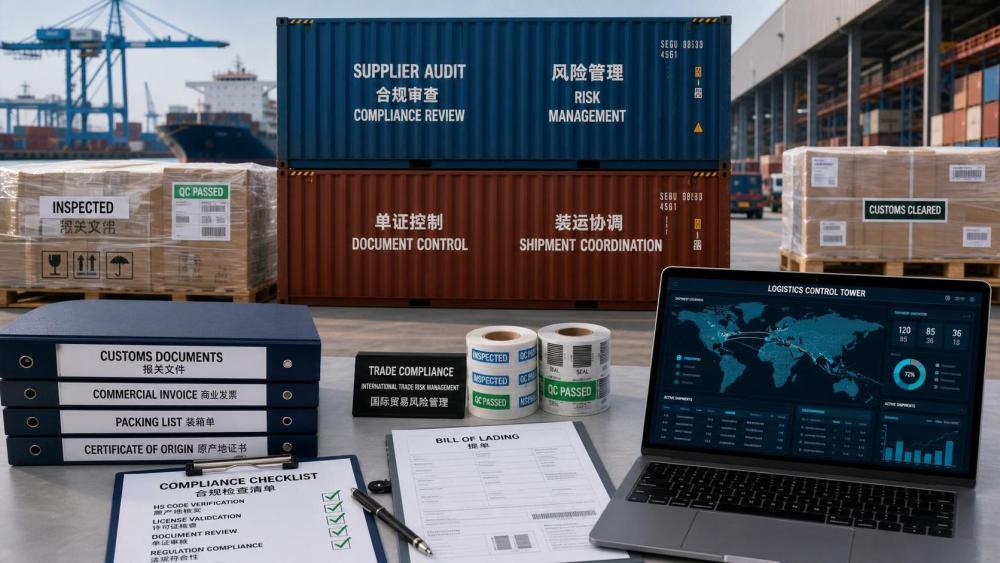
Many teams already have a trade risk management checklist. The problem is not the document itself. The problem is how narrow, static, or disconnected it becomes.
In real operations, trade risk management sits between quality, safety, procurement, logistics, finance, and customs. If one function works in isolation, delays spread fast.
A useful checklist should not read like a compliance archive. It should support shipment readiness, document accuracy, supplier reliability, and response speed.
That also means the best trade risk management checklist is reviewed before sourcing, before booking, before loading, and before customs submission.
Gap 1: Weak Supplier and Site Verification
The first major gap appears long before shipment. Teams approve suppliers based on price, lead time, or sample quality, but overlook operational stability.
A supplier may pass initial checks, yet still fail under export pressure. Missing licenses, subcontracting without disclosure, and weak safety controls often surface too late.
What to verify early
- Business registration, export authority, and product-specific certifications
- Factory audit status, production controls, and traceability systems
- Sub-supplier exposure for critical parts, chemicals, or packaging materials
- Incident history involving quality recalls, labor issues, or safety violations
A stronger trade risk management checklist should require evidence, not verbal confirmation. That simple shift reduces false confidence.
Gap 2: Incomplete Product Compliance Review
Cross-border shipments fail quickly when product compliance is treated as a last-step formality. This is especially costly for regulated or safety-sensitive goods.
Teams often confirm destination standards, but miss upstream requirements tied to material content, labeling, packaging, testing methods, or export controls.
In actual trade flows, one missing declaration can stop release. One outdated test report can trigger re-inspection. One incorrect label can force relabeling at port.
Common compliance blind spots
- Country-specific product safety rules and restricted substance lists
- Correct HS classification and duty treatment
- Battery, chemical, pressure, food-contact, or machinery declarations
- Marking, language, packaging, and origin labeling requirements
An effective trade risk management checklist should link each product family to a compliance matrix by market, not just by SKU.
Gap 3: Documentation Control Starts Too Late
Document errors remain one of the most frequent causes of customs delays. They also remain one of the most preventable.
The issue is timing. Many teams check invoices, packing lists, certificates, and shipping marks only after goods are packed or already in transit.
By then, every correction is slower and more expensive. Some cannot be fixed without reissuing documents across multiple parties.
Build document review into the checklist
- Confirm product descriptions match commercial and customs usage.
- Align quantities, weights, and dimensions across every file.
- Check consignee, importer, and notification details carefully.
- Validate certificate dates, signatories, and regulatory references.
- Review draft documents before cargo handover.
This part of the trade risk management checklist should have clear ownership. Shared responsibility often turns into no responsibility.
Gap 4: Poor Handoffs Between Quality, Safety, and Logistics
Costly delays often happen during handoffs, not during inspections. Quality signs off on product conformity, but logistics never receives the latest handling restrictions.
Safety teams may flag temperature limits, stacking rules, or hazardous components, yet booking instructions still use standard cargo assumptions.
That mismatch creates damaged goods, rejected loads, or port-side repacking. In some cases, it leads to outright refusal by carriers.
A practical trade risk management checklist should connect operational data across functions before cargo release.
Critical handoff points
- Inspection release status and approved batch numbers
- Packaging integrity and transport suitability
- Dangerous goods classification or handling instructions
- Seal control, loading photos, and container condition checks
Gap 5: No Trigger-Based Monitoring for Trade Changes
A checklist that never changes becomes stale fast. Trade environments shift through sanctions, tariff actions, port disruptions, carrier rule updates, and policy revisions.
More importantly, not every update matters equally. Teams need trigger-based monitoring linked to shipment risk, not just general market news.
This is where GTIIN-style trade intelligence becomes useful. Reliable market tracking helps teams focus on risks with direct operational impact.
Useful triggers to add
A modern trade risk management checklist should tell teams when to escalate, not just what to review.
Gap 6: Corrective Action Exists, but Response Time Does Not
Many organizations capture nonconformities well. Fewer define response deadlines for trade-critical issues. That gap turns small findings into shipment failures.
For example, a packaging defect may seem manageable. But if replacement materials need export relabeling, the schedule can collapse quickly.
Your trade risk management checklist should assign response windows by severity, shipment date, and regulatory exposure.
Minimum response fields
- Issue description and affected shipment reference
- Owner, deadline, and escalation path
- Containment decision before loading
- Verification evidence before closure
A Practical Trade Risk Management Checklist to Use
If the checklist is too long, teams stop using it. If it is too broad, nobody knows what matters. A workable version should be short, timed, and role-based.
- Validate supplier status, licensing, and production controls.
- Map product compliance requirements by destination market.
- Confirm test reports, certifications, and labeling rules.
- Review draft trade documents before final packing.
- Align inspection release with logistics and handling instructions.
- Screen for current sanctions, tariff changes, and route disruptions.
- Assign corrective-action owners and response deadlines.
- Hold a final shipment readiness check before dispatch.
This kind of trade risk management checklist works because it stays close to real decision points. It is built for execution, not for filing.
Final Takeaway
The most expensive delays usually come from ordinary gaps. A missed document detail, an unverified supplier claim, or a broken handoff can block an entire shipment.
A stronger trade risk management checklist helps prevent that by making risk visible earlier, ownership clearer, and response faster.
In practice, the best results come from reviewing the checklist against live trade conditions, supplier performance, and actual delay cases.
Start with the common gaps above, tighten the controls that affect shipment readiness, and turn your trade risk management checklist into a working tool that protects delivery, quality, and safety at the same time.
Have questions about this sector analysis, or seeking best practices specific to your niche? Drop us a line below and let the senior consultants at GTIIN assist you.
“We respect your privacy. Your information is strictly confidential.”
Weekly Insights
Stay ahead with our curated technology reports delivered every Monday.
Recommended News
 Supply ChainNov 10, 2026China Extends Pause on 24% Additional Tariff on US Goods by Two Months
 Industry StandardsNov 10, 2026Which imports are subject to EU carbon border compliance?
 Global SourcingNov 09, 2026USTR Extends 178 China Section 301 Tariff Exclusions to January 2027
 Supply ChainNov 09, 2026How can a tariff risk management dashboard track cost exposure?