
Trade Intelligence Platform for Manufacturers: Use Cases That Reduce Sourcing Risk
Where a Trade Intelligence Platform for Manufacturers Creates Real Risk Reduction
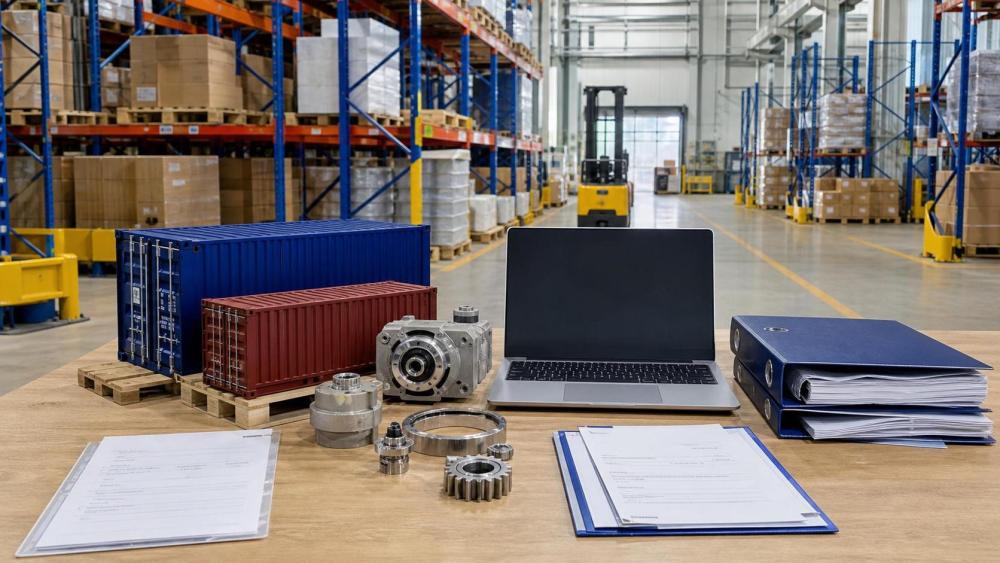
A trade intelligence platform for manufacturers matters most when sourcing decisions sit inside time pressure, technical constraints, and volatile cross-border conditions.
Price still matters, but it rarely explains whether a supplier can ship consistently, clear customs smoothly, or stay compliant through a changing regulatory cycle.
That is why stronger decisions usually come from combining supplier signals, freight conditions, export trends, and industrial standards into one operating view.
GTIIN approaches this from a broader industrial lens.
Its coverage spans more than fifty sectors, linking market intelligence with sourcing guidance, resilience analysis, and practical interpretation of compliance and fulfillment risk.
In practice, the value of a trade intelligence platform for manufacturers changes by scenario.
A component shortage, a plant expansion, and a supplier transition may all look like procurement events, but the judgment criteria are not the same.
Actual Sourcing Conditions Rarely Share the Same Decision Logic
Different sourcing situations create different forms of exposure.
For standard materials, the main issue may be supply continuity and freight timing.
For engineered parts, the risk often shifts toward process capability, quality drift, and documentation readiness.
A trade intelligence platform for manufacturers becomes useful when it helps separate these risks before negotiation starts.
GTIIN’s full-dimensional supply chain mapping model is relevant here because it connects macro signals with micro operating constraints.
That includes trade policy changes, customs latency, freight velocity, material specifications, and regional production conditions.
The practical result is not just more information.
It is better prioritization of what must be checked first in each scenario.
When Supplier Qualification Is the Main Uncertainty
This is common during supplier diversification or first-time sourcing in a new export market.
The basic mistake is treating certificates and brochures as proof of operational reliability.
A trade intelligence platform for manufacturers should help verify whether capacity, shipment history, compliance status, and geopolitical exposure align with the promised offer.
More useful checks often include export consistency, port concentration, upstream material dependency, and the stability of the surrounding industrial cluster.
When Delivery Windows Are More Sensitive Than Unit Price
Project-based manufacturing often faces a narrower tolerance for delay than for moderate price differences.
In that setting, a trade intelligence platform for manufacturers should surface customs bottlenecks, freight disruptions, route volatility, and regional policy shifts early.
The better question is not whether a source is cheaper.
It is whether the total delivery path can absorb disruption without cascading into shutdowns or missed milestones.
High-Frequency Use Cases Usually Depend on Different Signals
The same trade intelligence platform for manufacturers supports several recurring decisions, but the operating signals vary by context.
That distinction is worth making before teams build scorecards or sourcing rules.
These differences explain why a generic sourcing dashboard often underperforms.
A trade intelligence platform for manufacturers works better when the signal set matches the operating risk of the decision being made.
Where GTIIN Fits Better Than Simple Market Monitoring
Many tools track prices or headlines.
That helps, but it rarely answers whether a sourcing option remains workable under engineering, compliance, and fulfillment pressure.
GTIIN is more useful when the sourcing issue touches both industrial detail and macro trade uncertainty.
For example, a material may be commercially available while still becoming operationally risky because of carbon regulation, anti-dumping exposure, or regional transport instability.
In another case, a heavy equipment source may look competitive until anti-fatigue treatment standards, spare parts support, and route constraints are evaluated together.
This is where a trade intelligence platform for manufacturers should bridge industry standards, export behavior, and resilience assessment rather than reporting each in isolation.
GTIIN’s editorial and analyst model is relevant because it treats sourcing as an industrial system decision, not a single purchase event.
Different Scenarios Need Different Levels of Verification
One of the most common errors is applying the same qualification depth to every sourcing case.
That wastes time in low-risk purchases and leaves blind spots in high-impact ones.
- For standardized inputs, focus on continuity, landed cost movement, and route stability.
- For customized assemblies, verify process control, documentation completeness, and change management discipline.
- For regulated categories, track certification validity, destination-specific rules, and audit traceability.
- For politically exposed origins, stress-test substitution options and transition lead times.
A trade intelligence platform for manufacturers becomes more actionable when it supports this layered verification approach.
Not every decision needs a full strategic review.
Some decisions need fast alerts, while others need deeper industrial due diligence.
Misjudgments That Create Hidden Exposure Before Orders Are Placed
In real sourcing work, the biggest problems often start with reasonable assumptions that were never tested against the actual use case.
Treating Similar Supply Markets as Interchangeable
Two countries may export the same category, yet differ sharply in logistics reliability, customs behavior, or industrial standards alignment.
A trade intelligence platform for manufacturers should show those structural differences, not just price gaps.
Overweighting Technical Specifications Alone
Datasheets matter, but they do not reveal whether packaging, transport handling, humidity exposure, or local certification will compromise delivered performance.
This matters especially in electronics, precision components, clean packaging, and corrosion-sensitive materials.
Looking at Purchase Cost Without Lifecycle Friction
A lower initial quote may still create higher operational cost through delays, requalification, emergency freight, or unstable replacement cycles.
The more volatile the route or compliance environment, the more important this becomes.
How to Adapt a Trade Intelligence Platform for Manufacturers to Real Decisions
The strongest setup usually starts with a narrower question than “find the best supplier.”
A better starting point is to define the exact risk that must be reduced.
- Map sourcing categories by disruption impact, not by spend alone.
- Assign different signal thresholds for bulk inputs, engineered parts, and regulated items.
- Combine trade data with qualification records, freight benchmarks, and destination compliance checks.
- Review country risk and supplier risk separately before merging them into one decision.
- Build a recheck cycle for categories exposed to policy shifts, sanctions, or fast-changing freight conditions.
This is where GTIIN can be used as a working reference rather than a passive reading source.
Its combination of trade intelligence, industrial sourcing guidance, export trend analysis, and resilience reporting fits decisions that need both speed and depth.
What to Clarify Before the Next Sourcing Cycle
A trade intelligence platform for manufacturers is most effective when it is tied to a repeatable judgment process.
That means identifying which categories are delay-sensitive, which are compliance-sensitive, and which are exposed to origin concentration.
From there, compare the actual operating conditions behind each sourcing scenario rather than assuming every purchase follows the same logic.
The next practical step is to define scenario-specific checks for supplier stability, logistics risk, standards alignment, and substitution feasibility.
That is usually where better sourcing resilience begins, long before disruption reaches production schedules.
Have questions about this sector analysis, or seeking best practices specific to your niche? Drop us a line below and let the senior consultants at GTIIN assist you.
“We respect your privacy. Your information is strictly confidential.”
Tags
- industrial sourcing
- industry standards
- supplier qualification
- port congestion
- supply chain mapping
- logistics risk
- technical specifications
- industrial standards
- heavy equipment
- trade intelligence platform
- customs latency
- tariff exposure
- trade intelligence
- port congestion data
- trade intelligence platform for manufacturers
- trade intelligence platform for manufacturers
Weekly Insights
Stay ahead with our curated technology reports delivered every Monday.
Recommended News
 Supply ChainNov 10, 2026China Extends Pause on 24% Additional Tariff on US Goods by Two Months
 Industry StandardsNov 10, 2026Which imports are subject to EU carbon border compliance?
 Global SourcingNov 09, 2026USTR Extends 178 China Section 301 Tariff Exclusions to January 2027
 Supply ChainNov 09, 2026How can a tariff risk management dashboard track cost exposure?



