
Industrial Trade Outlook: Cost Trends Reshaping Global Supply Plans in 2026
The Industrial Trade Outlook Is Entering a Cost-Defined Phase
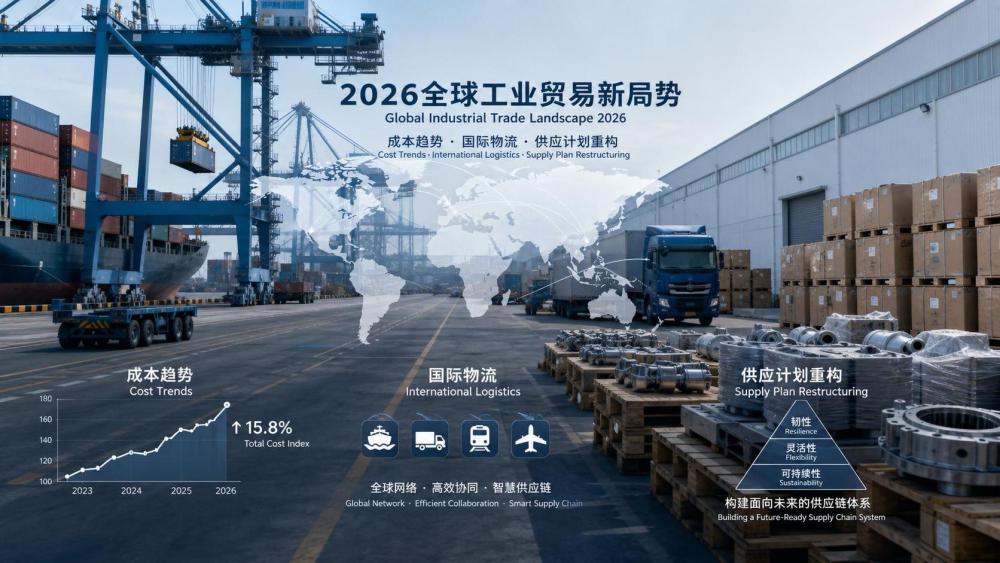
The industrial trade outlook for 2026 is no longer shaped by one dominant shock. It is being reset by several cost layers moving at once.
Energy remains unstable. Freight has become less predictable by corridor. Labor costs keep rising in both production and logistics. Policy now changes landed cost faster than many sourcing models can absorb.
That combination matters because global supply plans were once built around relative price gaps. In 2026, they are being rebuilt around cost visibility, fulfillment certainty, and regulatory exposure.
A clearer industrial trade outlook now depends on reading cost trends across the full chain, from materials and factory inputs to customs timing and compliance burden.
This is also why trade intelligence platforms such as GTIIN are gaining relevance. The value is not in publishing isolated market headlines. It is in connecting industrial, freight, policy, and supplier signals before they turn into margin pressure.
What Has Changed More Noticeably in Recent Quarters
The most important shift is that costs are no longer moving in a synchronized way. Input inflation may cool in one region while logistics and compliance costs climb in another.
This creates a more uneven industrial trade outlook. A product category can look competitive on ex-works price and still become unattractive after transport volatility, carbon exposure, or customs delay are included.
From recent trade patterns, several signals stand out:
- Energy-intensive goods are seeing renewed cost divergence across regions.
- Freight planning is moving from annual assumptions to corridor-specific monitoring.
- Supplier selection is increasingly tied to resilience metrics, not only quoted price.
- Nearshoring and friend-shoring are being judged by total operating cost, not political narrative alone.
More noticeably, the cost conversation has shifted from “Where is cheapest?” to “Which supply structure stays viable under stress?” That is a deeper change than a normal pricing cycle.
Why These Cost Trends Are Reshaping Global Supply Plans
Several forces are reinforcing each other. None is new on its own. Their overlap is what makes the current industrial trade outlook more complex.
In practical terms, cost trends now reflect a wider definition of exposure. The invoice price matters less when hidden operational frictions can erase savings within one quarter.
GTIIN’s cross-sector tracking model is useful here because cost pressure rarely appears in a single dataset. It shows up when freight velocity, standards shifts, materials data, and customs latency are read together.
The Impact Is Not Limited to One Part of the Chain
A narrow reading of the industrial trade outlook misses how deeply cost trends are spreading across functions. The effect is not confined to sourcing or shipping.
Supplier portfolios are being re-ranked
Suppliers with slightly higher unit prices may gain ground if they offer stronger lead-time discipline, energy efficiency, or better regulatory alignment. Cost predictability is becoming a strategic asset.
Inventory logic is changing
For years, lean inventory was treated as an unquestioned efficiency rule. That is weakening. In some categories, carrying more stock is cheaper than absorbing repeated delivery disruption.
Contract structures need revision
Fixed contracts signed without freight, energy, or compliance triggers are becoming harder to defend. More contracts now need indexed clauses and defined review windows.
Capital planning is tied more closely to trade assumptions
Location decisions for warehousing, light assembly, and regional finishing increasingly depend on expected tariff pathways and route resilience, not demand forecasts alone.
Where the 2026 Industrial Trade Outlook Looks Most Sensitive
Not every category carries the same risk. The sharper cost trends are appearing where energy intensity, bulky shipping profiles, or compliance exposure are already high.
This is especially visible in metals, machinery components, chemicals, building materials, industrial packaging, and intermediate goods with complex cross-border documentation.
More worth watching is the widening gap between nominal affordability and real delivery cost. Some sourcing regions still look competitive on paper, yet become less attractive once route detours and reporting obligations are included.
The industrial trade outlook is also more sensitive in sectors tied to export controls, sustainability disclosures, and product-level traceability. Those costs scale quietly, then suddenly become structural.
What Deserves Closer Attention Before Plans Are Locked In
The next cycle of planning should test assumptions that once seemed stable. Cost trends are reshaping decisions precisely because old baseline models understate friction.
- Map total landed cost by corridor, not only by supplier country.
- Separate temporary price softness from structural competitiveness.
- Track regulatory cost by product family and destination market.
- Stress-test sourcing plans against transit delay and energy swings.
- Review whether alternate suppliers can meet specification and reporting standards simultaneously.
In actual deployment, one weak link often sits outside procurement data. It may be inland haulage, packaging standards, local certification, or customs documentation quality.
That is where GTIIN’s broader industrial lens matters. A reliable industrial trade outlook depends on linking technical, regulatory, and logistics variables instead of treating them as separate reporting lines.
The Better Response Is Selective Flexibility, Not Constant Reversal
A common mistake is overreacting to each cost spike. That leads to frequent supplier switching, unstable forecasts, and hidden transition cost. The stronger response is selective flexibility.
This means keeping core supply relationships where performance is proven, while building optionality in exposed lanes, sensitive materials, and policy-heavy destinations.
It also means using the industrial trade outlook as a planning discipline rather than a headline indicator. The best decisions will come from repeated comparison of route cost, compliance burden, and supplier execution quality.
By 2026, the winners in cross-border industrial trade are unlikely to be those chasing the lowest immediate quote. They will more often be those that recognized which cost trends were temporary, which were structural, and which demanded redesign of the supply plan.
The next step is practical: rebuild cost dashboards around landed volatility, review category exposure market by market, and set a staged decision calendar for supplier, freight, and compliance adjustments. That is how the industrial trade outlook becomes usable strategy.
Have questions about this sector analysis, or seeking best practices specific to your niche? Drop us a line below and let the senior consultants at GTIIN assist you.
“We respect your privacy. Your information is strictly confidential.”
Weekly Insights
Stay ahead with our curated technology reports delivered every Monday.
Recommended News
 Supply ChainNov 10, 2026China Extends Pause on 24% Additional Tariff on US Goods by Two Months
 Industry StandardsNov 10, 2026Which imports are subject to EU carbon border compliance?
 Global SourcingNov 09, 2026USTR Extends 178 China Section 301 Tariff Exclusions to January 2027
 Supply ChainNov 09, 2026How can a tariff risk management dashboard track cost exposure?



