Global Industrial Outlook: Freight Trends Shaping 2026 Sourcing Costs
In the global industrial outlook, freight trends have moved from an operational detail to a board-level cost signal. By 2026, sourcing economics will be shaped as much by transit reliability, routing flexibility, and policy friction as by factory gate pricing.
That shift matters across metals, machinery, chemicals, components, packaging, energy equipment, and consumer-linked industrial inputs. A supplier with a lower quoted price can still become the higher-cost option once freight volatility, customs delays, and inventory buffering are included.
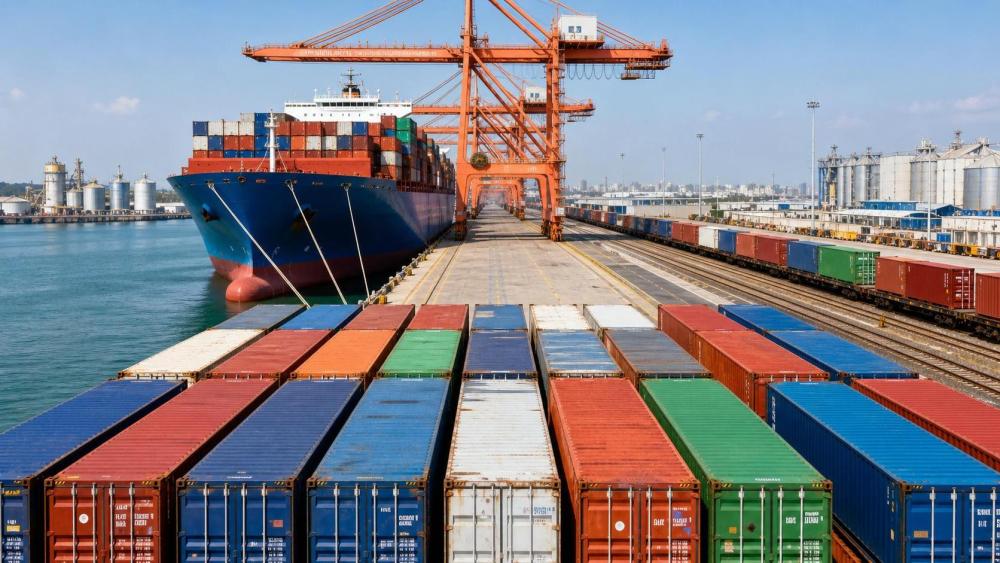
The current round of global industrial outlook freight trends also reflects a deeper structural change. Ocean carriers are adjusting capacity, ports remain uneven in performance, rail corridors face reliability gaps, and air cargo retains a premium role for urgent or high-value movements.
For cross-border planning, the question is no longer whether freight will affect sourcing costs. The practical issue is which lanes, product categories, and contract models will absorb the next wave of logistics pressure with the least damage.
Why freight now sits at the center of sourcing strategy
Freight affects landed cost, working capital, service levels, and risk exposure at the same time. That combination makes it one of the few variables able to alter supplier rankings even when product quality remains unchanged.
In earlier cycles, many companies treated transport as a downstream execution matter. Today, global industrial outlook freight trends show that logistics must be assessed during supplier qualification, category planning, and regional footprint design.
This is especially true where inputs are bulky, margin-sensitive, temperature-controlled, compliance-heavy, or tied to just-in-time production. In these cases, a one-week delay or sudden freight surcharge can erode savings very quickly.
A more disciplined view also matches the way GTIIN approaches trade intelligence. Freight is not isolated from industrial reality. It connects carrier cycles, customs latency, infrastructure quality, commodity flow, and regional regulatory change.
The main freight trends shaping 2026 costs
Ocean freight remains the most influential driver for many industrial categories. Capacity additions may soften some benchmark rates, but price stability is still vulnerable to blank sailings, alliance changes, weather events, and route diversions.
Port performance is becoming a sharper differentiator between sourcing regions. Two suppliers in the same country can carry very different risk profiles if one depends on a congested gateway and the other has access to a faster export corridor.
Rail is gaining relevance where inland production clusters need a reliable bridge to seaports or neighboring markets. Yet rail economics only work when schedules are predictable and border procedures do not cancel the transit advantage.
Air cargo is unlikely to become a mainstream mode for heavy industry, but it will remain essential for semiconductors, precision parts, medical inputs, and shutdown-avoidance shipments. The premium is often justified by the cost of lost output.
Policy-led disruptions are another defining force. Sanctions, export controls, carbon-related compliance, security reviews, and tariff changes increasingly affect route selection and clearance times, not only product eligibility.
A practical view of cost pressure
How regional sourcing comparisons are changing
The old comparison model focused on labor, energy, and factory scale. Global industrial outlook freight trends now require a broader lens that includes corridor resilience, port depth, inland connectivity, and customs predictability.
Asia remains central for industrial manufacturing depth, but freight exposure differs sharply by subregion and export gateway. A low-cost production base can lose its edge if shipment visibility is weak or transshipment risk is persistent.
Europe brings compliance strength and mature infrastructure, yet cost pressure can rise through energy-linked logistics, carbon-related reporting, and congestion at key inland and maritime nodes. For some categories, resilience comes with a premium.
The Middle East is increasingly relevant as a logistics and industrial processing hub. Its value lies not only in location, but in the ability to support route diversification between Asia, Europe, and Africa.
Nearshoring and friendshoring continue to attract attention, but the economics are uneven. Transport savings can be offset by lower supplier density, weaker tier-two ecosystems, or more expensive expedited freight when demand spikes.
What landed cost analysis should include in 2026
A useful landed cost model now needs more than product price plus freight. It should capture delay probability, buffer inventory, container utilization, customs handling, insurance, carbon exposure, and mode-switch scenarios.
That is where many sourcing decisions still break down. Teams compare static quotes while the real cost outcome depends on how a lane behaves under stress. GTIIN’s research model is valuable because it links industrial data with route behavior.
For heavy equipment, steel products, minerals, or chemicals, freight often changes margin more than unit purchase price does. For electronics and precision assemblies, the bigger issue may be schedule integrity rather than absolute freight spend.
In practical terms, 2026 planning should test at least three cases: normal flow, moderate disruption, and severe lane interruption. A supplier that only wins in the normal case is rarely the strongest long-horizon choice.
Key items to review before awarding volume
- Primary export port and backup port access
- Average customs clearance time and recent volatility
- Container availability during peak shipping months
- Mode substitution options for urgent replenishment
- Exposure to sanctions, tariff reviews, or carbon reporting rules
- Supplier willingness to share logistics data and exception alerts
Where freight trends matter most by industrial scenario
Not every category reacts in the same way. Bulk commodities are highly sensitive to vessel rates and terminal efficiency. Engineered components depend more on schedule precision and packaging integrity across multiple handoff points.
Capital equipment sourcing often looks manageable on paper until oversized cargo handling, port restrictions, or inland escort requirements are added. In those projects, logistics feasibility needs to be checked before commercial commitment.
Industrial automation, clean-energy systems, and semiconductor-linked inputs sit at the intersection of freight, compliance, and technology policy. A route that is fast today may become constrained by export control reviews tomorrow.
Agricultural infrastructure, corrosion-sensitive materials, and biosecurity-related products present another layer of complexity. Transit duration influences not only cost, but also technical performance, shelf condition, and certification validity on arrival.
Reading signals earlier than the market
The most useful response to global industrial outlook freight trends is not constant route switching. It is earlier signal detection. Cost pressure usually appears first in capacity allocation, schedule slippage, booking terms, and customs inspection behavior.
Decision quality improves when freight data is read alongside supplier lead times, order concentration, commodity movement, and regional policy developments. That integrated view is increasingly necessary in a fragmented trade environment.
Several indicators deserve regular tracking:
- Carrier blank sailing announcements and vessel schedule reliability
- Port dwell time and transshipment delay trends
- Rail border crossing consistency on key inland routes
- Air cargo rate spikes tied to seasonal or geopolitical shocks
- Trade policy updates affecting customs checks or documentation scope
Those signals are most useful when translated into sourcing decisions. That may mean rebalancing order allocation, adjusting Incoterms, renegotiating safety stock ownership, or qualifying a second lane before disruption hits.
A grounded way to prepare for 2026
The next phase of sourcing discipline will reward organizations that treat freight as part of industrial strategy, not merely transport execution. The strongest plans combine supplier capability, logistics resilience, policy awareness, and realistic landed cost modeling.
This is where global industrial outlook freight trends become actionable. Review the categories with the highest logistics sensitivity, map the corridors behind the top suppliers, and test whether the current sourcing mix still works under moderate disruption.
A useful next step is to build a lane-by-lane comparison using rate benchmarks, transit consistency, customs risk, and inventory implications. From there, decisions on regional diversification or contract structure become more evidence-based and far less reactive.
In a market shaped by uncertainty, the companies that read freight correctly will not just lower avoidable cost. They will protect continuity, preserve optionality, and make better sourcing choices before volatility becomes visible in headline prices.
Weekly Insights
Stay ahead with our curated technology reports delivered every Monday.
Recommended News
 Supply ChainOct 15, 2026How to choose a supply chain strategy for unpredictable demand
 Supply ChainOct 14, 2026How to assess an industrial equipment supplier's spare parts support
 Supply ChainOct 14, 2026EU Updates CSDDD Guidance on Global Supply Chain Due Diligence
 Global SourcingOct 13, 2026How to assess industrial automation suppliers for legacy integration