Which environmental testing standards apply to your facility's emissions?
A facility can have a valid operating permit, a well-maintained control system, and still fail an emissions review because the team used the wrong sampling method, tested the wrong pollutant, or relied on a corporate standard that does not satisfy the local regulator. This often becomes visible when a stack test is scheduled, a wastewater discharge changes, a buyer asks for environmental evidence, or an inspection identifies a gap between monitoring records and permit conditions.
The direct answer is that no single environmental testing standard applies to every facility. Applicable requirements are normally determined by your emission source, the receiving environment, the facility location, permit conditions, applicable industry rules, and any customer or export-market obligations. Environmental testing standards compliance therefore requires a structured comparison of legal limits, approved methods, monitoring frequencies, laboratory requirements, and reporting rules—not simply selecting a familiar test method.
Start with the emission pathway, not the laboratory method
The most reliable first step is to map where materials leave the facility. A test method is only useful after the team understands which pathway is regulated and what the permit or governing rule requires. The major pathways are usually air emissions, wastewater discharges, stormwater, solid and hazardous waste, fugitive releases, and greenhouse gas emissions.
For example, a combustion unit may require testing for particulate matter, sulfur-related compounds, nitrogen oxides, carbon monoxide, volatile organic compounds, or specific hazardous air pollutants. A surface-treatment line may create wastewater containing metals, acidity or alkalinity, suspended solids, oils, and process chemicals. A warehouse may have little direct stack discharge but still need controls for refrigerants, hazardous material storage, dust, contaminated runoff, or waste handling.
Build an emissions inventory that identifies each source, its operating conditions, controls, discharge point, and likely pollutants. The inventory should distinguish between routine releases and occasional releases during startup, shutdown, maintenance, cleaning, abnormal production, or emergency operation. These less routine conditions are frequently omitted from testing plans even though a permit may address them separately.
- Point sources: stacks, vents, boilers, furnaces, thermal oxidizers, process exhausts, wastewater outfalls, and treatment-system discharges.
- Fugitive sources: leaks from valves and tanks, loading operations, material transfer, open handling, dust-generating activities, and evaporative losses.
- Indirect pathways: discharges to a municipal sewer, waste sent off-site, contaminated stormwater, or emissions generated by outsourced processing.
- Controlled sources: emissions after filters, scrubbers, separators, adsorbers, catalytic systems, or biological treatment units.
This map gives quality and safety teams the basis for deciding whether they need continuous monitoring, periodic sampling, control-device inspections, calculation-based reporting, or all of these together.
Separate legal requirements from voluntary management standards
A frequent compliance error is treating an environmental management certification as if it establishes emission limits. A management-system standard can help organize responsibilities, audits, corrective actions, and document control, but it does not replace air permits, wastewater discharge permits, hazardous-waste rules, or local environmental regulations.
Likewise, an internal corporate standard may set stricter environmental goals than the minimum legal requirement. That can be useful for supply-chain consistency, but the compliance team must still follow the method, reporting format, detection limit, and sampling frequency specified by the authority with jurisdiction.
The governing requirement is often the strictest applicable one, but that does not mean teams can freely substitute a stricter internal test method for a mandated regulatory method. A different method may produce results that cannot be directly compared with permit limits. Confirm equivalency before changing the method, sampling duration, sampling location, or analytical laboratory.
Air emissions: match pollutants, source type, and test conditions
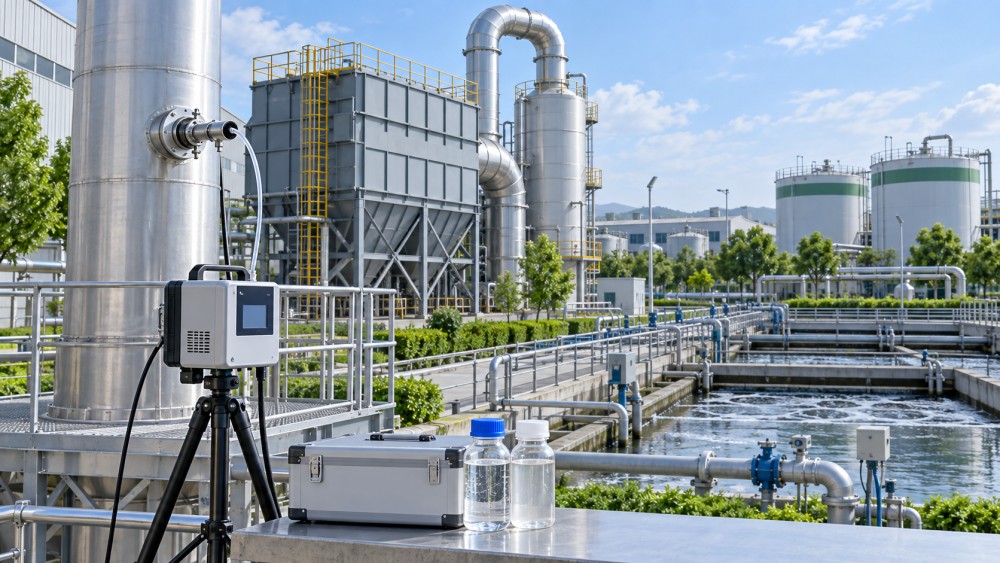
Air-emissions standards usually combine three elements: an emission limit, a specified measurement approach, and an operating condition under which the result is valid. A facility may be required to test while production is at a defined load, while pollution-control equipment is operating normally, or over a stated sampling period. A result collected during low production may not demonstrate compliance at maximum throughput.
Common air-testing categories include:
- Particulate matter and visible emissions: relevant to combustion, drying, crushing, cutting, handling of powders, and material transfer.
- Combustion gases: often associated with boilers, engines, heaters, kilns, furnaces, and generators.
- Volatile organic compounds: associated with coating, printing, adhesive use, solvent cleaning, storage tanks, and chemical processing.
- Acid gases and inorganic pollutants: possible in metal treatment, waste thermal processing, chemical manufacturing, and certain fuel-burning operations.
- Hazardous air pollutants: source-specific substances that may require targeted analytical methods rather than a general VOC test.
Stack testing requires more than selecting an accredited laboratory. The sampling location must be suitable, ports must be accessible and safe, flow conditions must meet method requirements, and production records must show the operating rate during the test. Before testing, review the stack configuration, recent process changes, fuel type, raw material composition, bypass arrangements, and control-device maintenance history. These details can explain a result that appears inconsistent with previous tests.
Continuous emissions monitoring systems may be required for certain sources or pollutants. Where they are used, compliance depends on calibration, quality assurance checks, data capture, downtime procedures, alarm response, and data substitution rules. Installing a monitor does not remove the need for a written process for reviewing excursions and documenting corrective action.
Wastewater standards depend on where the water goes
Wastewater compliance changes significantly depending on whether water is discharged directly to surface water, sent to a municipal treatment system, reused on-site, injected, transported off-site, or managed as waste. Teams should not assume that a result acceptable for one pathway is acceptable for another.
Direct discharges commonly involve permit limits for parameters such as flow, pH, temperature, suspended solids, oxygen-demanding substances, nutrients, oils, metals, and process-specific contaminants. Discharges to a municipal system may be controlled through a pretreatment authorization. In that setting, limits can focus on pollutants that interfere with the receiving treatment plant, damage its infrastructure, pass through treatment, or create safety risks.
Sampling design matters as much as the analytical result. A grab sample represents conditions at a particular moment and may be appropriate for parameters that change rapidly, such as pH, temperature, residual disinfectants, or certain volatile substances. A composite sample combines portions collected over time or flow and can better represent a variable production discharge. The permit or authorization normally determines which approach is required.
Before a scheduled discharge test, confirm the following:
- The sample point is the approved compliance location and is accessible without contaminating the sample.
- Production, cleaning, regeneration, batch discharge, and treatment operations are representative of the required test condition.
- Containers, preservatives, holding times, and transport arrangements match the selected analytical method.
- Flow measurements are functioning, especially where limits are mass-based rather than concentration-based.
- Field measurements are recorded promptly when the method requires immediate analysis.
A laboratory result without a defensible chain of custody, field record, sampling time, or sample preservation record may be difficult to use in an inspection or dispute. Quality control procedures should identify who collects the sample, who verifies labels, who reviews the laboratory report, and how anomalies are investigated.
Do not overlook stormwater, waste, and fugitive releases
Facilities sometimes focus on stacks and wastewater outfalls while overlooking environmental pathways that are less visible. Stormwater can become regulated when it contacts raw materials, waste containers, vehicle areas, loading zones, outdoor process equipment, or contaminated surfaces. Required activities may include visual inspections, sampling during qualifying rain events, housekeeping records, spill response, and corrective measures for exposed materials.
Hazardous-waste requirements are not always described as “emissions testing,” but waste characterization can be central to environmental compliance. A waste stream may need evaluation based on process knowledge, analytical testing, or both. The correct approach depends on the material, applicable classification rules, and whether the waste is recycled, treated, stored, transported, or disposed of. Do not rely solely on a safety data sheet for a mixed or altered waste stream; the waste generated at the facility may differ from the original product.
Fugitive emissions need a different control strategy from stack emissions. Leak detection and repair programs, inspection frequencies, equipment tagging, repair deadlines, and follow-up verification may be more relevant than a single stack test. Material balance calculations, vapor controls, enclosed transfer systems, and maintenance records can also form part of the compliance evidence.
Use an applicability review when processes change
Environmental testing obligations should be reassessed before—not after—a material process change. A new coating, higher-sulfur fuel, different solvent, expanded production line, replacement boiler, modified scrubber, additional storage tank, or altered wastewater treatment chemical can change the pollutants present or the applicable limits.
The review should ask practical questions: Does the change create a new emission point? Does it increase throughput above a permit threshold? Does it alter the chemical composition of emissions or wastewater? Will an existing control device remain effective? Does the current monitoring method still cover the pollutant? Is prior approval required before installation or operation?
Even changes intended to improve efficiency can create compliance complications. A higher-capacity unit may increase total emissions despite a lower emission rate per unit of product. A replacement chemical may reduce one hazard while creating a new wastewater parameter. A more efficient filter may change pressure-drop behavior and require revised maintenance controls. Documenting this review makes later permit renewals, audits, and incident investigations more manageable.
Make the test result traceable and decision-ready
Environmental testing standards compliance is not demonstrated by a laboratory certificate alone. Inspectors, customers, and internal auditors may need to see how the reported value connects to the operating source, method, date, sample location, unit of measurement, regulatory limit, and corrective action process.
A useful compliance file typically includes the current permit or authorization, an applicability matrix, approved sampling procedures, calibration records, laboratory accreditation scope where relevant, chain-of-custody forms, field logs, production records, test reports, and correspondence concerning deviations or resampling. Keep version control on procedures and make clear which limits apply to each discharge point.
Review results in context. Compare them with permit limits, previous trends, process conditions, control-device readings, and laboratory qualifiers. A result below a limit can still signal an emerging issue if it rises sharply from the normal baseline. Conversely, an unexpected high result may reflect a real process event, an unsuitable sample point, a preservation error, or a unit-conversion problem. The investigation should establish which explanation is supported by records rather than assuming the result is invalid.
When a result is near or above a limit
First, preserve the evidence. Secure the laboratory report, field notes, operating data, calibration information, maintenance records, and any relevant batch or material records. Then check whether the result was calculated and reported in the same basis as the limit: dry versus wet gas, corrected versus uncorrected oxygen basis, concentration versus mass loading, daily maximum versus average, or grab versus composite sample.
Next, assess whether an immediate operational response is required under the permit, site procedure, or applicable regulation. This may involve adjusting production, inspecting a control system, isolating a discharge, notifying the responsible internal function, or following a required notification process. Retesting can be appropriate, but it should not be used to delay investigation of a credible exceedance.
The strongest prevention measure is a living compliance matrix that links every emission source to its pollutant limits, applicable methods, sampling frequency, responsible owner, record-retention period, and change triggers. It turns a scattered set of permits, laboratory reports, and maintenance tasks into a control system that can be reviewed before an inspection, a production change, or a supply-chain environmental assessment.
Weekly Insights
Stay ahead with our curated technology reports delivered every Monday.
Recommended News
 Market TrendsSep 25, 2026Which industrial market research trends signal a shift in demand?
 Supply ChainSep 24, 2026How trade compliance screening prevents costly shipment delays
 Supply ChainSep 23, 2026What drives cross-border logistics management pricing for importers?
 Supply ChainSep 22, 2026How heavy equipment lifecycle data can reduce unexpected downtime