Which embedded emissions count under CBAM for hydrogen imports?
Which embedded emissions count under CBAM for hydrogen imports?
For technical evaluators assessing CBAM hydrogen imports, the critical question is where the emissions boundary starts—and stops. Under the EU Carbon Border Adjustment Mechanism’s definitive regime, hydrogen is assessed on direct CO₂ emissions embedded in production, rather than its full lifecycle footprint. Indirect emissions from electricity consumption are excluded from the embedded-emissions calculation used for certificates. That distinction changes how reforming, electrolysis and carbon-capture pathways should be compared.
The difficult part is rarely identifying the production technology. It is deciding which utility emissions belong to hydrogen, how shared equipment is allocated, and whether a supplier’s carbon-intensity figure actually follows the CBAM methodology. A credible lifecycle assessment can still be the wrong number for a CBAM declaration.
Start with the legal boundary, not the hydrogen colour
Regulation (EU) 2023/956 provides the starting point. Annex I identifies hydrogen under CN code 2804 10 00 and specifies carbon dioxide as the relevant greenhouse gas. Annex II places hydrogen among the goods for which only direct emissions are taken into account. Annex IV establishes the framework for calculating embedded emissions.
Read together, these provisions mean that CBAM is not asking for a cradle-to-gate hydrogen footprint expressed in all greenhouse gases. Upstream methane leakage, electricity-generation emissions and shipping impacts may matter commercially or under other legislation, but they do not automatically enter hydrogen’s CBAM certificate calculation.
“Green,” “blue” and “grey” are therefore inadequate compliance descriptors. A technical assessment needs the production route, installation boundary, relevant reporting period and underlying emissions calculation. Renewable-hydrogen or low-carbon certification can provide useful supporting information, but it does not replace CBAM-specific evidence.
Also check the imported product itself. Hydrogen and ammonia are different goods with different calculation requirements. Hydrogen transported through an ammonia supply chain should not simply inherit the treatment of a shipment declared as hydrogen gas. Customs classification must precede the emissions assessment.
What belongs inside the hydrogen production boundary?
For hydrogen made by steam methane reforming or related hydrocarbon-conversion routes, the calculation normally needs to capture both process CO₂ and combustion CO₂ attributable to production. Counting only the concentrated CO₂ stream separated from the process gas misses emissions from fired equipment and relevant utilities.
The assessment should follow the applicable production-process boundaries, rather than treating the entire industrial site as one hydrogen plant. On an integrated refinery or chemical site, boilers, steam networks, fuel-gas systems and separation equipment may serve several products. Their emissions require a defensible attribution method; assigning everything to hydrogen is no more reliable than assigning nothing.
This is a boundary guide, not a substitute for the detailed calculation rules. An activity’s location alone does not determine its treatment: purchased steam can bring relevant direct emissions into the calculation, while electricity generated on site still requires the correct separation of electricity-related emissions.
Imported steam is the boundary mistake worth checking early
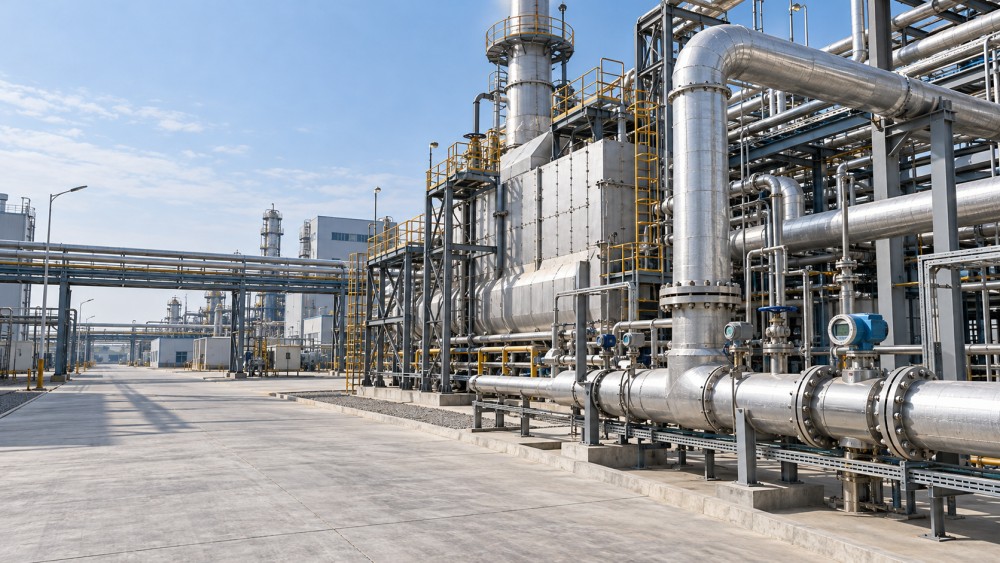
Under CBAM, direct emissions include emissions from producing heating and cooling consumed during production, irrespective of where that heat or cooling is produced. “Direct” therefore does not mean only emissions from stacks physically located inside the hydrogen installation.
Consider a reformer receiving steam from a neighbouring utility plant. The hydrogen operator may report little boiler fuel consumption because steam is purchased. That does not make the associated heat emissions disappear. The evaluator needs the relevant heat quantity, its emissions basis and an allocation consistent with the applicable methodology.
Combined heat and power makes this more demanding. A single fuel input produces two outputs with different treatment for hydrogen: attributable heat emissions can count, while electricity-related indirect emissions are excluded. Neither the utility’s total fuel emissions nor a blended “energy carbon factor” should be accepted without understanding the split.
Ask for the steam and heat balance early. Shared steam headers, condensate returns and exported heat are much harder to reconstruct after the reporting period has closed.
Electrolysis: electricity exclusion is not a blanket zero declaration
For water electrolysis, electricity consumption is usually central to a lifecycle carbon assessment. Under hydrogen’s direct-only CBAM treatment, however, those electricity-related indirect emissions do not enter the certificate calculation. A grid-connected electrolyser can therefore show a very different CBAM intensity from its lifecycle intensity.
That does not establish renewable status, compliance with EU renewable-fuel rules or eligibility for a customer’s low-carbon procurement programme. These are separate tests. A power purchase agreement or renewable electricity certificate should not be presented as proof that the entire CBAM calculation is complete.
The practical question is whether the production boundary contains any attributable direct CO₂ sources or consumed heat carrying associated emissions. Auxiliary fuel use and thermal inputs need examination. Where an installation also generates electricity, emissions must be separated according to the applicable rules rather than classified solely by stack location.
A low or zero direct-emissions result needs evidence supporting the boundary and activity data. It should not be inferred from the word “electrolytic” on a specification sheet.
Carbon capture: examine what remains, not just what is captured
A capture-rate headline is insufficient for reforming-based hydrogen. The supplier must show which CO₂ streams are captured and which remain emitted. Capturing a concentrated process stream does not necessarily address furnace flue gas, utility emissions or emissions associated with additional heat demand.
The denominator matters as much as the percentage. A capture rate measured against one process stream is not the same as a reduction across all emissions attributable to hydrogen production. Technical evaluators should request the stream-level carbon balance and reconcile it with the reported residual intensity.
Nor is every transfer of captured CO₂ automatically deductible. Any subtraction must satisfy the applicable CBAM requirements for recognising CO₂ as not emitted, including the relevant conditions for transport and permanent geological storage. Selling CO₂ for an unspecified use is not enough to establish eligibility.
Check capture-related energy requirements as well. Additional fuel or heat consumption can affect the remaining direct emissions. A defensible assessment traces capture, residual releases and qualifying storage together instead of applying a marketing percentage to an uncaptured baseline.
Build the calculation around attributable emissions and actual output
Conceptually, specific embedded emissions divide the relevant emissions attributed to hydrogen production by the corresponding hydrogen output, with any required precursor treatment applied under the prescribed methodology. The numerator and denominator must describe the same production boundary and reporting period.
This sounds straightforward until production becomes integrated. A site may recover hydrogen from several streams, blend purchased and internally produced hydrogen, or produce hydrogen alongside other saleable outputs. A site-wide average is not automatically representative of the imported product. Equally, a favourable production line cannot be selected without a traceable basis.
Output data deserve particular attention. Metered hydrogen quantity, purity corrections and conversions between mass and volume must be internally consistent. A figure stated in kilograms of CO₂ per kilogram of hydrogen is numerically equivalent to tonnes of CO₂ per tonne of hydrogen; changing units does not resolve an inconsistent product basis.
Keep certificate adjustments separate. Recognition of an eligible carbon price paid abroad and adjustments reflecting EU ETS free allocation affect the compliance obligation; they should not be used to rewrite the installation’s physical embedded-emissions intensity.
What supplier evidence makes the number usable?
A single carbon-intensity certificate rarely contains enough information to evaluate the calculation. The useful evidence package connects the installation, production process and shipment to a reproducible result:
- Installation identity, production route and a process-boundary diagram showing shared utilities.
- Reporting-period hydrogen output, measurement basis and reconciliation with production records.
- Fuel and feedstock quantities, carbon-content information, emission factors and relevant monitoring records.
- Heat imports and exports, utility emission factors, and allocation methods for shared equipment.
- Where capture is claimed, stream-level quantities and evidence supporting the claimed treatment of transferred CO₂.
- The applicable verification documentation where actual emissions are used under the definitive regime.
Do not confuse transitional reporting with definitive compliance. The transitional phase required information on both direct and indirect emissions, including for hydrogen. An older reporting spreadsheet containing electricity emissions is therefore not necessarily erroneous—but its combined total should not be carried unchanged into the definitive hydrogen certificate calculation.
Where actual data are unavailable, use only the default-value route permitted by the applicable rules. A supplier’s lifecycle estimate or an industry average is not an interchangeable fallback.
Keep two carbon assessments, not one compromised number
For cross-border sourcing analysis, GTIIN’s practical recommendation is to maintain separate views of CBAM embedded emissions and wider supply-chain carbon performance. The former supports regulatory assessment; the latter captures issues such as upstream methane, electricity sourcing and logistics that may influence procurement decisions.
Before accepting a supplier’s figure, ask three questions: Does it use hydrogen’s direct-CO₂ boundary? Does it include attributable heat emissions without importing excluded electricity emissions? Can its output, allocation and capture claims be verified? If any answer is unclear, the number is not yet ready for a defensible import assessment.
Regulatory reference: Regulation (EU) 2023/956, particularly Articles 3 and 7 and Annexes I, II and IV. Use the current consolidated text and applicable definitive-period implementing rules when preparing a declaration.
Have questions about this sector analysis, or seeking best practices specific to your niche? Drop us a line below and let the senior consultants at GTIIN assist you.
“We respect your privacy. Your information is strictly confidential.”
Weekly Insights
Stay ahead with our curated technology reports delivered every Monday.
Recommended News
 Supply ChainOct 30, 2026How to reduce customs clearance delay risk with accurate invoices
 Supply ChainOct 30, 2026Ministry of Commerce Announces 2027 Goods Export Quotas
 Market TrendsOct 29, 2026How port capacity shapes the US maritime freight transport market
 Market TrendsOct 29, 2026Germany's Asia-Pacific Trade Deficit Forecast to Hit Record €146 Billion in 2026