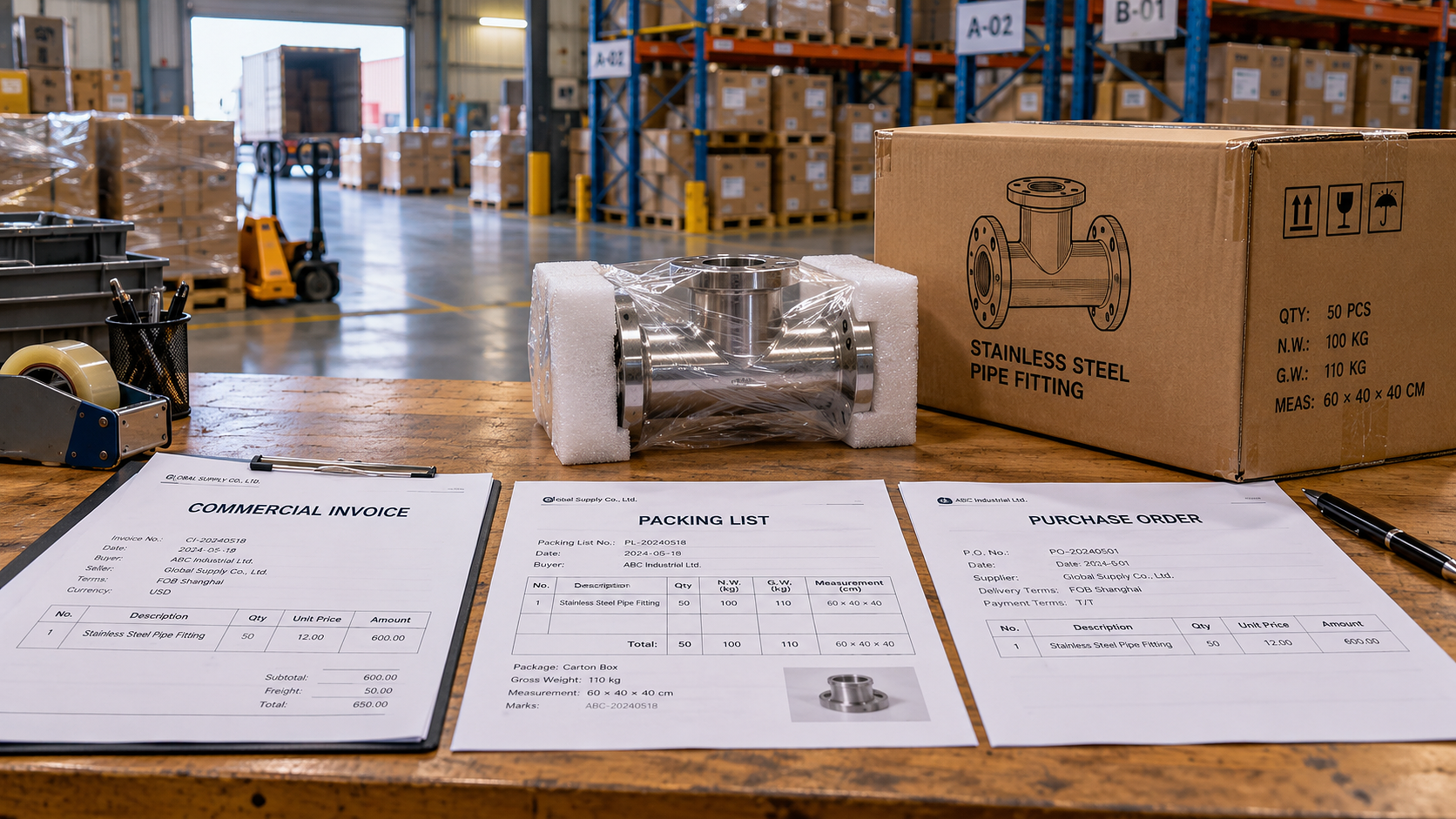
How to reduce customs clearance delay risk with accurate invoices
An accurate commercial invoice can reduce customs clearance delay risk by giving the broker and customs authorities a clear, supportable account of what is being shipped, where it originated, and how it was valued. For operations teams, the most effective control is a review before dispatch: compare the invoice with the purchase order, packing list, shipping instructions, and the information needed for the import declaration.
Accuracy does not guarantee release. Customs may select a shipment for examination, request permits, or question classification even when the invoice is complete. Still, resolving avoidable discrepancies before the goods move gives the broker more time to prepare the entry and reduces the chance that a routine question becomes a costly hold.
Start with the fields most likely to affect clearance
A commercial invoice is a commercial record as well as a source of information for the customs declaration. Requirements vary by destination and transaction, so the importer and broker should agree on the required fields before the supplier issues the final version. The following checks address the information that commonly drives questions.
Describe what the goods are
Descriptions such as “parts,” “samples,” or “industrial equipment” may match an internal order but leave a customs officer unable to identify the goods. Each line should identify the product in plain language and include the characteristics needed to distinguish it from other items: material, function, model, composition, or intended use, as relevant.
For example, “stainless-steel pipe fittings, threaded, for industrial fluid systems” is more useful than “fittings.” A chemical shipment may require a precise chemical identity and concentration; a machine component may need its function and the equipment it is designed for. The level of detail should support the proposed tariff classification without adding specifications that the supplier cannot substantiate.
A part number helps connect the invoice to the order, but it rarely replaces a meaningful description. Where the shipment contains different goods, separate them into invoice lines instead of combining them under one broad label.
Reconcile quantities, units, and weights
Check that the invoiced quantity and unit of measure match the commercial transaction and can be reconciled with the packing list. A difference between “100 pieces” on the invoice and “10 cartons” on the packing list may be entirely valid if each carton contains 10 pieces, but the documents should make that relationship clear.
Confirm the number of packages and the gross and net weights where required. Small rounding differences can arise from weighing or conversion, but unexplained discrepancies can prompt questions or make it harder to identify the goods during an inspection. For bulk shipments, agree on how the final quantity will be established and how any difference between estimated and final figures will be documented.
Make the value traceable
Each invoice line should show the quantity, unit price, line total, and currency, with a total that can be reconciled to the transaction. Check calculations and identify discounts, credits, freight, insurance, and other charges clearly when shown. The invoice should also state the agreed delivery terms, including the named place, so the broker can understand which costs may be included in the price.
The price paid is important, but it is not always the complete customs value. Depending on the destination’s valuation rules and the facts of the transaction, certain charges or other amounts may need to be added or treated separately. Examples can include separately paid freight or insurance, royalties, or materials supplied by the buyer for use in production. Provide the broker with the underlying information rather than assuming that the invoice total is automatically the declaration value.
Do not assign an arbitrary low value to a replacement, warranty shipment, sample, or no-charge item. These goods may still require a supportable value for customs purposes, even when no payment is due. Explain the transaction and agree with the broker on the appropriate documentation and valuation approach for the destination.
Identify origin and parties accurately
Record the seller, buyer, and other required parties using their correct legal names and addresses. The consignee, importer of record, and purchaser may be different entities; do not substitute one for another simply because an address appears familiar. Confirm who is responsible for the declaration and provide the broker with the information that destination rules require.
Country of origin is also more specific than the country from which the shipment is dispatched. Goods can be shipped from a distribution center in one country while originating in another. Where a line contains goods of different origins, identify them separately when needed. A claim for preferential tariff treatment may require additional evidence and must satisfy the applicable rules of origin; an origin statement on an invoice is not automatically enough.
Compare the invoice with the shipment, not just the order
A purchase order is a useful starting point, but it may no longer reflect what is physically being shipped. Partial deliveries, substitutions, revised prices, and changes in packaging can all make an invoice prepared from the original order inaccurate. The final review should follow the goods that will cross the border.
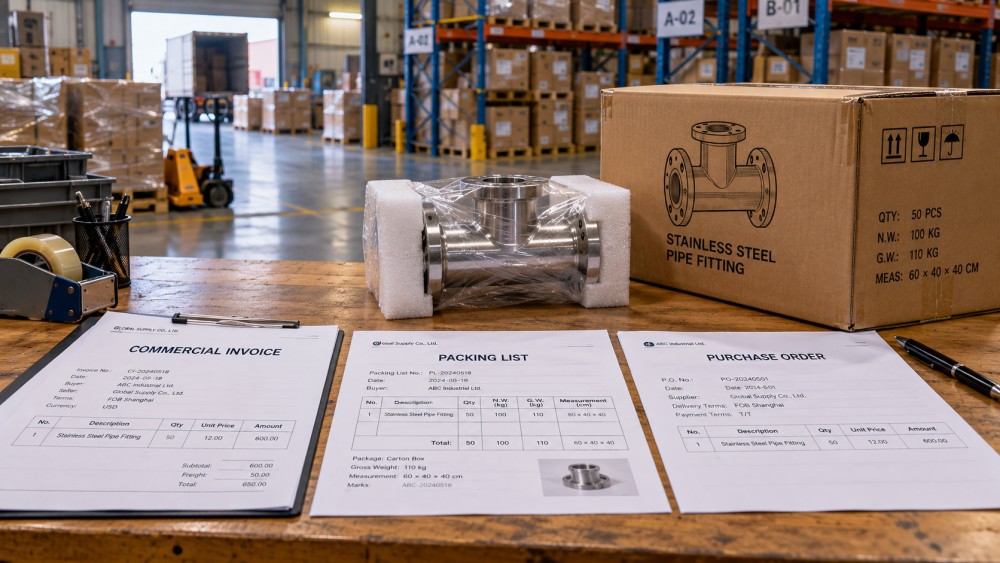
Before the shipment is handed to the carrier, compare these records:
- Invoice and packing list: Match product lines, quantities, package counts, weights, and identifying marks. Explain conversions between units and packages.
- Invoice and purchase order: Check the buyer and seller, agreed prices, currency, delivery terms, and any approved substitutions or partial shipment.
- Invoice and shipping documents: Check the shipper, consignee, destination, and shipment references. Different roles may be legitimate, but the relationship should be clear.
- Invoice and supporting evidence: Check origin records, product specifications, permits, and valuation documents where applicable. Give the broker enough information to resolve differences.
Consistency does not mean copying the same wording into every document. A packing list describes how goods are packed, while an invoice describes the commercial transaction. They should nevertheless tell a coherent story. If an invoice lists 500 meters of cable and the packing list shows five reels, record the quantity per reel or provide another clear link between the two.
Classification deserves a separate check. The invoice description should give the broker enough detail to assess the proposed tariff code, but a code supplied by the seller should not be accepted automatically. Classification is a legal determination under the importing jurisdiction’s tariff rules, and national subdivisions can differ. Where the description, product specification, and proposed code do not align, resolve the issue before filing.
Build a review process that fits the shipment
Not every shipment needs the same depth of review. A repeat shipment of unchanged, well-documented goods may only need checks for transaction-specific changes. A first shipment, a new destination, a mixed consignment, or a product with uncertain classification or origin deserves earlier scrutiny. The same applies when the invoice value is affected by buyer-supplied materials, royalties, or unusual commercial arrangements.
Assign the checks to people who can actually verify the information. The supplier or exporter can confirm the goods packed, prices, and production records. The importer can verify the purchase terms, parties, intended use, and information it holds about the transaction. The customs broker can review entry requirements and flag classification or valuation questions, but may need technical and commercial evidence from both sides to resolve them.
A practical sequence is to request a draft invoice before dispatch, review it against the order and available product information, then confirm the final invoice against the packing list once packing is complete. Send the final document set to the broker before arrival where possible. Agree on a cutoff for changes and identify who can approve corrections when the supplier, freight forwarder, and importer are in different time zones.
Keep one controlled final version. Reissued invoices should carry a clear revision reference or date, and the team should tell the broker which version replaces the earlier one. Otherwise, a correct document can still lead to an incorrect declaration if an outdated copy remains in circulation.
Respond to a discrepancy before it becomes a hold
When a reviewer finds a mismatch, first establish whether it is a documentation error or a change in the actual shipment. An invoice showing 120 units against a packing list showing 100 requires a count and an explanation; changing the number to make the documents agree without checking the goods can create a more serious problem.
Ask the responsible party for evidence, such as the final packing record, corrected order, product specification, or pricing breakdown. Then issue the appropriate correction and circulate it to everyone using the documents. Preserve the original and revised records under the organization’s document-retention procedures, along with the reason for the change.
If the goods have already shipped or a declaration has already been submitted, notify the broker promptly. The available correction procedure depends on the jurisdiction and the stage of the entry. Do not assume that replacing an invoice in an internal folder changes information already filed with customs.
For a customs query or hold, request the specific question or document needed, assign an owner, and respond with consistent evidence. An inaccurate description may require a revised invoice and product details; a valuation question may require the purchase agreement, payment records, or an explanation of charges. Keep the carrier and receiving team informed when release timing affects storage, delivery, or production planning.
Use recurring discrepancies to improve the next shipment
A post-shipment review is most useful when it identifies where the incorrect information originated. Repeated differences in package counts may point to an invoice created before final packing. Frequent classification questions may indicate that product descriptions omit material or function. Value questions may arise because freight, discounts, or buyer-provided inputs are recorded outside the supplier’s invoice.
Track the discrepancy, its cause, the correction, and whether customs or the broker requested additional information. Use that record to update the invoice template, supplier instructions, or pre-dispatch checklist. Also review the template when the product, transaction structure, or destination changes; a format that worked for one route may omit information required on another.
The objective is a document set that can be understood and supported without last-minute reconstruction. When the invoice matches the goods, the commercial terms, and the evidence held by the parties, the broker is better positioned to address customs questions before they interrupt delivery.
Have questions about this sector analysis, or seeking best practices specific to your niche? Drop us a line below and let the senior consultants at GTIIN assist you.
“We respect your privacy. Your information is strictly confidential.”
Weekly Insights
Stay ahead with our curated technology reports delivered every Monday.
Recommended News
 Supply ChainOct 30, 2026How to reduce customs clearance delay risk with accurate invoices
 Supply ChainOct 30, 2026Ministry of Commerce Announces 2027 Goods Export Quotas
 Market TrendsOct 29, 2026How port capacity shapes the US maritime freight transport market
 Market TrendsOct 29, 2026Germany's Asia-Pacific Trade Deficit Forecast to Hit Record €146 Billion in 2026