Industrial Compliance Audits: Records to Prepare Before Inspectors Arrive
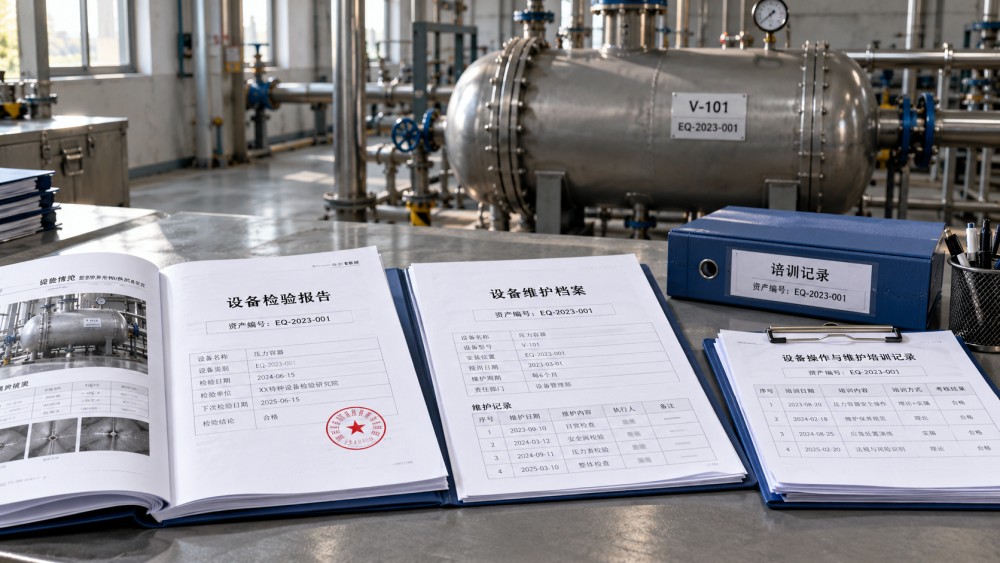
An inspector asks for the latest pressure-system inspection report, then requests the operator’s training record and the maintenance history for the same asset. Each document exists, but they use different equipment names and sit in separate systems. Retrieval slows, and the records cannot readily demonstrate that the equipment was authorized, maintained, and operated under controlled conditions.
Before industrial compliance audits, prepare a scope-based evidence package covering applicable obligations, personnel competence, equipment condition, measurement reliability, operational controls, incidents, and corrective actions. The priority is not collecting the most documents; it is making required records current, complete, traceable, and retrievable. Requirements differ by jurisdiction, activity, permit, and audit type, so establish what applies before using a generic document list.
Start with the inspection scope, not the shared drive
A regulatory inspection, management-system certification audit, and customer compliance assessment may examine overlapping records for different purposes. A certification certificate does not replace a statutory inspection, and a customer’s approval does not establish regulatory compliance.
Confirm the facility, processes, legal entities, products, and review period involved. Include temporary operations, contractors, warehouses, and off-site activities where they fall within scope. If advance notice is available, use the inspection notice or audit plan to identify requested evidence without assuming that inspectors will examine only those items.
Create an applicability register linking each obligation to its evidence. Use current official requirements, permit conditions, applicable standards, and contractual commitments rather than relying solely on an old audit checklist.
Where applicability is uncertain, assign someone to resolve it with the relevant regulatory, legal, or technical function. Marking a requirement “not applicable” needs a defensible reason, not an empty folder.
The records that need substantive review
Permits, approvals, and previous findings
Prepare operating licenses, environmental permits, equipment registrations, inspection approvals, and other authorizations relevant to the site. Check the legal entity, address, covered activities, conditions, and validity. An authorization may still be current while no longer covering an expanded process or changed operating capacity.
Keep prior inspection reports, notices, correspondence, and submitted responses together. For each previous finding, provide the required action, responsible person, due date, completion evidence, and any acceptance or follow-up correspondence. Do not describe a finding as closed merely because a response was sent.
Training, competence, and work authorization
A training attendance sheet establishes participation, not necessarily competence. Where a task requires demonstrated ability or formal authorization, assemble assessment results, relevant qualifications, refresher records, and authorization status alongside attendance logs.
Match records to current assignments, including temporary workers and contractors where applicable. Check that training covered the procedure revision and equipment actually used. A worker transferred to a different machine may need additional assessment even when the job title has not changed.
Equipment inspections and maintenance
Organize equipment registers, preventive maintenance records, required examination reports, pre-use checks, defect reports, and repair histories around stable asset identifiers. Include safety-critical devices and protective systems where they are within scope, not only production machinery.
The record should show what was inspected, when, by whom, the result, and the disposition of defects. Where return-to-service approval is required, retain it. A completed maintenance work order does not necessarily demonstrate that a separate statutory examination or safety verification occurred.
Calibration and measurement control
For instruments used to accept products or verify controlled conditions, prepare calibration or verification records appropriate to their use. Check instrument identity, applicable range, results, acceptance criteria, dates, and traceability evidence where required. Confirm that the calibration scope supports the actual measurement task.
Review out-of-tolerance results carefully. The file should address whether earlier measurements, released products, or safety decisions were affected, together with containment and follow-up actions. A new calibration certificate alone does not resolve the potential impact of earlier unreliable readings.
Operational, safety, and environmental evidence
Prepare the risk assessments, approved procedures, work permits, emergency arrangements, and operating records relevant to the inspection. Depending on site activities, this may include hazardous-energy control, chemical inventories, safety data sheets, contractor coordination, exposure monitoring, emissions monitoring, waste documentation, or emergency drill records.
For quality-related reviews, connect receiving inspections, supplier approvals, material certificates, in-process checks, final acceptance, and nonconforming-product disposition to the relevant batch, order, or serial number. Supplier documents should be linked to the material received; an unrelated certificate in a purchasing folder is weak evidence.
Test the links between records
Inspectors may follow one asset, task, or product through several records. Run the same exercise internally before the visit. Select a higher-risk operation and trace the requirement through to evidence of execution and any follow-up.
- Identify the controlled activity. Select an asset, batch, maintenance task, or hazardous operation within scope.
- Retrieve the applicable instruction. Confirm which approved procedure or specification applied when the work occurred.
- Verify people and resources. Check competence, authorization, equipment condition, and measurement status at that time.
- Examine the execution record. Look for results, dates, identifiers, acceptance decisions, and required approvals.
- Follow exceptions. Trace defects, deviations, incidents, or failed checks through containment and corrective action.
Check historical validity, not just today’s status. An instrument calibrated now may have been overdue when a batch was accepted. A current training certificate may not demonstrate authorization on the date of the task. Likewise, a revised procedure cannot retrospectively prove that earlier work followed an approved instruction.
Record inconsistent identifiers, missing attachments, unexplained date sequences, and unsupported approvals. These issues can make otherwise valid evidence difficult to verify.
Separate missing evidence from failed controls
A gap review should distinguish a retrieval problem from an activity that never occurred. They require different responses. Search source systems and contact record custodians before deciding a record is absent, but do not let a prolonged search delay action on a possible safety or compliance failure.
Never backdate inspections, recreate signatures, or present a later check as historical proof. A reconstruction based on available evidence must be identified as such and cannot substitute for a required contemporaneous record.
Prioritize gaps involving expired authorizations, overdue safety-critical examinations, unresolved serious incidents, failed monitoring, or potentially invalid product acceptance. A missing folder label and an unexamined lifting device do not deserve equal attention. Possible reporting obligations or permit breaches need prompt assessment by the responsible compliance function.
Make corrective-action files withstand follow-up questions
An action tracker marked “complete” is an index, not proof of resolution. Retain the original finding, immediate containment, investigation, identified causes, action taken, implementation evidence, and effectiveness review. Keep deadlines and any approved extensions visible.
Distinguish correction from corrective action. Replacing a damaged guard corrects the immediate condition; examining why checks failed to detect the damage addresses recurrence. Where the evidence points beyond one machine or department, document whether similar conditions were assessed elsewhere.
Effectiveness checks should match the failure. Revising a form does not demonstrate that employees use it correctly, and retraining alone may not resolve an unsuitable procedure. If effectiveness remains under review, show the interim controls, responsible owner, and review date rather than claiming premature closure.
Build an evidence index that works during the visit
Keep controlled source records in their established systems and create an inspection index pointing to them. Uncontrolled duplicate folders can introduce conflicting versions. Where exports are needed, identify their source and extraction date, and preserve relevant approval history, attachments, and metadata.
Each index entry should identify the record category, coverage period, custodian, source location, access restrictions, and known exceptions. Use stable asset or batch identifiers in filenames where practical. Test whether scanned documents are legible and whether electronic exports retain the information needed to interpret them.
- Test retrieval using the access permissions the inspection team will actually have.
- Nominate backup custodians for critical records and essential systems.
- Confirm retention periods against applicable obligations; do not apply a universal period to every record type.
- Preserve records subject to investigations, legal holds, or other preservation requirements.
- Arrange appropriate handling of medical, personal, confidential, or legally protected information without obstructing lawful access.
Keep obsolete procedures distinguishable from current instructions while preserving historical versions needed to explain past work. Deleting superseded documents immediately before an inspection can remove necessary context.
Use the remaining preparation time for a retrieval rehearsal
Ask someone outside the record-owning team to request evidence by asset, task, and date rather than by filename. Include one contractor activity, one failed inspection, and one closed corrective action if they are relevant to scope. This tests whether the evidence can answer questions without relying on a single employee’s memory.
Before arrival, assign an inspection coordinator, technical contacts, and a person to log requests and documents supplied. Staff should describe actual practices, distinguish facts from assumptions, and refer unanswered technical questions to the responsible owner.
On the day, provide responsive records with enough context to interpret them and retain a copy or reference in the request log. If a record cannot be found, state what is known, who is checking, and when an update can be provided. Where a serious gap remains open, have the risk assessment, interim restrictions, responsible owner, and completion plan ready; preparation must not be presented as proof that the underlying deficiency has been resolved.
Have questions about this sector analysis, or seeking best practices specific to your niche? Drop us a line below and let the senior consultants at GTIIN assist you.
“We respect your privacy. Your information is strictly confidential.”
Weekly Insights
Stay ahead with our curated technology reports delivered every Monday.
Recommended News
 Supply ChainNov 10, 2026China Extends Pause on 24% Additional Tariff on US Goods by Two Months
 Industry StandardsNov 10, 2026Which imports are subject to EU carbon border compliance?
 Global SourcingNov 09, 2026USTR Extends 178 China Section 301 Tariff Exclusions to January 2027
 Supply ChainNov 09, 2026How can a tariff risk management dashboard track cost exposure?