What drives the cost of meeting environmental compliance standards?
What drives the environmental compliance standards cost for modern enterprises? For business decision-makers, the answer goes far beyond regulatory fees, spanning technology upgrades, supply chain traceability, emissions monitoring, reporting systems, and shifting global trade rules. Understanding these cost drivers is essential for balancing compliance, operational efficiency, and long-term competitiveness in an increasingly regulated international market.
For many companies, environmental compliance still appears in budgets as a line item: permits, audits, waste handling, certification, consultant fees. In practice, that view is too narrow. The real cost is shaped by how deeply environmental requirements affect production design, sourcing decisions, data systems, logistics, supplier management, and market access.
This matters because compliance costs are no longer determined only by local environmental law. A manufacturer exporting into Europe may need to assess carbon reporting exposure. A consumer goods supplier may be pushed by customers to document recycled content, restricted substances, or packaging recovery obligations. A mining, chemicals, metals, or industrial processing business may face direct emissions controls, wastewater treatment standards, and mandatory monitoring. Even businesses with relatively light direct emissions can face rising indirect compliance costs through procurement contracts and customer due diligence requirements.
In other words, the environmental compliance standards cost is increasingly a strategic cost, not just an administrative one.
Why compliance costs vary so widely between companies
Executives often compare their own spending with peers and conclude that regulations are either manageable or excessive. That comparison can be misleading. Two firms in the same industry may face very different cost profiles because environmental compliance is driven by operating reality, not by legal text alone.
The biggest variables usually include:
- Production process complexity and pollution intensity
- Facility age and existing technical baseline
- Jurisdictions where the company produces and sells
- Customer-imposed standards beyond legal minimums
- Availability of internal environmental management capabilities
- Traceability requirements across upstream suppliers
- Exposure to carbon, waste, packaging, water, and chemical regulations
A newer plant designed with energy efficiency, closed-loop water use, and integrated emissions controls may have higher upfront capital expenditure but lower long-term compliance risk. An older facility may face lower historical depreciation costs yet far higher retrofit and monitoring expenses once standards tighten.
This is one reason compliance discussions often go wrong in boardrooms: finance teams look at direct annual spend, while operations teams understand that the true cost sits in asset redesign, lower process flexibility, production downtime during upgrades, and procurement limitations.
Capital expenditure is usually the largest hidden driver
When standards become stricter, the first visible cost is often not a fee but a technical gap. If a site lacks the necessary equipment to meet emissions, wastewater, dust, noise, or hazardous material requirements, the company must invest in physical controls.
Depending on sector, this may include:
- Air pollution control systems
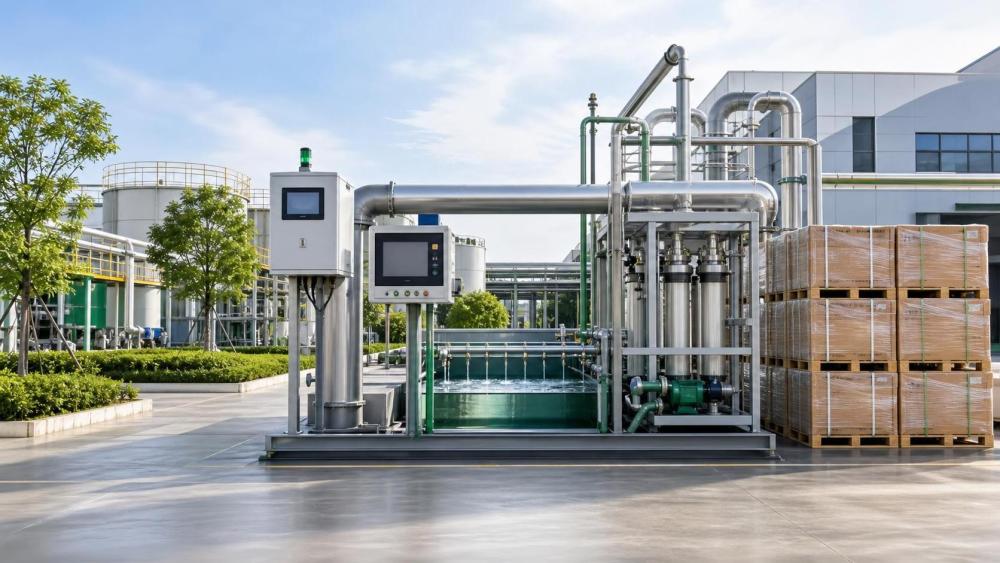
- Wastewater treatment units
- Solvent recovery equipment
- Leak detection and containment systems
- Energy-efficient boilers, motors, and heat recovery systems
- Process enclosure, filtration, or material substitution
These are not simply compliance purchases. They affect plant layout, utilities, maintenance planning, energy use, staffing, and throughput. In some cases, the cost of meeting a standard is driven less by the equipment itself than by installation complexity and operational disruption. A three-day stoppage in a continuous process facility can be more expensive than the hardware being installed.
That is why smart companies assess compliance through lifecycle cost rather than initial project cost. A lower-priced system that increases power consumption, reagent use, maintenance frequency, or reporting burden can become the more expensive option within a few years.
Monitoring, measurement, and reporting are becoming permanent cost centers
Environmental regulation has shifted from periodic permitting to ongoing data accountability. Authorities, customers, lenders, and downstream buyers increasingly want measurable evidence, not broad statements of policy.
This creates a second major cost layer: monitoring infrastructure and reporting systems.
Common cost components include:
- Continuous or periodic emissions measurement
- Water discharge testing and lab analysis
- Hazardous waste tracking
- Carbon accounting tools
- Environmental management software
- Internal audit and data assurance processes
- Third-party verification where required by customers or programs
For decision-makers, the important point is that reporting costs do not scale neatly with company size. Mid-sized firms can be disproportionately burdened because they lack the internal systems of large multinationals but are still expected to meet increasingly formal disclosure requirements.
This is especially relevant in cross-border trade. Environmental data that once stayed within the factory gate may now be requested by importers, regulators, financial institutions, or major OEM customers. The commercial risk is not only non-compliance fines. It is also delayed qualification, lost bids, customer remediation demands, and exclusion from preferred supplier lists.
Supply chain traceability is now part of compliance cost
One of the biggest shifts in recent years is that environmental compliance is moving upstream. A company may meet its own site obligations and still face cost pressure because buyers want proof regarding raw materials, embedded carbon, recycled content, forest-risk sourcing, packaging composition, or chemical restrictions.
That pushes costs into supplier engagement.
For procurement and executive teams, this can mean:
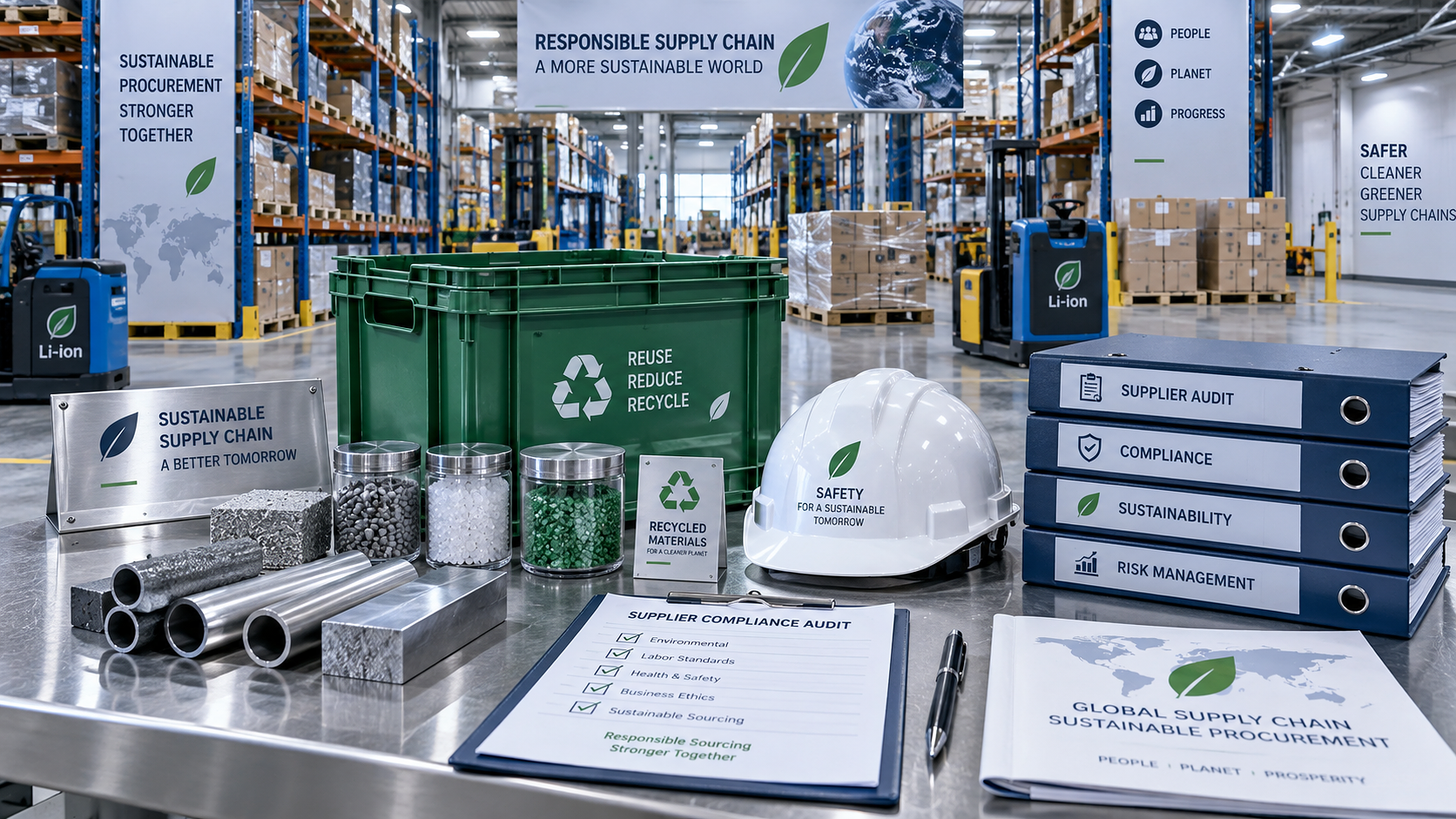
- Supplier questionnaires and qualification audits
- Material composition declarations
- Chain-of-custody documentation
- Country-of-origin and process-origin validation
- Digital traceability systems
- Dual sourcing where incumbent suppliers cannot comply
This is where many firms underestimate the environmental compliance standards cost. They assume the issue belongs to EHS or sustainability teams, when in reality supplier non-compliance can create commercial cost in the form of higher input prices, reduced sourcing flexibility, inventory buffers, or accelerated vendor replacement.
In sectors such as metals, chemicals, textiles, packaging, electronics, and food processing, the cost of obtaining compliant inputs can exceed the cost of managing the company’s own facility obligations.
Geography changes the economics of compliance
Not all regulatory environments create cost in the same way. Some jurisdictions impose heavy direct permit, treatment, and inspection costs. Others impose lower direct costs but higher uncertainty, weaker infrastructure, or more abrupt enforcement shifts.
For internationally active businesses, four geographic cost drivers deserve attention:
- Differences between production-country rules and destination-market requirements
- Regional energy mix and utility prices affecting emissions reduction economics
- Access to testing labs, waste disposal networks, and qualified service providers
- Local enforcement consistency and project approval timelines
Europe is a particularly important reference point because market access there increasingly intersects with environmental performance, carbon visibility, packaging obligations, and product-related compliance requirements. The EU Carbon Border Adjustment Mechanism is one example of how environmental policy can alter cost exposure in traded goods, though its exact impact depends on sector, reporting phase, and implementation scope. Companies should verify current applicability against official EU guidance because requirements continue to evolve.
The broader lesson is clear: the cost of compliance is increasingly tied to where you sell, not just where you produce.
Labor and organizational capability are often overlooked
Many compliance models underbudget internal labor. Yet environmental compliance standards cost is frequently driven by people-dependent activities: permit management, document control, sampling coordination, incident response, training, supplier communication, audit preparation, and corrective action tracking.
In companies with limited internal expertise, this leads to two expensive patterns. The first is over-reliance on consultants for recurring work that should eventually be institutionalized. The second is fragmented ownership, where legal, operations, procurement, quality, and sustainability teams each hold part of the data but no one controls the full compliance process.
That fragmentation creates soft costs that are very real:
- Slower customer responses
- Repeated data collection
- Audit failures caused by documentation gaps
- Delayed product launches
- Missed permit renewal deadlines
- Inefficient environmental investments
For senior management, this means compliance capability should be evaluated as an operating function, not just a legal safeguard.
Standards themselves are not the only issue; change is
One reason environmental cost planning is difficult is that the target keeps moving. Regulatory baselines tighten. Customer codes of conduct expand. Investor and lender expectations become more formalized. Voluntary standards sometimes become de facto mandatory in supply chains because major buyers insist on them.
As a result, the cost of compliance is heavily influenced by change frequency.
A company operating to today’s minimum standard may still face high future cost if its equipment, data systems, or product portfolio have little adaptability. By contrast, a business that invests in modular monitoring systems, cleaner process chemistry, standardized supplier documentation, and auditable data workflows may spend more now but less during the next wave of regulatory change.
This is why mature companies no longer ask only, “What does compliance cost this year?” They also ask, “How expensive will the next change be if we do nothing now?”
Common misconceptions that distort budgeting
Several misconceptions repeatedly lead to poor budgeting and weak decision-making.
“Compliance cost equals fines avoided.”
That is too narrow. The more relevant economic question is market continuity. A company may avoid penalties and still lose business if it cannot satisfy customer environmental due diligence.
“Certification solves compliance.”
Management systems such as ISO 14001 can support process discipline, but certification alone does not guarantee legal compliance or product-specific conformity. It is a governance tool, not a universal shield.
“Environmental costs are mostly one-time upgrades.”
In reality, recurring costs often rise after the initial project: consumables, calibration, testing, maintenance, staff time, verification, and digital reporting.
“Only high-emission industries need to worry.”
Lower-emission sectors can still face substantial cost through packaging rules, waste obligations, restricted substances, customer disclosures, and upstream traceability demands.
How decision-makers should evaluate environmental compliance spending
For executives, the practical challenge is not whether compliance matters. It is how to separate unavoidable cost from strategic overreaction.
A useful evaluation framework includes five questions:
- Is the cost driven by law, customer requirement, financing condition, or internal policy?
- Is it a one-time capital fix, a recurring operating expense, or both?
- Does the spend reduce risk only, or also improve efficiency, yield, energy use, or market access?
- Can the burden be reduced through process redesign rather than end-of-pipe treatment?
- What is the cost of delayed action compared with planned transition?
This framework matters because not all compliance spending is equally valuable. Some investments are defensive and unavoidable. Others can generate operational returns through energy savings, lower scrap, less water consumption, fewer incidents, and stronger customer retention. The most effective firms treat environmental spending as a portfolio of risk control and performance improvement, not as a single compliance bucket.
What to watch next
Looking ahead, three developments are likely to shape cost structures further.
First, data quality expectations will continue to rise. More companies will need auditable environmental information at product, site, and supplier level. Second, trade-related environmental rules will increasingly affect procurement economics, especially in carbon-intensive and regulation-sensitive sectors. Third, buyer-driven standards will keep pushing smaller suppliers to formalize systems that were once informal.
For business leaders, the implication is straightforward. Environmental compliance standards cost is no longer determined mainly by regulators arriving at the factory gate. It is being shaped by a wider commercial system: export markets, customer qualification rules, capital access, supplier transparency, and the technical readiness of operations.
Companies that understand these drivers early tend to make better decisions on plant upgrades, sourcing strategy, and market positioning. Those that view compliance only as a legal obligation often discover the real cost later—through disruption, rushed investment, or lost business.
Weekly Insights
Stay ahead with our curated technology reports delivered every Monday.
Recommended News
 Supply ChainOct 15, 2026How to choose a supply chain strategy for unpredictable demand
 Supply ChainOct 14, 2026How to assess an industrial equipment supplier's spare parts support
 Supply ChainOct 14, 2026EU Updates CSDDD Guidance on Global Supply Chain Due Diligence
 Global SourcingOct 13, 2026How to assess industrial automation suppliers for legacy integration