EU Updates CBAM Reporting Template for Non-EU Exporters
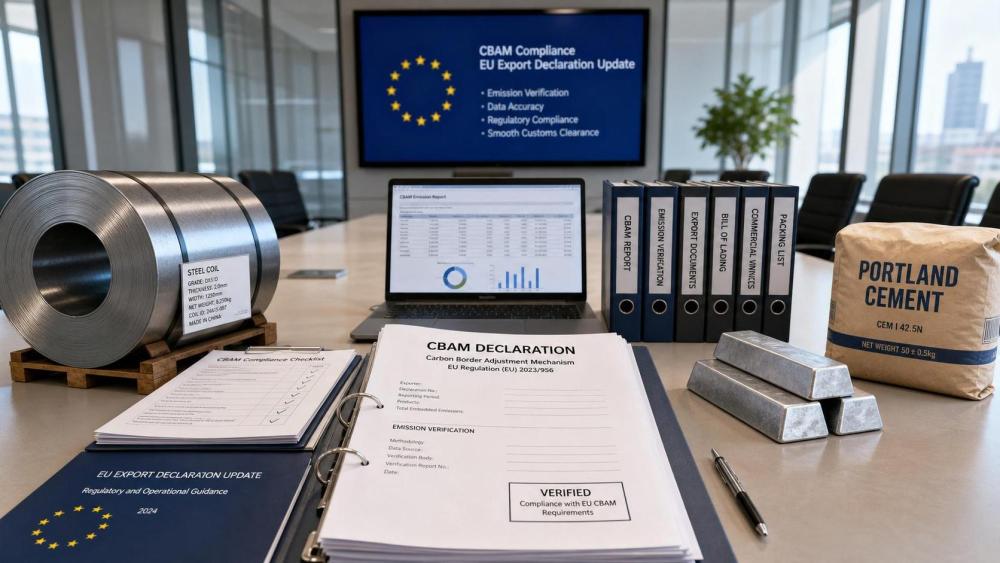
On 2026-07-04, the European Commission published a revised CBAM transitional reporting template, adding new fields for embedded emissions verification, third-party assurance declarations, and more detailed production route disclosures. For exporters outside the EU supplying cement, iron and steel, aluminium, fertilisers, hydrogen, and electricity to the EU, this is not just a document update. It signals tighter documentation expectations before shipment, with direct relevance for manufacturers, exporters, compliance teams, and supply chain counterparts, including Chinese suppliers serving EU-facing customers.
What the update formally changes
The confirmed information available shows that the revised CBAM transitional reporting template was released by the European Commission on 2026-07-04. The updated template introduces additional data fields in three areas: embedded emissions verification, third-party assurance declarations, and granular disclosures on production routes.
The update directly affects all non-EU exporters supplying cement, iron and steel, aluminium, fertilisers, hydrogen, and electricity to the EU. The provided information also makes clear that Chinese manufacturers are among the affected parties, particularly because pre-shipment compliance documentation requirements are becoming stricter.
Where the operational impact is likely to appear
Export-facing manufacturers will face deeper data preparation needs
From an industry perspective, manufacturers shipping covered products to the EU may be affected first at the data collection stage. The new reporting fields point to a higher level of disclosure around how emissions are verified and how production routes are described. In practice, this can increase the amount of plant-level or batch-related information that needs to be assembled before goods move.
Trading companies may see heavier document coordination work
For direct trading companies handling EU-bound orders, the likely impact is less about physical production and more about document completeness and timing. Analysis shows that where reporting templates become more detailed, the burden often shifts to coordinating information from manufacturers, internal compliance teams, and customers requesting supporting materials.
Supply chain and service providers may be drawn into pre-shipment compliance workflows
Supply chain service providers, documentation teams, and related intermediaries may also feel the effect. Observably, stricter pre-shipment documentation requirements can create additional checkpoints in booking, customs preparation, handover scheduling, and customer-side review, even when the service provider is not the reporting entity itself.
EU buyers and downstream procurement teams may ask for earlier confirmation
Procurement and downstream users sourcing covered goods from non-EU suppliers may also adjust their requests. What deserves closer attention is that more granular reporting fields can lead buyers to seek earlier confirmation on emissions-related records, assurance statements, and production route details before finalizing delivery or supplier acceptance.
What companies should watch now
Check whether existing internal data can match the new fields
Companies involved in affected exports should first compare their current internal records with the newly introduced reporting elements mentioned in the update. The immediate issue is not only whether data exists, but whether it is recorded in a form that can support embedded emissions verification, assurance declarations, and production route disclosure.
Review who is responsible for supporting declarations
The reference to third-party assurance declarations suggests a practical need to clarify roles across manufacturers, exporters, and any external verification counterparties. Analysis shows that delays often arise when responsibilities for preparing, reviewing, and issuing supporting declarations are not clearly assigned in advance.
Pay attention to shipment timing and customer communication
Because the update is tied to stricter pre-shipment compliance documentation requirements, affected businesses should closely watch how document preparation may influence order release, shipment scheduling, and communication with EU customers. This is especially relevant where contract execution depends on documentation being accepted before dispatch.
Separate confirmed rule text from evolving implementation practice
What deserves closer attention is the difference between the published template update and how market participants will operationalize it. Companies should avoid assuming that every reporting or document issue has already been standardized in day-to-day transactions. For now, the practical handling of requests, supporting materials, and review expectations still requires continued observation.
Why this looks like more than a routine template revision
Analysis shows that this update is better understood as a compliance signal rather than a purely administrative edit. The addition of fields tied to verification, assurance, and production-route detail suggests a move toward tighter traceability in CBAM-related reporting for covered imports into the EU.
At the same time, it would be too early to treat this single update as a fully settled end state. Observably, the template itself is a confirmed development, but the full operational consequences for each exporter category, supply arrangement, and customer workflow still need to be followed through actual implementation practice.
How the market may need to read this update
The clearest takeaway is that affected non-EU exporters should read the revised CBAM transitional reporting template as an immediate documentation and readiness issue, not just as a policy headline. For the covered sectors, the update matters because it brings reporting expectations closer to day-to-day trade execution.
It is more appropriate to understand this as both a short-term operational change and a longer-term compliance signal. In the short term, documentation requirements appear to be tightening. In the longer term, the market should continue watching how these reporting expectations shape supplier qualification, transaction preparation, and customer-side scrutiny.
Basis of this article and points requiring further verification
This article is based on the user-provided news title, event date, and event summary. The confirmed inputs used here are the publication of the revised CBAM transitional reporting template on 2026-07-04, the newly introduced data fields, and the stated impact on non-EU exporters in the covered sectors.
For this type of industry update, common source categories would usually include official announcements, company disclosures, industry association information, authoritative media coverage, and standard-setting or regulatory documents. However, a specific official source link was not provided in the input, so further verification remains necessary. Continued attention should focus on any subsequent official wording, practical reporting guidance, and how affected exporters and EU-facing customers apply the revised template in actual shipment documentation processes.
Have questions about this sector analysis, or seeking best practices specific to your niche? Drop us a line below and let the senior consultants at GTIIN assist you.
“We respect your privacy. Your information is strictly confidential.”
Weekly Insights
Stay ahead with our curated technology reports delivered every Monday.
Recommended News
 Supply ChainNov 10, 2026China Extends Pause on 24% Additional Tariff on US Goods by Two Months
 Industry StandardsNov 10, 2026Which imports are subject to EU carbon border compliance?
 Global SourcingNov 09, 2026USTR Extends 178 China Section 301 Tariff Exclusions to January 2027
 Supply ChainNov 09, 2026How can a tariff risk management dashboard track cost exposure?