Safety Regulations in Manufacturing: 7 Audit Gaps That Raise Risk
Why do audit gaps matter before an accident happens?
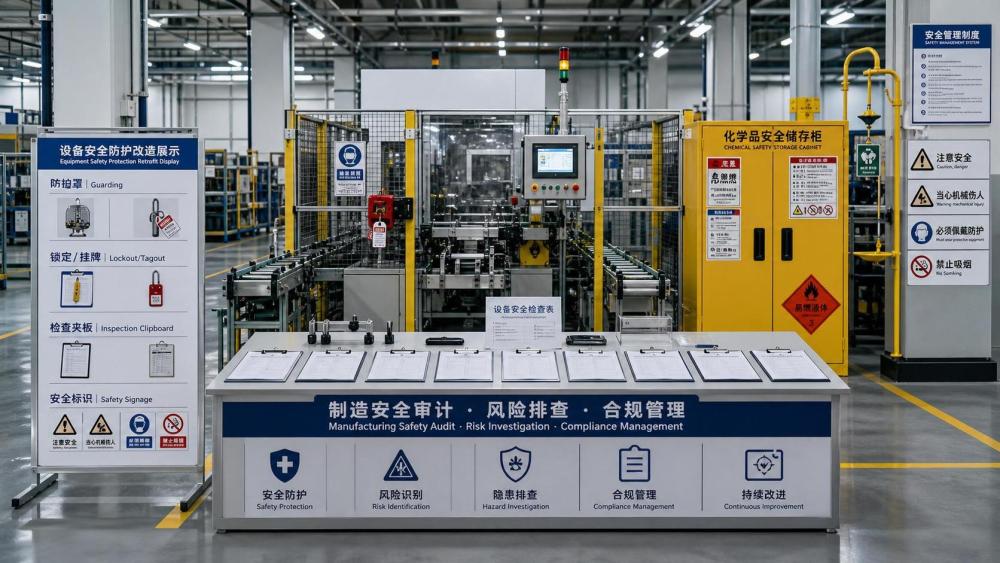
In many plants, visible hazards get attention first. Audit weaknesses usually stay hidden until a regulator, customer, or incident exposes them.
That is why safety regulations manufacturing programs cannot be judged by written policies alone. The real question is whether the audit process can detect drift early.
A site may look compliant on paper while lockout records are incomplete, contractor controls vary by shift, or machine guarding checks lack traceability.
In practice, the highest-risk gaps are often administrative at first. They later become technical, legal, and operational failures.
Across global production networks, this matters even more. Standards, supplier expectations, and enforcement intensity differ by region, but audit discipline must stay consistent.
This is where broader industrial intelligence helps. Platforms such as GTIIN track regulatory change, sourcing pressures, and supply chain disruption signals that can reshape plant-level compliance priorities.
So the useful starting point is simple: do not wait for injury data to confirm a weakness that audit evidence already suggests.
Which audit gaps raise risk the fastest?
Seven gaps appear repeatedly in manufacturing reviews, especially where production pressure overrides verification quality.
- Training is recorded, but task competency is not tested at the workstation.
- Machine safeguarding inspections exist, yet corrective actions remain open too long.
- Lockout/tagout procedures are generic and not matched to actual equipment configurations.
- Near-miss trends are collected, but root causes are not linked to preventive actions.
- Contractor safety controls are weaker than internal employee controls.
- Chemical handling audits focus on storage labels, not exposure routes and emergency readiness.
- Audit scoring rewards completed checklists rather than verified risk reduction.
These weaknesses are common because they are easy to overlook during routine compliance walks.
More importantly, each one can undermine safety regulations manufacturing compliance across multiple systems at once, from training to maintenance to procurement.
A quick judgment table for the seven gaps
A short comparison makes it easier to see which findings need immediate escalation.
Are your audits checking paperwork, or checking real control performance?
This is often the turning point. Many teams audit document presence, not operational effectiveness.
For example, a confined space procedure may be current, signed, and properly filed. That does not confirm atmospheric testing is done in the right sequence.
The same issue appears in PPE reviews. A policy may specify protection levels, while actual use varies by temperature, line speed, or supervisor expectations.
A stronger safety regulations manufacturing audit asks for field proof:
- Can the operator explain the critical step without prompting?
- Does the observed task match the approved risk control?
- Is the supervisor closing deviations within a defined timeframe?
- Can maintenance, production, and EHS records tell the same story?
If the answers do not align, the audit process is measuring documentation quality, not control reliability.
Why do multi-site and supplier-linked operations miss compliance drift?
The problem is rarely one regulation. It is variation.
Different plants may share a corporate standard while using different machines, staffing models, languages, and maintenance contractors. Audit checklists then become too general.
Supplier-linked production adds another layer. Incoming materials, packaging methods, and outsourced processing steps can change hazard exposure without a formal design change.
This is where cross-border intelligence becomes practical rather than theoretical. GTIIN’s monitoring of export rules, industry standards, and supply chain shifts helps identify where operating assumptions may no longer hold.
A coating chemical sourced from a new market, for instance, may carry different handling constraints. A faster fulfillment route may alter inspection windows. An automation retrofit may introduce guarding requirements missed by older audits.
So when safety regulations manufacturing compliance starts drifting across locations, look first at change management, supplier onboarding, and local interpretation of core standards.
What signals usually show drift early?
- Corrective actions repeat across quarters.
- The same checklist scores well, but incident precursors increase.
- Temporary controls stay in place too long.
- Sites interpret one standard in different ways.
- New equipment launches without revised task risk reviews.
How can you tell whether an audit finding is minor or truly high risk?
Severity should not depend only on legal wording. It should also reflect exposure frequency, failure consequence, and the likelihood of control breakdown.
A missing signature may be minor. A completed form that masks a failed isolation step is not.
A useful judgment method combines three checks:
- Does the issue affect a life-critical or high-energy task?
- Could one failure bypass several protections at once?
- Has the same weakness appeared before under another name?
If two answers are yes, escalation is usually justified.
This matters for safety regulations manufacturing reviews because low-quality grading can bury the issues most likely to trigger injury, downtime, customer concern, or enforcement action.
What should change in the next audit cycle?
The next cycle should be narrower in focus and deeper in evidence.
Instead of expanding checklist length, strengthen the link between hazard type, control verification, and closeout discipline.
A practical reset usually includes these moves:
- Reclassify findings by operational risk, not only by clause reference.
- Require field observation for critical tasks in every audit cycle.
- Tie contractor reviews to the same control standard used internally.
- Check whether engineering changes triggered updated procedures and training.
- Review supplier or material changes for hidden EHS impacts.
- Track repeat findings as system failures, not isolated misses.
That approach makes safety regulations manufacturing audits more predictive. It also improves discussions with operations, maintenance, and sourcing teams because the evidence is concrete.
The immediate next step is to map your seven most common findings against task criticality, recurrence, and closure speed. That small review often reveals where risk is rising quietly, even when headline metrics still look stable.
Weekly Insights
Stay ahead with our curated technology reports delivered every Monday.
Recommended News
 Supply ChainOct 15, 2026How to choose a supply chain strategy for unpredictable demand
 Supply ChainOct 14, 2026How to assess an industrial equipment supplier's spare parts support
 Supply ChainOct 14, 2026EU Updates CSDDD Guidance on Global Supply Chain Due Diligence
 Global SourcingOct 13, 2026How to assess industrial automation suppliers for legacy integration