
EU PPWR EPR Rule Starts July 1 for Imported Packaging
On July 1, 2026, the EU will activate the mandatory EPR registration system tied to the Packaging and Packaging Waste Regulation (PPWR), extending the requirement to all non-EU companies exporting packaged goods into the bloc. The development matters directly to exporters in electromechanical products, daily consumer goods, food, and cosmetics, as well as to overseas importers and supply chain teams, because customs clearance will depend on whether producer registration and annual carbon footprint reporting have been completed.
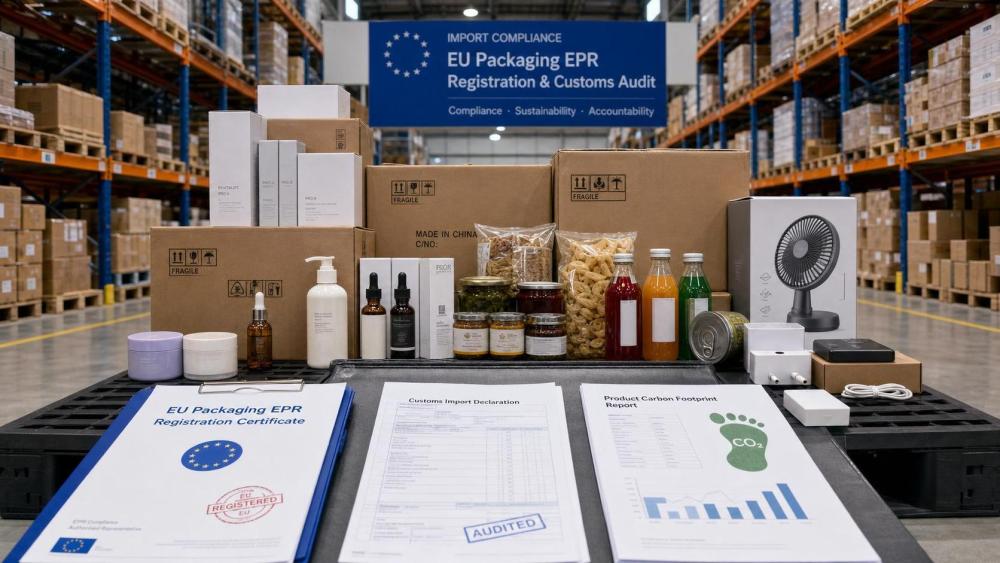
What Has Been Confirmed for July 1
The confirmed change is that the supporting mandatory EPR registration system under the EU PPWR will formally enter into use on July 1, 2026. Its scope covers all non-EU enterprises that export goods containing packaging to the EU market.
The confirmed compliance consequences are also clear in the provided information: goods that have not completed producer registration and annual carbon footprint reporting will be refused customs clearance by member state customs authorities.
The confirmed business relevance is cross-sector rather than limited to a single category. The requirement directly affects Chinese exporters in machinery and electrical products, consumer goods, food, and cosmetics, and it also requires overseas importers to coordinate immediately with Chinese suppliers on registration and life cycle assessment, or LCA, data preparation.
Where the Pressure Will Be Felt First
Export shipments face a direct market-entry checkpoint
From an industry perspective, direct trading companies are likely to feel the impact first because the new requirement is tied to customs clearance. The practical issue is not only whether the product can be sold, but whether the shipment can enter the EU at all. What deserves closer attention is the handoff between export documentation, packaging compliance records, and shipment timing.
Manufacturers will be pulled into data preparation
Processing and manufacturing enterprises may be affected even when they are not the final importer, because the required annual carbon footprint reporting points back to packaging-related data preparation. Analysis shows that factories supplying packaged goods may need to work more closely with customers and importers on LCA-related information, especially where packaging choices are embedded in production and delivery processes.
Importers carry immediate coordination risk
Overseas importers are specifically highlighted in the provided information, which means their role is operationally important. Their exposure lies in supplier coordination, registration readiness, and the completeness of supporting records before goods are shipped. Observably, importer risk is not limited to internal compliance; it also depends on whether upstream suppliers can provide usable data on time.
Supply chain service providers may see tighter document demands
Logistics, customs, and related supply chain service teams may also be affected through execution risk. Even without being the regulated producer themselves, these parties may need to handle stricter pre-clearance checks, document review, and exception management. The key change to watch is whether clients begin moving compliance verification earlier in the shipping cycle.
What Companies Should Watch Now
Registration status cannot be treated as a late-stage formality
Analysis shows that registration should be viewed as a front-end market access condition rather than a post-shipment paperwork task. For exporters and importers, the immediate concern is whether the responsible party has been identified and whether the registration process has started in time for EU-bound packaged goods.
LCA data readiness will shape execution speed
What deserves closer attention is the readiness of carbon footprint reporting inputs. The provided information specifically points to annual reporting and LCA data preparation, so companies should distinguish between having a policy awareness and having data that can actually support filing and shipment execution.
Customer and supplier alignment needs to start early
For businesses selling into the EU through distributors, importers, or cross-border supply arrangements, communication risk may become as important as technical compliance. The practical issue is whether Chinese suppliers and overseas importers agree early on responsibilities, document scope, and delivery timelines tied to registration and reporting.
Category exposure should be checked shipment by shipment
The provided information identifies electromechanical goods, daily consumer products, food, and cosmetics as directly affected sectors. Companies in these categories should pay closer attention to which product lines, packaging formats, and customer accounts may face the earliest implementation pressure, especially where customs timing is commercially sensitive.
Why This Looks Larger Than a Short-Term Filing Task
Observably, this update is more than a narrow administrative reminder. It links producer registration and carbon footprint reporting directly to customs clearance, which gives packaging compliance a more immediate place in cross-border trade operations. Analysis shows that the development is better understood as an operational compliance signal with direct execution consequences, not merely as a long-range policy discussion.
At the same time, it is still appropriate to treat parts of the implementation as a developing compliance process rather than assume every practical detail is settled in business workflows. The immediate result is clear from the provided information, but companies still need to keep watching how requirements are interpreted and managed in day-to-day trade execution.
How the Market Should Read This Update
The most balanced reading is that this is already a concrete compliance threshold for companies exporting packaged goods into the EU, while also serving as a longer-term signal that packaging-related reporting is becoming more tightly connected to market access. For affected exporters and importers, the issue is not only regulatory awareness but whether registration and reporting preparation can be integrated into shipment planning, supplier communication, and customs readiness.
It is more appropriate to understand this update as a confirmed short-term operational requirement with broader long-term implications for packaging compliance and trade execution. That makes it important now, while still requiring continued observation as implementation practice develops.
Basis of This Article
This article is based on the user-provided news title, event date, and event summary. In reporting on developments of this type, commonly relevant source categories may include official announcements, company disclosures, industry association updates, authoritative media coverage, and standards-related documents.
No specific official source link was provided in the input, so the exact official reference still requires ongoing verification. The main follow-up points worth monitoring are whether there are further official clarifications on registration practice, reporting expectations, and the operational handling of customs clearance linked to PPWR-related EPR compliance.
Have questions about this sector analysis, or seeking best practices specific to your niche? Drop us a line below and let the senior consultants at GTIIN assist you.
“We respect your privacy. Your information is strictly confidential.”
Weekly Insights
Stay ahead with our curated technology reports delivered every Monday.
Recommended News
 Supply ChainNov 10, 2026China Extends Pause on 24% Additional Tariff on US Goods by Two Months
 Industry StandardsNov 10, 2026Which imports are subject to EU carbon border compliance?
 Global SourcingNov 09, 2026USTR Extends 178 China Section 301 Tariff Exclusions to January 2027
 Supply ChainNov 09, 2026How can a tariff risk management dashboard track cost exposure?



