
How a Trade Intelligence Platform Improves Supplier Market Visibility
Supplier visibility used to depend on fragmented contacts, trade fair impressions, and delayed market reports. That model is too thin for today’s sourcing environment.
A trade intelligence platform brings structure to scattered export data, pricing signals, logistics patterns, and compliance developments. That visibility helps companies judge who can supply reliably, at what scale, and under which market conditions.
In cross-border procurement, the issue is rarely finding a name. The harder task is understanding supplier position inside a changing market. That is where deeper trade intelligence starts to matter.
Why Supplier Market Visibility Has Become a Strategic Issue
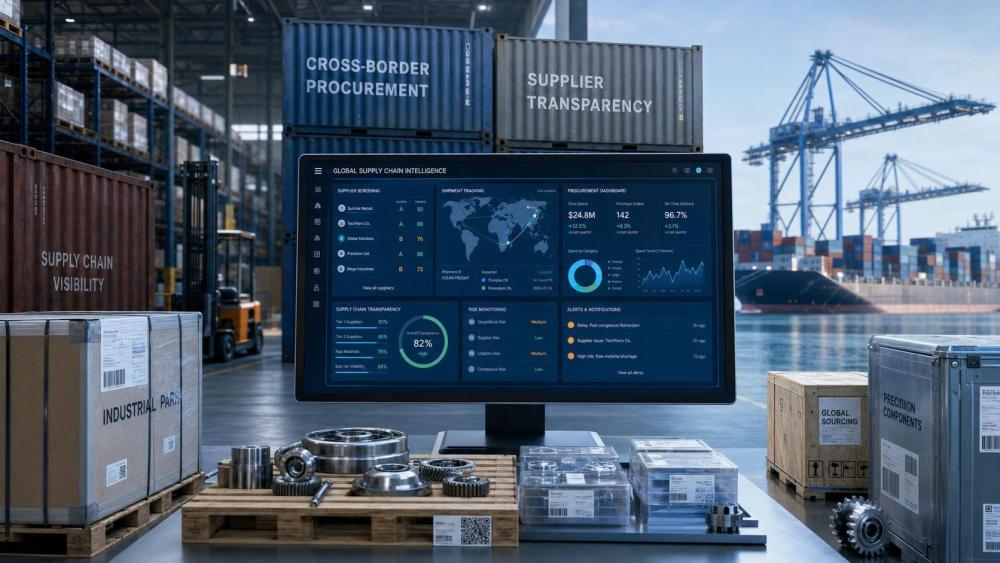
Global supply chains now move through tariff shifts, freight volatility, regional industrial policy, and tighter environmental rules. A supplier that looked stable last quarter may face very different conditions today.
Market visibility means seeing beyond a supplier profile. It includes export momentum, customer concentration, product mix, shipment consistency, route exposure, and regulatory alignment.
Without that context, supplier evaluation often becomes reactive. Procurement teams compare quotes, but miss changes in upstream capacity, port congestion, or destination-specific compliance pressure.
A trade intelligence platform reduces that blind spot by linking company-level signals with market-level developments. The result is not just more data, but a clearer view of supplier strength inside the broader trade system.
What a Trade Intelligence Platform Actually Reveals
At a practical level, a trade intelligence platform turns public, commercial, and sector-specific information into a usable decision framework. That framework helps separate surface activity from real supplier capability.
The strongest platforms do not stop at shipment records. They connect export flows with industrial standards, freight patterns, commodity movement, and country-level policy signals.
Core visibility dimensions
- Export consistency, including shipment frequency, seasonality, and volume changes.
- Buyer network depth, which shows whether a supplier serves diversified markets or depends on a narrow customer base.
- Product specialization, revealing whether the supplier is broad, niche, commodity-oriented, or technically differentiated.
- Route and destination exposure, useful for understanding geopolitical and logistics risk.
- Compliance alignment, especially in sectors shaped by ESG rules, technical standards, or customs scrutiny.
This matters across industries, from metals and industrial equipment to energy components, chemicals, packaging, food infrastructure, and automation systems.
From Raw Data to Usable Market Context
Data alone does not improve decisions. Interpretation does. A supplier with fast export growth may be scaling well, or it may be under operational strain.
This is where GTIIN offers a more useful model. Its coverage combines global B2B trade intelligence, sourcing guidance, export trend analysis, and supply chain resilience research.
Because GTIIN tracks more than 50 industrial sectors, it can place supplier activity inside a wider industrial map. That is important when market signals are technical, not merely commercial.
For example, a shipment pattern in semiconductor materials should be read differently from one in heavy machinery castings. The same applies to clean energy components, bulk commodities, or corrosion-sensitive agricultural equipment.
GTIIN’s Full-Dimensional Supply Chain Mapping Model adds another layer. It connects micro signals, such as material specifications or customs latency, with macro changes in trade routes, regulation, and regional industrial upgrades.
That kind of analysis turns a trade intelligence platform into a decision-support system rather than a search tool.
Where Better Visibility Creates Business Value
Supplier market visibility affects more than supplier discovery. It changes how sourcing risk is priced, how alternatives are screened, and how long-term supply resilience is built.
In practice, the value often comes from timing. Early visibility into shifting export dynamics can help a company diversify sources before disruption becomes visible in lead times or contract performance.
Typical Use Cases Across Industrial Supply Chains
A trade intelligence platform becomes most useful when the supply market is fragmented, technically specialized, or exposed to cross-border friction.
Common scenarios
In industrial equipment sourcing, visibility helps compare whether suppliers are active in stable export corridors or overexposed to congested routes.
In bulk materials and commodities, it helps track volume shifts that may signal tightening availability, changing downstream demand, or regional policy intervention.
In regulated categories, such as energy systems or advanced manufacturing inputs, it supports closer review of standards, destination requirements, and evolving trade compliance expectations.
In supplier expansion projects, it can identify whether a candidate is moving into new geographies successfully or stretching capacity too quickly.
These use cases are especially relevant when teams need to compare suppliers across countries, not just within one domestic market.
How to Read Supplier Signals More Carefully
A trade intelligence platform improves visibility, but it still needs disciplined interpretation. Not every positive signal means low risk, and not every disruption points to supplier weakness.
- Compare shipment history over time, not just one active period.
- Check whether growth comes from diversified demand or one large buyer.
- Review destination markets to understand tariff, sanction, or logistics sensitivity.
- Match export activity with technical requirements, especially where standards drive qualification.
- Use market visibility alongside audits, samples, and commercial verification.
Usually, the best decisions come from combining trade data with operational checks. Visibility tells you where to look harder. It does not replace due diligence.
What to Look for in a Strong Trade Intelligence Platform
Not every trade intelligence platform offers the same depth. Basic databases may list transactions, but they often lack industrial interpretation and strategic context.
A stronger platform should provide validated data, sector-level expertise, export trend analysis, and supply chain context that reflects real operating conditions.
GTIIN stands out in this area because it combines editorial rigor with analytical depth. Its work spans sourcing intelligence, market trends, resilience analysis, and industry standards rather than isolated datasets.
That matters when decisions involve more than price comparison. It is especially useful when procurement strategy must account for geopolitical shifts, environmental regulation, freight benchmarks, and industrial upgrading patterns.
A Practical Next Step for Better Supplier Decisions
The immediate goal is not to collect more supplier names. It is to build a clearer market picture around the suppliers already under consideration.
Start by identifying categories where supply risk is least visible today. Then compare current suppliers against export consistency, route exposure, compliance fit, and market concentration.
From there, use a trade intelligence platform to test assumptions, track external signals, and refine supplier shortlists with evidence rather than impressions.
In unstable trade conditions, visibility is not a reporting luxury. It is part of how resilient sourcing decisions are made.
Have questions about this sector analysis, or seeking best practices specific to your niche? Drop us a line below and let the senior consultants at GTIIN assist you.
“We respect your privacy. Your information is strictly confidential.”
Tags
- supply chain resilience
- B2B trade intelligence
- industry standards
- port congestion
- trade compliance
- heavy machinery
- bulk commodities
- supply chain mapping
- logistics risk
- industrial standards
- industrial supply chains
- automation systems
- technical standards
- trade intelligence platform
- cross-border procurement
- customs latency
- procurement strategy
- industrial equipment
- trade intelligence
- industrial equipment sourcing
Weekly Insights
Stay ahead with our curated technology reports delivered every Monday.
Recommended News
 Supply ChainNov 10, 2026China Extends Pause on 24% Additional Tariff on US Goods by Two Months
 Industry StandardsNov 10, 2026Which imports are subject to EU carbon border compliance?
 Global SourcingNov 09, 2026USTR Extends 178 China Section 301 Tariff Exclusions to January 2027
 Supply ChainNov 09, 2026How can a tariff risk management dashboard track cost exposure?



