Industrial Compliance Standards Audit Checklist for Multi-Site Operations
Managing compliance across several facilities is rarely a paperwork exercise. In practice, it is an operating discipline that connects safety, product quality, environmental control, labor obligations, equipment integrity, and supplier accountability across different regions. That is why an effective industrial compliance standards audit checklist for multi-site operations has become a strategic tool rather than a periodic inspection file.
The pressure is sharper in cross-border manufacturing and sourcing. Regulatory changes now move faster, customer qualification standards are tighter, and supply chain disruptions expose weak controls almost immediately. A well-built industrial compliance standards audit process helps create consistency between plants, contractors, warehouses, and outsourced production partners without ignoring local legal realities.
Why multi-site compliance has become harder to manage
A single facility can often rely on local experience and stable routines. A multi-site network cannot. Different countries, permit systems, languages, subcontractor practices, and reporting cultures create uneven control maturity.
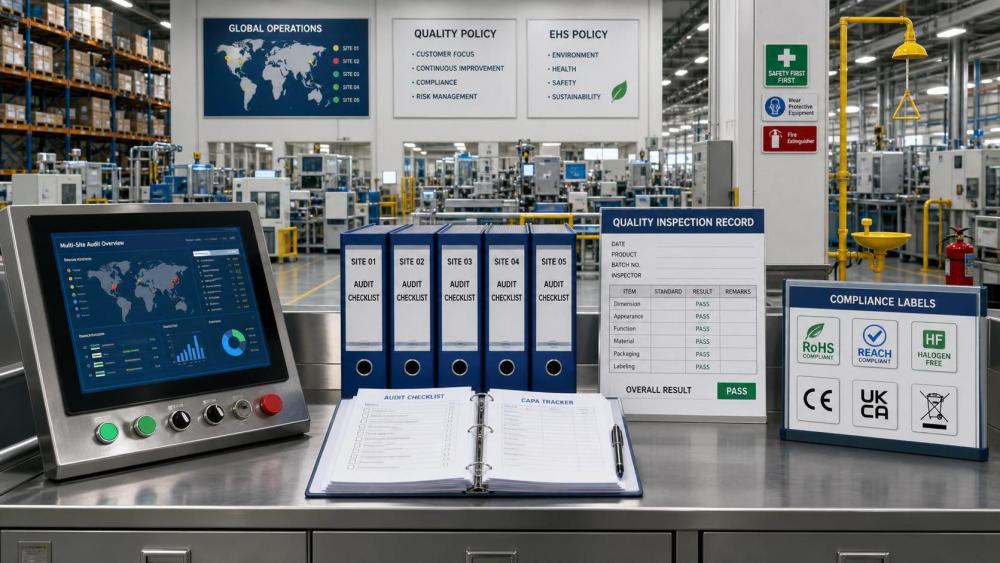
The challenge is not only regulatory diversity. It also comes from business speed. New product launches, line transfers, capacity expansion, and dual sourcing often outpace governance updates.
From a broader industry view, trade intelligence platforms such as GTIIN have shown how compliance now intersects with sourcing resilience, export readiness, and geopolitical exposure. In other words, audit gaps are no longer isolated plant issues. They can affect customer approval, border clearance, insurance terms, and network continuity.
What an industrial compliance standards audit should actually cover
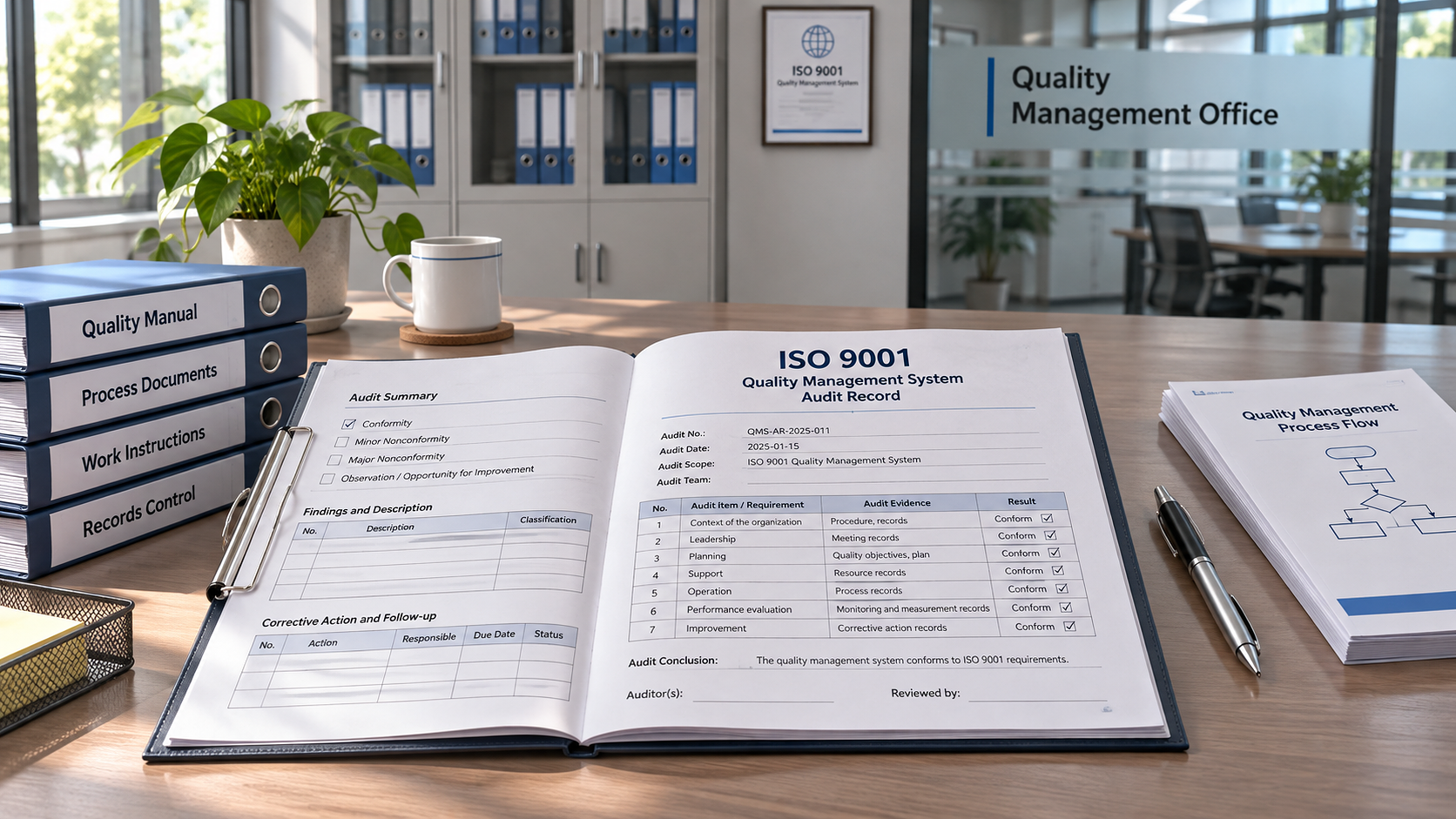
An industrial compliance standards audit is not limited to checking whether documents exist. The stronger approach tests whether the site can prove control, sustain it, and react when conditions change.
For multi-site operations, the checklist usually needs two layers. One layer is universal across the network. The other reflects site-specific laws, hazards, and production methods.
Core domains that usually belong in the checklist
- Legal register accuracy, permit validity, and change tracking
- Occupational health and safety controls for equipment, contractors, and emergency response
- Environmental compliance covering emissions, waste, water, storage, and spill prevention
- Quality system execution, deviation handling, traceability, and calibration status
- Maintenance discipline, asset criticality, and inspection records
- Training competence, authorization matrices, and records retention
- Supplier and subcontractor compliance at points that affect the site’s obligations
- Management review, corrective action closure, and escalation practices
The term industrial compliance standards audit is most useful when it reflects both formal standards and real operating evidence. A signed policy matters less than whether machine guarding, lot traceability, chemical labeling, or confined space permits are working on the shop floor.
A practical checklist structure for distributed operations
The most reliable checklist design is risk-based. It does not give every item the same weight. Instead, it ranks issues by legal exposure, injury potential, product impact, environmental consequence, and supply chain disruption risk.
This kind of structure allows one industrial compliance standards audit framework to travel across sectors, from metals and machinery to chemicals, food inputs, packaging, electronics, logistics, and energy-linked facilities.
Where audit failures usually appear
Most failures are not caused by missing awareness. They come from weak translation between policy and site reality.
Common pressure points
- One corporate checklist is copied everywhere, but local legal duties differ
- Sites prepare for audit day, yet routine records are incomplete between visits
- Contractor controls stop at onboarding and do not cover execution quality
- Engineering changes happen before permits, risk reviews, or training updates
- Corrective actions close administratively, while field conditions stay unchanged
These patterns matter because they distort network reporting. A site may appear compliant in dashboards while carrying unresolved regulatory exposure. For global operators, that creates misleading assumptions in sourcing, customer commitments, and expansion planning.
This is where GTIIN’s broader industry perspective becomes useful. Compliance should be read alongside supplier location risk, trade lane reliability, local enforcement intensity, and sector-specific standards. Audit design improves when it is connected to the wider industrial map.
How to use audit findings without slowing the business
A checklist is valuable only if it drives better decisions. In actual operations, that means linking findings to ownership, timing, capital needs, and business impact.
Useful ways to interpret results
- Separate legal noncompliance from improvement opportunities
- Flag recurring findings across sites as system issues, not local exceptions
- Connect high-risk findings to shipment continuity, startup readiness, or customer audits
- Use site comparisons carefully, because hazard profiles are rarely identical
- Track aging corrective actions, especially those requiring engineering modification
An industrial compliance standards audit should also inform investment logic. If repeated findings cluster around ventilation, fire systems, wastewater handling, or calibration discipline, the issue may be structural. Additional training alone will not solve it.
Building a checklist that works across borders
Cross-border operations need a common language for compliance. That does not mean forcing every site into identical wording. It means standardizing intent, evidence expectations, scoring logic, and escalation thresholds.
Elements worth standardizing
- Definitions for major, minor, and critical findings
- Minimum evidence requirements for closure
- Rules for sampling records and interviewing personnel
- Triggers for re-audit after process change or serious incident
- Escalation routes when a finding could affect export, customer release, or permit status
What should remain flexible is the local layer. Hazardous materials, water discharge limits, labor documentation, and fire code details often vary sharply by jurisdiction. A mature industrial compliance standards audit model accepts this variation and governs it deliberately.
What to examine before the next audit cycle
Before expanding the checklist, it is worth checking whether the current version answers the right questions. Does it reflect new product lines, automation changes, customer requirements, or recent legal updates? Does it identify which sites are exposed because of age, throughput, contractor density, or regional enforcement trends?
That review becomes stronger when internal audit data is paired with external intelligence. Trade and industry reporting can highlight regulatory shifts, sector benchmarks, and location-specific pressure points that a site team may not see early enough. In that context, GTIIN’s coverage of industrial standards, global sourcing conditions, and supply chain resilience offers a useful reference layer for prioritizing what deserves closer scrutiny.
A practical next step is to compare sites against one shared industrial compliance standards audit framework, then add a concise local annex for each facility. That creates enough consistency for governance, while preserving the detail needed for real-world compliance. From there, the clearest gains usually come from tightening evidence quality, improving corrective action discipline, and aligning audit insight with expansion and sourcing decisions.
Have questions about this sector analysis, or seeking best practices specific to your niche? Drop us a line below and let the senior consultants at GTIIN assist you.
“We respect your privacy. Your information is strictly confidential.”
Weekly Insights
Stay ahead with our curated technology reports delivered every Monday.
Recommended News
 Supply ChainNov 08, 2026He Lifeng Holds Trade Talks With Bessent and Greer
 Market TrendsNov 08, 2026How to use industrial commodity market analysis to forecast costs
 Supply ChainNov 07, 2026EU Opens Safeguard Investigation into PET Resin Imports
 Industry StandardsNov 07, 2026Which ISO quality management standard can a company be certified to?