
EU Pushes CBAM Transition to End-2027
On July 2, 2026, the European Commission confirmed that the transitional reporting phase of the Carbon Border Adjustment Mechanism (CBAM) will be extended by one year to 31 December 2027. The change delays full compliance obligations for importers covering iron, steel, cement, aluminum, fertilizers, electricity, and hydrogen, but it also resets planning for non-EU exporters, customs-related workflows, carbon data systems, and third-party verification preparation. For companies trading with the EU, the development is worth close attention because it changes timing, not the underlying need to prepare.
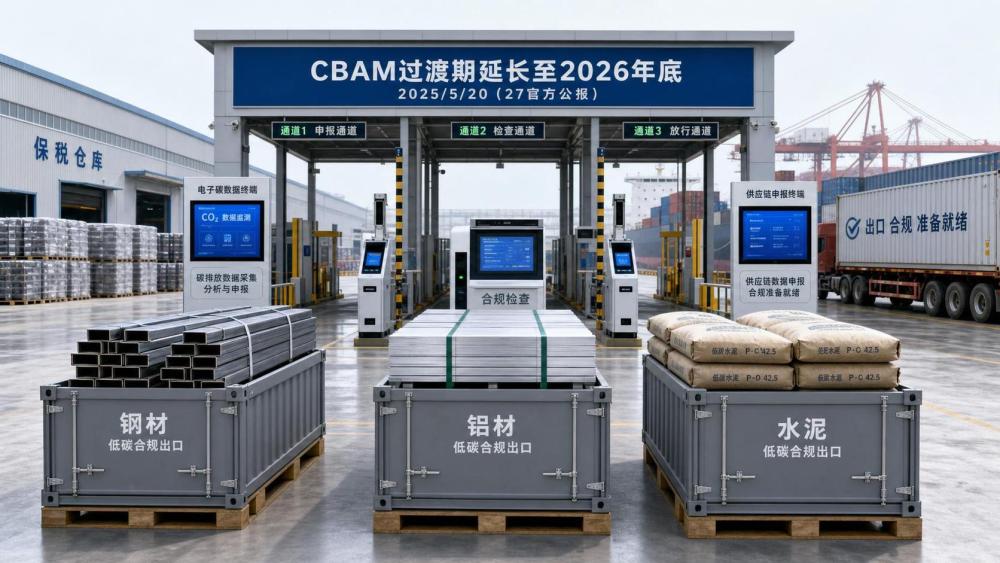
What the extension formally changes
The confirmed change is limited but operationally significant. The European Commission announced that the CBAM transitional reporting period will now run until 31 December 2027. As a result, full compliance obligations for importers in the covered sectors are postponed by one year.
The affected product groups named in the provided information are iron, steel, cement, aluminum, fertilizers, electricity, and hydrogen. The same information also indicates that the extension has direct implications for non-EU exporters' data collection arrangements, customs declarations, and readiness for third-party verification.
Importers are also expected to revisit implementation schedules linked to supplier onboarding, digital carbon reporting infrastructure, and contractual terms with manufacturers based in China and ASEAN markets.
Where the pressure shifts across the supply chain
Importers now face a timing reset, not a removal of work
From an industry perspective, EU importers are among the first parties affected because their compliance timeline has changed directly. The impact is most visible in onboarding schedules for suppliers, the rollout pace of digital reporting systems, and the sequencing of internal compliance preparation. What deserves closer attention is whether companies use the extra year to improve reporting quality or simply defer implementation decisions.
Non-EU exporters remain exposed through data and documentation
For exporters outside the EU, especially those supplying covered goods into Europe, the extension affects preparation for emissions-related data collection and supporting documentation. The operational impact is likely to be felt in how exporters organize production data, coordinate with customers on declaration requirements, and prepare for third-party verification expectations. The practical issue is not only timing, but also whether exporters can produce information in a form that importers can use.
Manufacturers in China and ASEAN may see contract reviews intensify
The provided information specifically points to Chinese and ASEAN-based manufacturers in relation to contractual clauses. Analysis shows this matters because contract language often determines reporting responsibilities, information-sharing duties, and timeline commitments between buyer and supplier. Even with the extension, manufacturers connected to EU-bound supply chains may still face more detailed requests from customers on carbon reporting readiness.
Service providers linked to customs and reporting systems may see revised demand patterns
Observably, the extension also matters for businesses supporting customs declarations, digital reporting infrastructure, and verification preparation. Their role sits between regulatory timing and operational execution. The key change is likely to be a reassessment of project timing, system rollout priorities, and client implementation calendars rather than a disappearance of demand.
What companies should watch now
Follow whether official wording leads to further rule clarification
Companies should distinguish between the confirmed timing extension and any future clarification that may shape practical implementation. The current confirmed fact is the new end date for the transitional phase. Analysis shows that businesses still need to monitor how official wording may later be reflected in operational guidance, especially where reporting procedures and readiness expectations are concerned.
Recheck supplier onboarding plans against the new deadline
Importers and procurement teams should revisit supplier onboarding schedules in the covered sectors. The immediate question is not whether onboarding is still needed, but whether the sequence, milestones, and internal deadlines should be adjusted. This is especially relevant where supply chains involve multiple non-EU manufacturers and reporting responsibilities are distributed across several parties.
Review digital carbon reporting projects with a delivery lens
The extension directly affects digital carbon reporting infrastructure timelines. What deserves closer attention is whether companies treat the extra year as room to improve data consistency and systems integration, or whether project delays create a later implementation bottleneck. The distinction between policy timing and actual business readiness remains important.
Revisit contract clauses before compliance pressure returns
The provided information highlights contractual clauses with Chinese and ASEAN-based manufacturers. In practice, this points companies toward reviewing how contracts allocate data provision duties, update obligations, and timing commitments. Even without adding new obligations in this article, it is reasonable to observe that contractual clarity may become a practical risk-control issue as the transition period continues.
How this development is best understood at this stage
Analysis shows that this is better understood as a short-term regulatory timing change with longer-term operational implications. The extension does not, by itself, indicate that CBAM-related preparation has become less relevant for the covered sectors. Instead, it suggests that the pace of compliance preparation may shift while the need for data systems, documentation discipline, and supplier coordination remains in place.
It is also more appropriate to understand this as a development that still requires continued observation. The confirmed fact is the one-year extension. The broader industry meaning will depend on how importers, exporters, and supply-chain partners adjust their execution plans during the extended transitional window.
What this means for the market conversation
At this point, the announcement should be read as a timeline adjustment rather than a final resolution of operational pressure around CBAM. For the sectors named in the announcement, the main significance lies in how preparation calendars, reporting workflows, and supplier relationships may be restructured over the next phase. A neutral reading is that the extension creates more planning space, while leaving the underlying compliance direction intact based on the information provided.
Basis of this article and points that still need checking
This article is based on the user-provided news title, event date, and event summary. For developments of this type, relevant source categories often include official announcements, company disclosures, industry association updates, authoritative media reporting, and standards-related documents. No specific official source link was provided in the input, so the exact wording and any later implementation details still need continued verification. The next areas to watch are any further official clarification on reporting expectations, importer implementation timelines, and how supplier-related documentation requirements are translated into day-to-day trade operations.
Weekly Insights
Stay ahead with our curated technology reports delivered every Monday.
Recommended News
 Supply ChainOct 15, 2026How to choose a supply chain strategy for unpredictable demand
 Supply ChainOct 14, 2026How to assess an industrial equipment supplier's spare parts support
 Supply ChainOct 14, 2026EU Updates CSDDD Guidance on Global Supply Chain Due Diligence
 Global SourcingOct 13, 2026How to assess industrial automation suppliers for legacy integration