What Hidden Costs Can Reduce Industrial Automation ROI?
Industrial automation can deliver substantial value, but the return on investment is often weakened by costs that sit outside the original equipment quotation. A robot cell, conveyor system, vision station, or automated packaging line may appear financially sound when compared with direct labor savings alone. That calculation can become unreliable once integration work, production disruption, software support, maintenance capability, and process variability are included.
The hidden costs that reduce the ROI of industrial automation systems are rarely random surprises. Most arise from a small set of planning assumptions: that the existing process is stable enough to automate, that the equipment will connect cleanly with surrounding systems, that operators can absorb new responsibilities quickly, and that expected throughput can be reached without extended tuning. Buyers who test those assumptions before approving a project are in a stronger position to distinguish a high-return automation investment from an expensive operational constraint.
Integration costs often exceed the cost of the machine interface
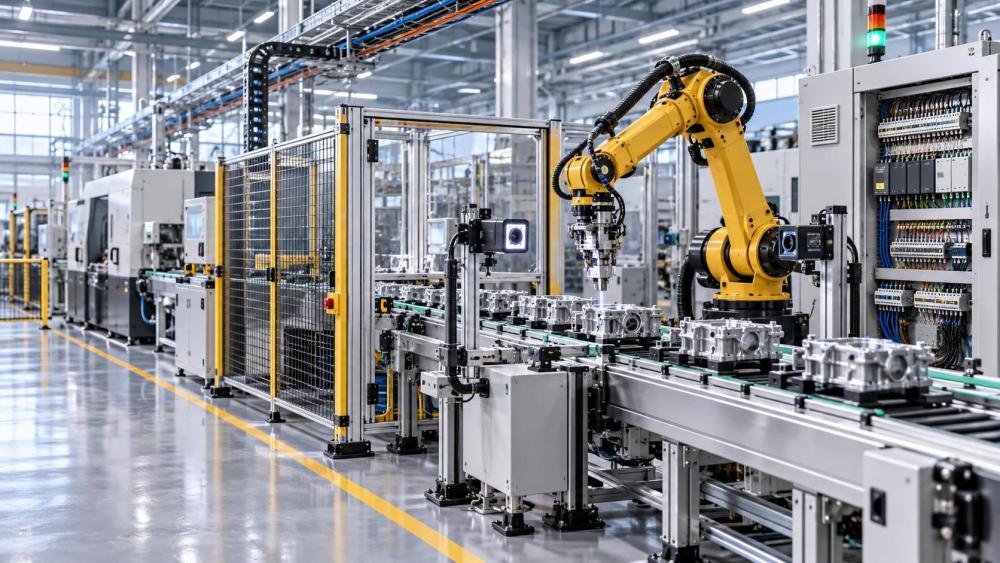
Automation suppliers typically price the equipment they provide: robots, controls, safety hardware, sensors, end effectors, conveyors, electrical cabinets, and standard commissioning. The project, however, must operate within a live production environment. That introduces a broader integration burden.
A new automated station may need to exchange data with manufacturing execution systems, warehouse software, quality databases, enterprise resource planning platforms, traceability tools, or legacy programmable logic controllers. Even when every component supports a common industrial protocol, connection is not the same as reliable operation. Data fields need to be mapped, error states need to be defined, and ownership of exceptions needs to be clear. A system that physically moves parts but does not accurately report rejects, rework, batch status, or inventory movements can create downstream control problems that offset much of its labor benefit.
Physical integration can be equally demanding. Floor loading, utility capacity, compressed-air quality, dust control, lighting for vision systems, cable routing, guarding, access for maintenance, and emergency-stop zoning may all require changes to the facility. In a constrained plant, a modestly priced cell can trigger layout revisions that affect material flow across an entire department.
Integration cost is particularly easy to underestimate when the automation must work across multiple product variants. A cell designed for one standardized component can be relatively predictable. A system expected to handle changing dimensions, surface finishes, packaging formats, or supplier tolerances usually requires more tooling, programming, testing, and validation. The capital budget should separate “base equipment integration” from “variant readiness,” rather than assuming that a demonstration with one part proves readiness for the production mix.
The cost of lost production during installation is often under-modeled
Automation ROI models usually account for equipment purchase and installation labor. They may not fully account for the contribution margin lost while the line is stopped, running at reduced speed, or producing at elevated scrap levels during ramp-up. For facilities with high asset utilization, this can be one of the largest costs in the business case.
Commissioning schedules tend to focus on technical milestones: equipment delivered, controls connected, safety validation completed, and site acceptance test passed. Production economics follow a different timetable. Output may remain below target while motion paths are refined, sensors are repositioned, operators learn recovery procedures, and exceptions emerge under real product variation. A system can pass acceptance testing yet still require several cycles of adjustment before it produces consistently at its expected rate.
Planned shutdowns reduce this exposure, but they do not eliminate it. A short shutdown window can shift risk into rushed installation work, deferred testing, and a difficult restart. The more useful comparison is not “shutdown versus no shutdown.” It is the expected cost of each transition strategy: a longer planned outage with deeper factory acceptance and pre-install work, or a shorter outage followed by a controlled, explicitly budgeted ramp-up period.
Labor savings can be real while labor cost does not fall as expected
Replacing manual handling, inspection, assembly, or packaging work does not automatically remove the associated labor cost from the operation. Automation frequently changes the labor mix before it reduces headcount. A line may need fewer people performing repetitive tasks but more people able to troubleshoot sensors, reset alarms, manage tooling changes, maintain robots, validate quality alerts, and schedule production around the automated asset.
This distinction matters most where direct labor is flexible only in theory. If workers are reassigned rather than removed, the benefit may appear as additional capacity, improved ergonomics, lower overtime, or more stable quality. Those can be valuable outcomes, but they should not be presented as immediate wage reduction. A business case that counts full labor elimination while the facility continues to carry the same staffing level will overstate ROI.
Training is also more than an initial vendor-led session. Operators need enough confidence to respond to routine faults without bypassing safety measures or waiting for specialist support. Maintenance staff need access to documentation, diagnostic tools, backup programs, calibration procedures, and spare-part information. Supervisors need to understand what changed in staffing, cycle-time expectations, and escalation procedures. Without this operational preparation, a technically capable system can spend too much time idle for minor recoverable issues.
For cross-border projects, language, documentation format, remote support hours, and local service availability add another layer. A low initial price from a distant supplier can become less attractive if a controls issue requires long remote troubleshooting sessions, site travel, or an extended wait for a proprietary replacement component.
Reliability costs are tied to recoverability, not only uptime promises
Quoted availability figures are useful only when the operating conditions behind them resemble the intended application. A robot working with uniform components in a controlled demonstration environment faces a different reliability profile from one handling variable incoming material on a humid shop floor beside a process that creates dust, vibration, oil mist, or heat.
Buyers should examine what happens when the system encounters an abnormal condition. Parts may arrive misoriented. Labels may be unreadable. Packaging may be damaged. A feeder may run empty. A vision system may fail to classify an item. An upstream machine may stop without warning. Each event has an economic cost that depends on recovery time, not merely detection capability.
A highly automated line can be more vulnerable to a single-point failure than a manual process. Manual teams can sometimes keep work moving around a local issue. An integrated cell may stop entirely when one scanner, network switch, sensor, gripper, servo drive, or software service fails. Redundancy is not required everywhere, but critical failure points should be identified before procurement. The practical question is whether a trained local team can restore operation safely and quickly, or whether every fault depends on external support.
Maintenance cost is similarly broader than scheduled service visits. It includes spare parts, preventive inspections, calibration, backups, consumables, software licenses, cyber patches, replacement tooling, and the time needed to preserve engineering knowledge as staff change. Systems using proprietary components may provide strong performance, yet introduce pricing and lead-time exposure over the asset life. A buyer should compare not just warranty terms, but the likely support model after warranty ends.
Quality gains depend on the process being stable enough to automate
Automation is often justified through improved consistency. That benefit is credible when the inputs, process conditions, and acceptance criteria are sufficiently controlled. It is less secure when automation is layered over an unstable process.
For example, an automated inspection station may accurately identify defects, but it cannot resolve variation introduced by inconsistent upstream material or unclear quality rules. A robotic assembly system may repeat its programmed motion precisely while producing defects because supplied parts vary beyond the gripper or fixture tolerance. In both cases, the automation makes the underlying process variation more visible, and may increase rejection or rework before the source of that variation is addressed.
This does not argue against automation. It changes the order of investment. Process capability, incoming-material specifications, fixture design, and quality criteria should be tested before the automation scope is frozen. Otherwise, engineering change requests can accumulate after installation. Each change may look small in isolation: a modified nest, another sensor, revised vision lighting, a new recipe, an additional reject lane. Together, they can materially alter project cost and delay the expected return.
There is also a commercial risk in defining performance too broadly. “Handles all current products” is a weak requirement unless the product family, weight range, dimensions, surface condition, orientation, changeover frequency, and acceptable cycle time are documented. Procurement teams need acceptance criteria that reflect real operating variation rather than a nominal sample set.
Cybersecurity and compliance costs arrive after connectivity expands
Connected automation creates value through traceability, remote diagnostics, performance monitoring, and production data. It also increases the number of systems that require access control, network segmentation, software management, backups, and incident response planning.
The cost may fall across several budgets: IT, operational technology, engineering, quality, and site management. That fragmentation makes it easy to omit from the original ROI calculation. A plant may need industrial network upgrades, managed remote access, user-account controls, patching procedures, secure backups, or support from specialists who understand both production equipment and cyber risk. For regulated or safety-sensitive operations, documentation and validation obligations may further extend implementation time.
Compliance expenses vary by sector and geography, so they should not be treated as a generic contingency. The relevant issue is whether the system’s safety design, electrical documentation, software controls, traceability records, and change-management process meet the requirements of the destination facility and customer base. Imported equipment can add complexity where local electrical practices, guarding requirements, language obligations, or certification expectations differ from the supplier’s home market.
A more credible ROI model uses scenarios, not a single payback figure
The most reliable automation business cases compare more than the expected production state. They include a base case, a slower ramp-up case, and a constrained-performance case. The goal is not to make every project look risky. It is to determine whether the investment remains defensible when throughput is lower than planned, labor is redeployed rather than eliminated, or extra engineering is required.
Before committing capital, teams should quantify the following items in the same financial model as the equipment price:
- Factory and site integration engineering, including controls, data, layout, utilities, guarding, and validation.
- Lost output, overtime, scrap, and rework during installation and ramp-up.
- Training time, revised staffing roles, technical support, and retained labor.
- Annual maintenance, critical spares, consumables, software, and lifecycle support.
- Expected product changes, tooling revisions, recipe development, and engineering change requests.
- Cybersecurity, network, documentation, certification, and compliance work required for the site.
- Working-capital effects where the system changes buffer inventory, work-in-process, or material flow.
The comparison should also distinguish benefits by type. Reduced labor expense, avoided overtime, increased capacity, improved yield, lower injury exposure, better traceability, and reduced customer claims do not have the same certainty or timing. Some are direct savings; others are contingent on sales demand, staffing decisions, or process discipline. Treating every benefit as immediate cash savings is a common source of inflated returns.
Industrial automation is most likely to meet its financial promise when it is applied to a stable, repeatable process with measurable constraints and an operating team prepared to own the system after commissioning. The purchase decision should therefore rest less on the headline equipment price or a short payback claim than on the full cost of making the automated process dependable. That is where hidden costs become visible early enough to manage, negotiate, or decide that the project should be redesigned before it scales.
Weekly Insights
Stay ahead with our curated technology reports delivered every Monday.
Recommended News
 Supply ChainSep 22, 2026How heavy equipment lifecycle data can reduce unexpected downtime
 Supply ChainSep 21, 2026How export regulations affect logistics lead times and delivery risk
 Industry StandardsSep 20, 2026What evidence is needed to pass a carbon reporting audit?
 Industry StandardsSep 19, 2026When does manufacturing compliance consulting reduce audit risk?