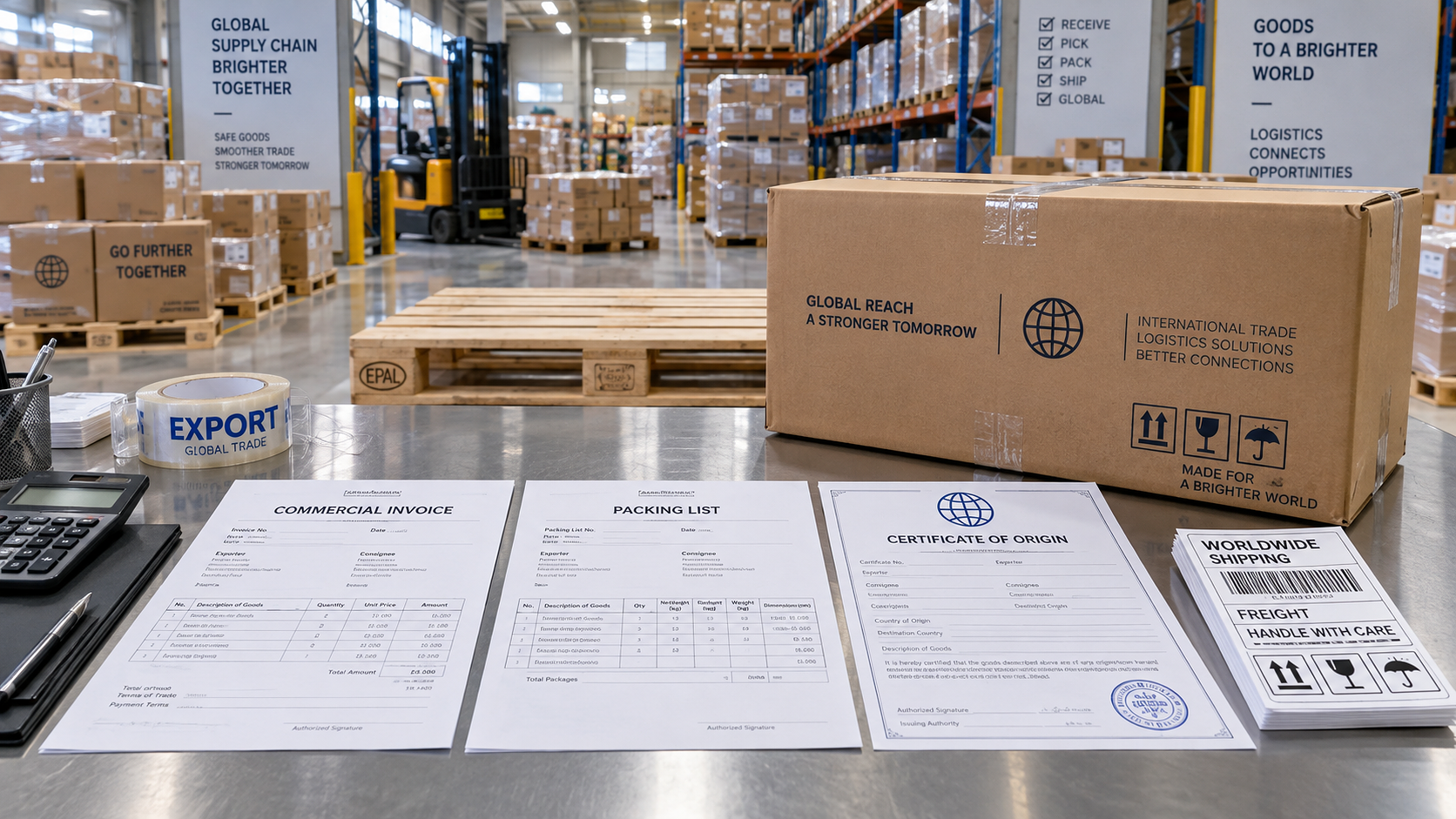
Trade Documentation Checklist: Invoices, Packing Lists, and Origin Certificates
Trade Documentation Checklist: Invoices, Packing Lists, and Origin Certificates
Accurate trade documentation is essential for procurement teams managing cross-border shipments, supplier compliance, and customs clearance. From commercial invoices and packing lists to certificates of origin, every document affects cost control, delivery reliability, and regulatory risk. This checklist outlines the core trade documentation requirements buyers should verify before goods leave the supplier, helping organizations prevent delays, disputes, and avoidable penalties across global supply chains.
The practical challenge is rarely that a supplier has no documents. More often, the documents exist but do not agree with one another, do not match the purchase order, or omit details that customs brokers, banks, insurers, and receiving teams need later. A shipment can be physically ready while still being commercially unready. For a buyer, that distinction matters: cargo held at origin or destination can disrupt production schedules, create demurrage exposure, and weaken leverage in a supplier dispute.
Trade documentation should therefore be treated as part of procurement control, not as a final administrative task delegated to a freight forwarder. The purchase order, contract, product specification, shipping instruction, and customs documents form one evidence chain. When a fact changes in one place—quantity, consignee, country of origin, price basis, packaging configuration, or delivery term—it may need to change everywhere.
Start with a Document Baseline Before Production Is Complete
The most reliable time to resolve document questions is before cargo is packed, not after the vessel booking has been confirmed. Procurement should establish a shipment-specific document matrix at order release. It does not need to be complicated, but it should identify the required document, responsible party, required format, approval deadline, and the source record against which it will be checked.
This is especially useful when importing industrial equipment, mixed product lines, regulated materials, replacement parts, or goods that may qualify for preferential tariff treatment. A generic supplier template may not reflect the buyer’s import declaration requirements. Nor should a document set be assumed sufficient merely because the supplier has used it for another customer or another destination.
- Confirm the legal seller, buyer, consignee, notify party, and importer of record.
- Lock the Incoterms® rule, named place or port, and agreed transport mode.
- Verify product descriptions, part numbers, technical grades, and unit-of-measure conventions.
- Determine whether origin evidence, permits, inspection records, safety documents, or treatment certificates are required.
- Set a pre-shipment review point before originals are issued or cargo is handed to the carrier.
A useful rule is simple: the buyer should be able to trace every key customs declaration field back to an approved commercial or technical source. If the customs code or origin statement cannot be supported by product data and supplier records, it should be reviewed before export rather than corrected during an audit or clearance hold.
The Commercial Invoice: More Than a Billing Document
The commercial invoice is usually the central document in a cross-border shipment. Customs authorities may use it to assess customs value, identify the parties to the transaction, compare declared goods with supporting records, and determine whether the invoice supports the import entry. Finance teams may also rely on it for payment approval, tax handling, and reconciliation.
For procurement, the invoice should be checked against the purchase order and, where applicable, the contract, pro forma invoice, letter of credit, or payment milestone schedule. Descriptions should be specific enough to identify the goods without becoming inconsistent with technical literature. Terms such as “machinery parts,” “samples,” or “accessories” may be inadequate if they do not distinguish material, use, model, or component type.
Particular care is needed with tooling, samples, warranty replacements, and goods supplied at no charge. “No commercial value” does not necessarily mean “no customs value.” Customs valuation rules differ by jurisdiction, and the importer should align with its customs broker or adviser on the correct treatment before the supplier prepares the invoice.
The invoice should also reflect the commercial reality of the transaction. If discounts, assists, commissions, royalties, molds, or separately invoiced freight are relevant to customs value, they should not be handled casually. Whether an amount must be declared or adjusted depends on the applicable rules and transaction structure; procurement should escalate unclear cases rather than rely on invoice wording alone.
The Packing List: The Physical Shipment Must Be Visible
A packing list translates a commercial order into a physical loading plan. Warehouse teams use it to receive goods, carriers use it to understand handling requirements, and customs or inspection authorities may use it to locate selected cartons, pallets, crates, or containers. It is also one of the quickest ways to identify whether the goods shipped are the goods ordered.
A good packing list does not simply repeat the invoice total. It breaks the shipment down by package number and packaging type, with net weight, gross weight, dimensions, and contents where relevant. For high-value components or mixed consignments, linking each package to purchase order lines, SKU references, or serial numbers can substantially reduce receiving ambiguity.
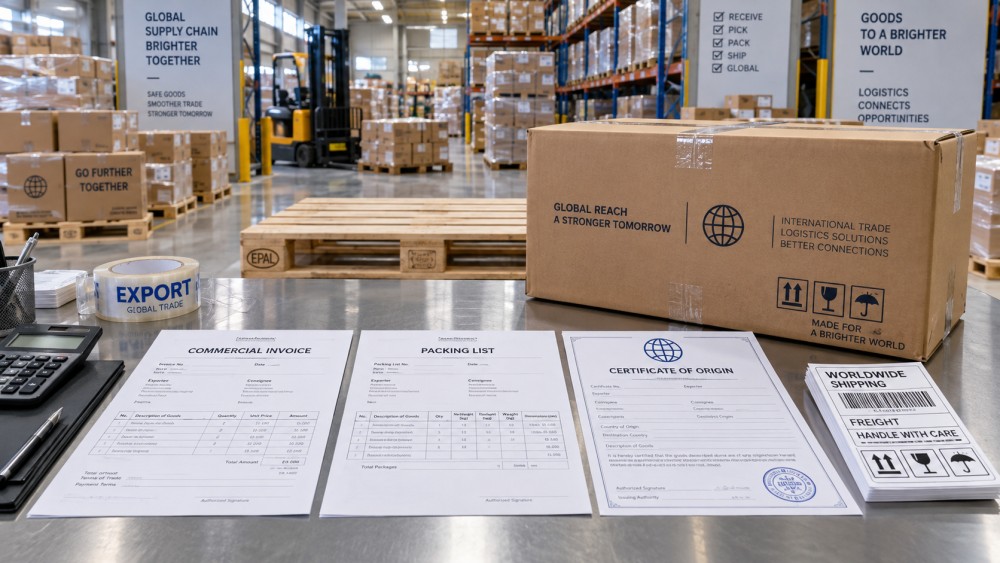
The distinction between net and gross weight is not cosmetic. Freight charges, carrier documentation, load planning, and certain customs declarations may depend on accurate physical data. If a crate contains machinery plus temporary bracing, moisture barriers, or spare parts, the packing list should make clear what is included. Inconsistent weights across the packing list, bill of lading, verified gross mass record, and carrier booking can trigger operational questions even when the commercial invoice appears correct.
Packaging itself may carry compliance implications. Wood packaging material is subject to requirements in many trade lanes, and controlled goods may need hazard markings, safety data sheets, or specialized packing declarations. These issues should be determined by the product and route, not assumed from previous shipments. A procurement team buying precision components may also need evidence that clean-room packaging, moisture protection, shock indicators, or anti-corrosion measures match the agreed specification.
Certificates of Origin: Do Not Treat Origin as a Shipping Label
A certificate of origin, or an origin declaration where permitted, can affect duty treatment, trade remedy exposure, import restrictions, and customer compliance obligations. Yet origin is often misunderstood because it is not always the same as the country from which goods are shipped. Goods may be exported from one country, assembled in another, and contain materials from several others.
There are generally two questions to separate. Non-preferential origin may be relevant for marking, quotas, trade remedies, and other regulatory measures. Preferential origin concerns whether goods meet the rules of a specific trade agreement and can claim a reduced or zero tariff rate. The supporting criteria, required statement, recordkeeping expectation, and authorized issuer can vary by destination and agreement.
Buyers should not request a certificate of origin as a routine attachment without first defining why it is needed. Is it required for customs clearance? Is it needed to claim a tariff preference? Does the customer require origin evidence? Is the product potentially exposed to anti-dumping, countervailing, sanctions, or local-content concerns? Each question calls for different evidence and a different level of review.
- Ask the supplier to identify the manufacturing location and the basis for the origin claim.
- Check whether the certificate format is accepted in the importing market.
- Ensure the goods description, invoice number, quantity, and exporter details align with the shipment documents.
- Retain supporting records for the period required by the applicable rules or company policy.
- Do not claim preferential treatment where the origin basis has not been confirmed.
Origin becomes more sensitive when supply chains shift. A sourcing move, a new subcomponent supplier, or a change in final assembly can alter origin analysis even if the finished product name and tariff code remain unchanged. Procurement change-control processes should flag these events for trade compliance review. It is far easier to assess origin before a sourcing transition than to reconstruct it after customs asks for proof.
Cross-Check the Document Set, Not Each File in Isolation
A document may look correct on its own while creating a problem when compared with the rest of the shipment file. The strongest pre-shipment control is a cross-document review. At minimum, compare commercial invoice, packing list, purchase order, transport instruction, and origin evidence line by line for material differences.
Focus on the fields that most often create downstream friction: names and addresses; product descriptions; quantities; package count; weights; values; currency; Incoterms® rule; origin; and reference numbers. The shipping mark on the carton should also correspond to the packing list. Where a bill of lading or air waybill is issued later, the buyer should still review draft transport details when timing permits, particularly consignee and notify-party information.
Some discrepancies are harmless formatting differences. Others are warning signs. A metric-ton unit on one document and kilograms on another may be reconcilable, but only if the conversion is clear. A change from “stainless steel valve” to “industrial component” is not simply editorial; it may obscure the item’s identity. Likewise, a different seller name can create payment, valuation, or sanctions-screening questions that should not be left for the forwarder to interpret.
Build Documentation into Supplier Management
The best documentation process is repeatable but not rigid. A low-value replenishment shipment may require a lighter review than a first-time import of engineered equipment, bulk materials, or goods entering a market with complex tariff measures. The buyer’s controls should reflect product risk, shipment value, supplier maturity, country exposure, and the consequences of delay.
GTIIN’s work across global sourcing, supply chain resilience, market trends, and industry standards points to a broader operational lesson: trade documents are not isolated paperwork. They sit at the intersection of physical fulfillment, customs latency, supplier accountability, freight execution, and commercial risk. A procurement team that sees those connections can ask better questions before cargo moves.
For recurring suppliers, include document quality in supplier performance reviews. Track avoidable amendments, missing data, late drafts, packing discrepancies, and unsupported origin claims. These records help distinguish a one-off mistake from a capability gap. They also provide a practical basis for updating shipping instructions, training suppliers, or requiring pre-approval for higher-risk routes and product categories.
Before authorizing dispatch, confirm one final point: can the importer, broker, finance team, warehouse, and supplier all describe the same shipment in the same terms? If the answer is uncertain, hold the document release long enough to resolve it. In cross-border procurement, a short review before departure is usually less disruptive than a correction after the goods are already in transit.
Weekly Insights
Stay ahead with our curated technology reports delivered every Monday.
Recommended News
 Global SourcingOct 09, 2026What to look for in a customs compliance management system
 Market TrendsOct 08, 2026What the global manufacturing outlook means for exporters' order planning
 Global SourcingOct 09, 2026Trade Documentation Checklist: Invoices, Packing Lists, and Origin Certificates
 Supply ChainOct 08, 2026What Drives CNC Beam Saw Cost Over Its Operating Life Cycle?