What drives smart manufacturing cost in a factory upgrade?
A factory upgrade often begins with a deceptively simple question: “How much will smart manufacturing cost?” The first quotation for robots, sensors, manufacturing execution software, or industrial connectivity may appear to answer it. In practice, it only opens the discussion.
Smart manufacturing cost is the full investment required to make a production system more visible, responsive, reliable, and scalable. It includes equipment, certainly, but also engineering time, data architecture, cybersecurity, workforce preparation, process redesign, supplier coordination, compliance work, and the operating discipline needed after commissioning. For enterprise decision-makers, the real challenge is not finding the lowest initial price. It is understanding which costs create lasting capability and which costs signal avoidable execution risk.
This distinction matters especially when capital budgets are under pressure. A factory can purchase advanced technology and still fail to realize value if its production data is unreliable, its maintenance model is unprepared, or its suppliers cannot support the new operating requirements. A credible upgrade plan therefore treats cost as a lifecycle question rather than a procurement event.
Start with the production constraint, not the technology catalog
The strongest factory modernization programs are usually built around a specific constraint: excessive changeover time, unstable quality, unplanned downtime, labor shortages in repetitive tasks, weak traceability, energy-intensive equipment, or poor visibility across multiple sites. Technology is then selected to solve that constraint.
When the sequence is reversed, costs tend to expand. A company may invest in automated guided vehicles before material flow has been standardized, deploy analytics before machine data is clean, or install a new MES without agreeing on common production definitions across plants. These projects can still produce islands of improvement, but integration and rework costs often become much higher than expected.
Before requesting supplier proposals, leadership teams should establish a baseline for the process being upgraded. This does not require perfect data, but it does require shared operational facts: current throughput, quality losses, downtime patterns, maintenance burden, labor exposure, inventory buffers, energy use, and the cost of missed delivery commitments. The baseline becomes the reference point for both investment decisions and later benefit validation.
What is included in smart manufacturing cost?
For procurement planning, it helps to separate the investment into several connected layers. No two factories will allocate the same share of spending to each layer, yet overlooking any one of them can distort the budget.
1. Physical automation and production equipment
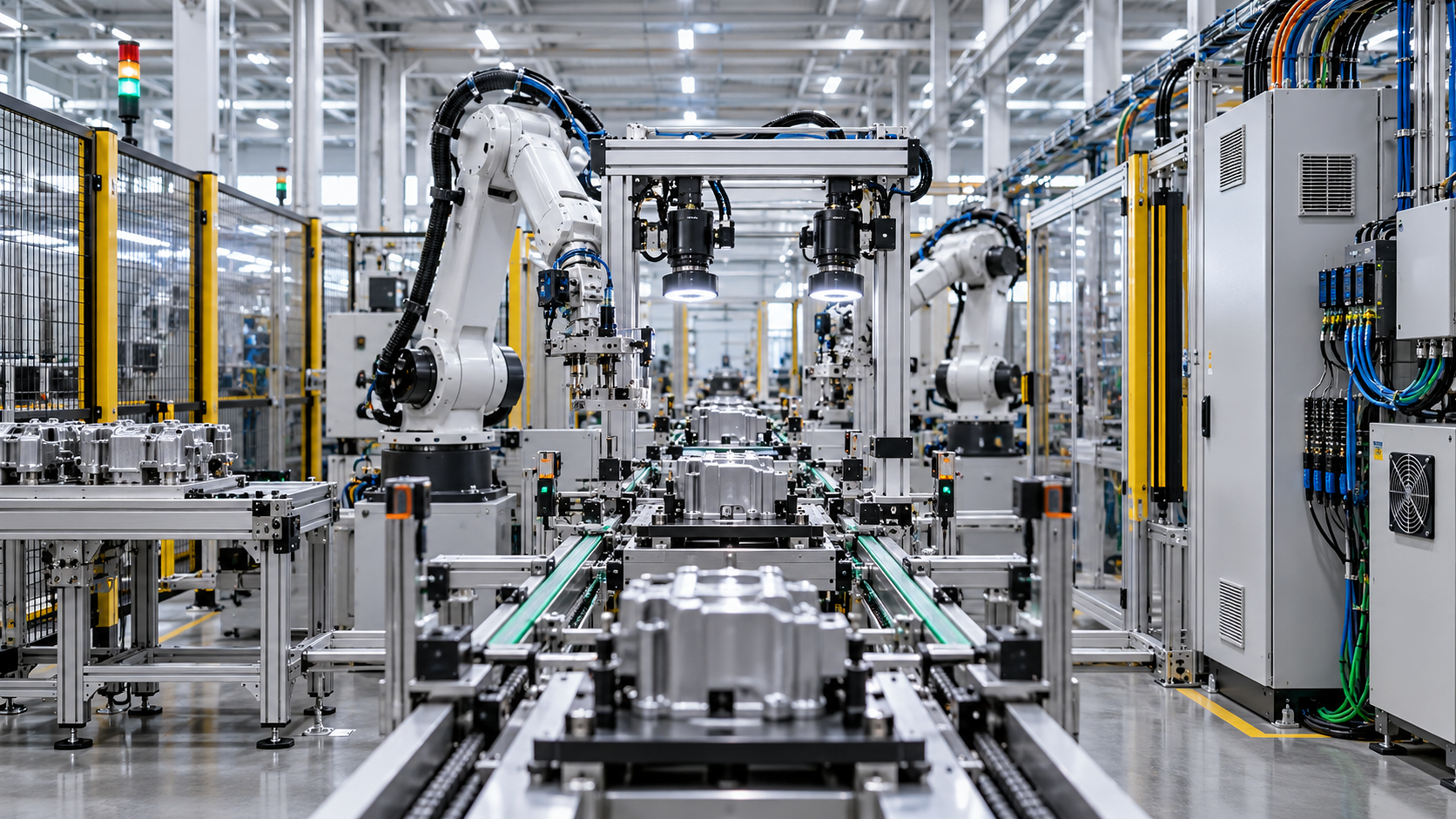
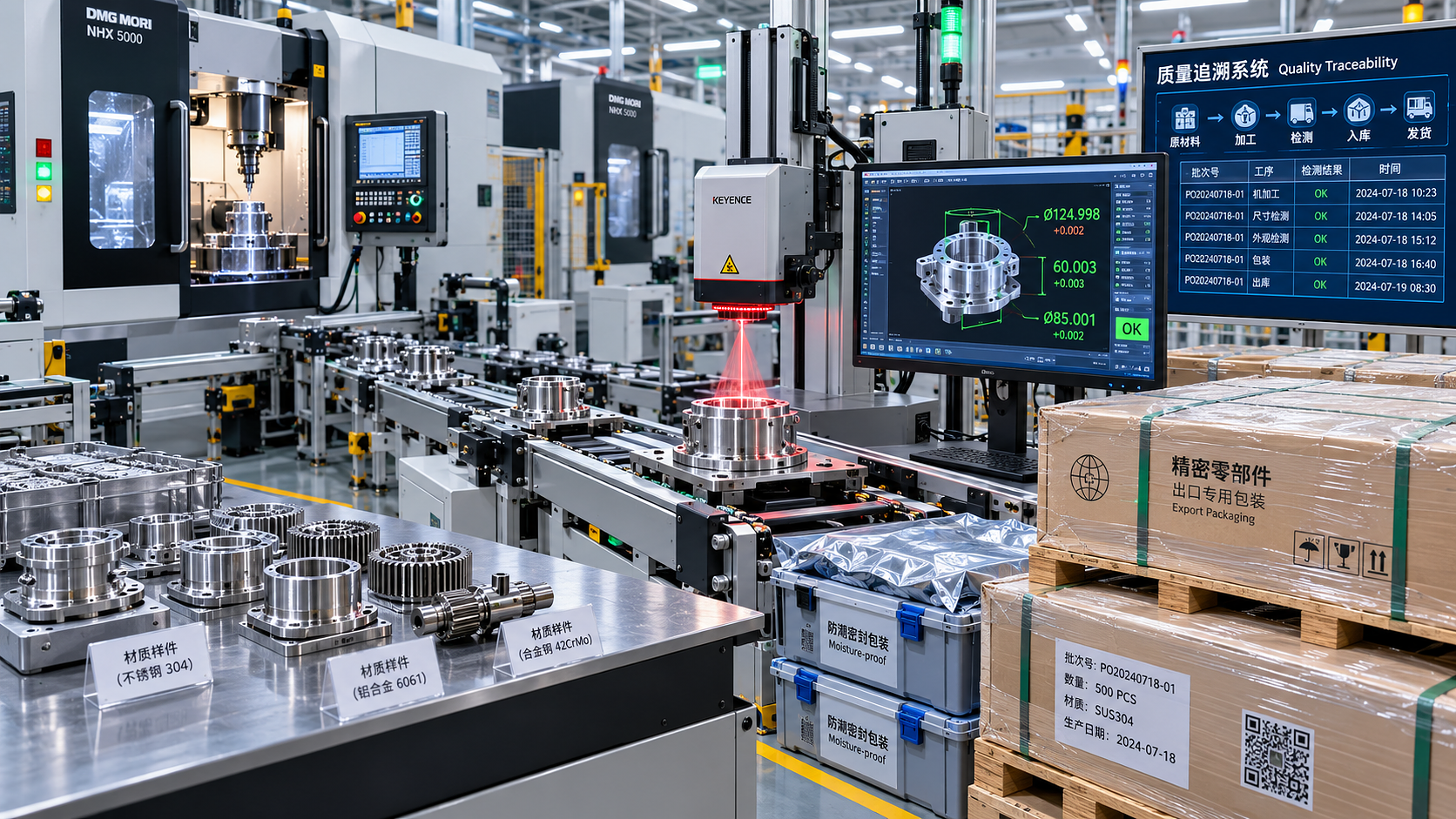
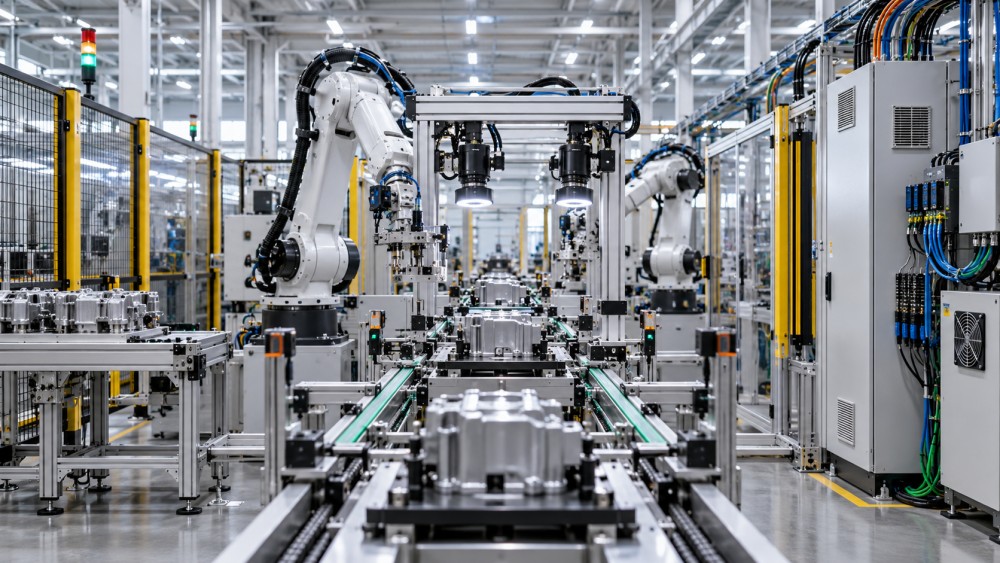
This is the most visible category: robotic cells, machine upgrades, conveyors, automated inspection systems, vision cameras, sensors, control panels, edge devices, and safety equipment. The purchase price depends on capacity requirements, payload, accuracy, environmental conditions, cycle time, and the degree of customization.
A ruggedized system designed for dust, heat, moisture, vibration, washdown, or hazardous environments will naturally cost more than a standard installation. So will systems requiring precision handling, clean-room compatibility, food-grade materials, or traceable batch control. Decision-makers should avoid treating these specifications as optional add-ons; they are often essential to uptime, compliance, and product integrity.
2. Integration engineering
Integration is where many budget assumptions become fragile. A robot or sensor may be technically capable, but connecting it safely and reliably to existing machinery, legacy programmable logic controllers, utilities, warehouse systems, and quality processes requires detailed engineering.
Typical scope includes mechanical design, electrical work, controls programming, network configuration, production simulation, line balancing, safety validation, site acceptance testing, and documentation. Older factories may also need floor reinforcement, cable routing, compressed-air upgrades, electrical capacity changes, lighting adjustments, or redesigned material staging areas.
The practical question is not “Can this equipment connect?” It is “Can it connect without creating new bottlenecks, safety gaps, or single points of failure?” A lower equipment quote can become more expensive if it transfers integration risk to the buyer.
3. Data, software, and industrial connectivity
Smart manufacturing depends on data moving between machines, operators, maintenance teams, quality systems, planning tools, and enterprise platforms. The related cost can include industrial networks, gateways, historians, cloud or on-premise infrastructure, MES functions, warehouse management interfaces, digital work instructions, dashboards, data cleansing, and application integration.
The critical expense is often not the software license itself. It is the work of making data consistent and useful. Different lines may use different naming conventions for downtime, different definitions of a good part, or different methods for recording rework. Without a shared data model, a dashboard can look sophisticated while offering little basis for operational action.
For multinational manufacturers, the architecture must also account for data residency requirements, cross-border data transfer rules, local connectivity conditions, and the need to integrate sites with unequal levels of digital maturity.
4. Cybersecurity and operational resilience
As operational technology becomes connected, it becomes part of the enterprise risk landscape. Smart manufacturing cost should therefore include network segmentation, identity and access controls, asset inventories, secure remote support procedures, backups, patching responsibilities, incident response, and vendor access governance.
Cybersecurity is sometimes treated as a late-stage compliance item because it is less visible than a new automated line. That approach is risky. A poorly secured connection can interrupt production, expose proprietary process data, or create a difficult dispute over who is responsible when an external integrator needs remote access. Security requirements should be written into the technical specification and commercial contract from the beginning.
5. People, training, and operating-model change
Automation changes work; it rarely removes the need for people. Operators may need to interpret digital work instructions, respond to alarms, complete electronic quality checks, and escalate abnormal conditions. Maintenance technicians may need training in controls, networks, drives, vision systems, or predictive maintenance tools. Supervisors may need a new cadence for using real-time production information.
These are genuine cost items: training time, temporary productivity loss during transition, documentation, role redesign, and sometimes additional specialist support. They are also among the most valuable investments. A modern line that depends on one external engineer to resolve every fault is not truly resilient.
The hidden cost drivers that change a business case
Two factories can buy similar equipment and end up with very different total costs. The difference usually lies in conditions that are not obvious in a product brochure.
- Legacy asset condition: Older machines may lack accessible control signals, documentation, spare parts, or compatible interfaces.
- Variation in products and processes: High-mix, low-volume production often requires more flexible tooling, recipe management, testing, and changeover engineering than stable, repetitive output.
- Site readiness: Utility availability, network coverage, layout constraints, safety zoning, and building condition can materially alter project scope.
- Supplier ecosystem maturity: A solution supported by local service capability, qualified spare parts, and clear escalation paths carries a different risk profile from one dependent on distant support.
- Regulatory exposure: Machinery safety, worker protection, product traceability, environmental rules, export controls, and sector-specific standards can add design and documentation requirements.
- Deployment timing: Installing during a planned shutdown may reduce disruption, while retrofitting a continuously operating line can require phased execution, temporary capacity, and more complex commissioning.
These factors explain why comparing suppliers solely on capital expenditure is unreliable. Procurement teams need an apples-to-apples scope matrix that identifies what is included, what is assumed, and what remains the buyer’s responsibility.
Build the budget around total cost of ownership
A more useful way to assess smart manufacturing cost is through total cost of ownership (TCO). This means looking beyond the initial purchase to the expenses and obligations that continue throughout the solution’s operating life.
A TCO review should cover installation, commissioning, software subscriptions, technical support, spare parts, preventive maintenance, calibration, cybersecurity updates, replacement components, connectivity fees, energy demand, and eventual decommissioning or upgrade needs. It should also identify production-side costs: scrap created during ramp-up, lost output during installation, and the operational impact of downtime if a critical component fails.
For many buyers, the biggest financial risk is not paying too much for equipment. It is underfunding the period after go-live. If there is no budget for maintenance, operator adoption, software support, and continuous improvement, performance can drift back toward the old baseline while the organization is left carrying the capital cost.
Use scenario planning rather than one optimistic payback calculation. A prudent review considers a base case, a delayed-ramp case, and a constrained-volume case. It also asks what happens if expected labor redeployment is slower than planned, if supplier lead times extend, or if demand shifts toward a more complex product mix. This does not weaken the business case; it makes it credible enough for board-level review.
How to evaluate supplier proposals without missing risk
Supplier selection should combine technical, commercial, and operational criteria. A proposal that appears complete may still exclude data integration, production acceptance criteria, training depth, site works, or post-launch support. Each omission can become a change order or a source of disagreement once the project is underway.
Ask prospective suppliers to describe the boundary of their responsibility in plain language. Who owns the control architecture? Who supplies and maintains interface documentation? Who is accountable for safety validation? What data will remain accessible to the factory? Can the buyer use another service provider later, or is the solution locked into a proprietary support model?
Acceptance testing deserves particular attention. Factory acceptance testing verifies that equipment performs under controlled conditions. Site acceptance testing confirms that it works in the real factory, with actual materials, utilities, operators, product variants, and upstream/downstream processes. Procurement contracts should define performance measures, defect-handling procedures, documentation delivery, spare-parts lists, warranty conditions, and the remedy if agreed requirements are not achieved.
For cross-border sourcing, add logistics and compliance questions: packaging standards for sensitive equipment, customs documentation, tariff exposure, origin declarations, export-control requirements, installation visas where relevant, and the availability of local technical support. Global trade intelligence can be especially valuable here, because a technically attractive solution may face delivery or compliance friction that changes its practical cost.
Phase the upgrade where uncertainty is highest
A full-scale transformation can be justified in some greenfield facilities or standardized networks. In established factories, however, a phased approach often produces better decisions. A pilot is not simply a smaller purchase. It is a structured way to test technical fit, workforce acceptance, data quality, supplier response, and measurable operational impact before replication.
The first phase should target a process where pain is clear and outcomes can be observed without relying on too many external variables. Once the organization has proven the operating model, it can scale standards across lines or sites with less uncertainty. This approach also makes it easier to establish reusable specifications, preferred supplier criteria, cybersecurity patterns, and training materials.
There is a balance to maintain. Excessive piloting can create disconnected experiments that never reach enterprise scale. The remedy is to design the pilot with the future architecture in mind: common data standards, interoperable interfaces, documented lessons, and an explicit decision gate for expansion.
A decision framework for enterprise leaders
Before approving an upgrade, senior leaders should be able to answer a short set of difficult questions. What operational problem are we solving, and how is it measured today? Which costs are fixed, which are contingent on site conditions, and which have been excluded? What capabilities must remain in-house after commissioning? How will the solution affect supplier dependency, cyber exposure, compliance obligations, and continuity of production?
They should also ask whether the investment supports a wider supply chain strategy. Better factory visibility can improve planning accuracy, traceability, inventory control, and response to disruptions. Yet these benefits only emerge when production data is connected to procurement, logistics, quality, and demand planning decisions—not when automation is treated as an isolated engineering project.
Smart manufacturing cost is ultimately a capability decision
The cost of a factory upgrade cannot be reduced to the price of a robot, platform, or control system. It reflects the work of creating a production environment that can learn, adapt, and operate reliably under changing market conditions. The organizations that manage this investment well do not chase technology for its own sake. They define the business constraint, map the full lifecycle cost, challenge supplier assumptions, prepare their people, and build resilience into the project from the start.
For procurement and executive teams, that discipline turns smart manufacturing cost from an uncertain capital request into a decision framework—one that connects factory performance with long-term competitiveness, supply chain resilience, and better control over industrial risk.
Weekly Insights
Stay ahead with our curated technology reports delivered every Monday.
Recommended News
 Global SourcingOct 04, 2026What drives smart manufacturing cost in a factory upgrade?
 Industry StandardsOct 03, 2026How to build an environmental compliance standards reporting process
 Industry StandardsOct 02, 2026What evidence should an industrial certification audit include?
 Market TrendsOct 01, 2026How technical specification trends data can reveal supplier capability gaps