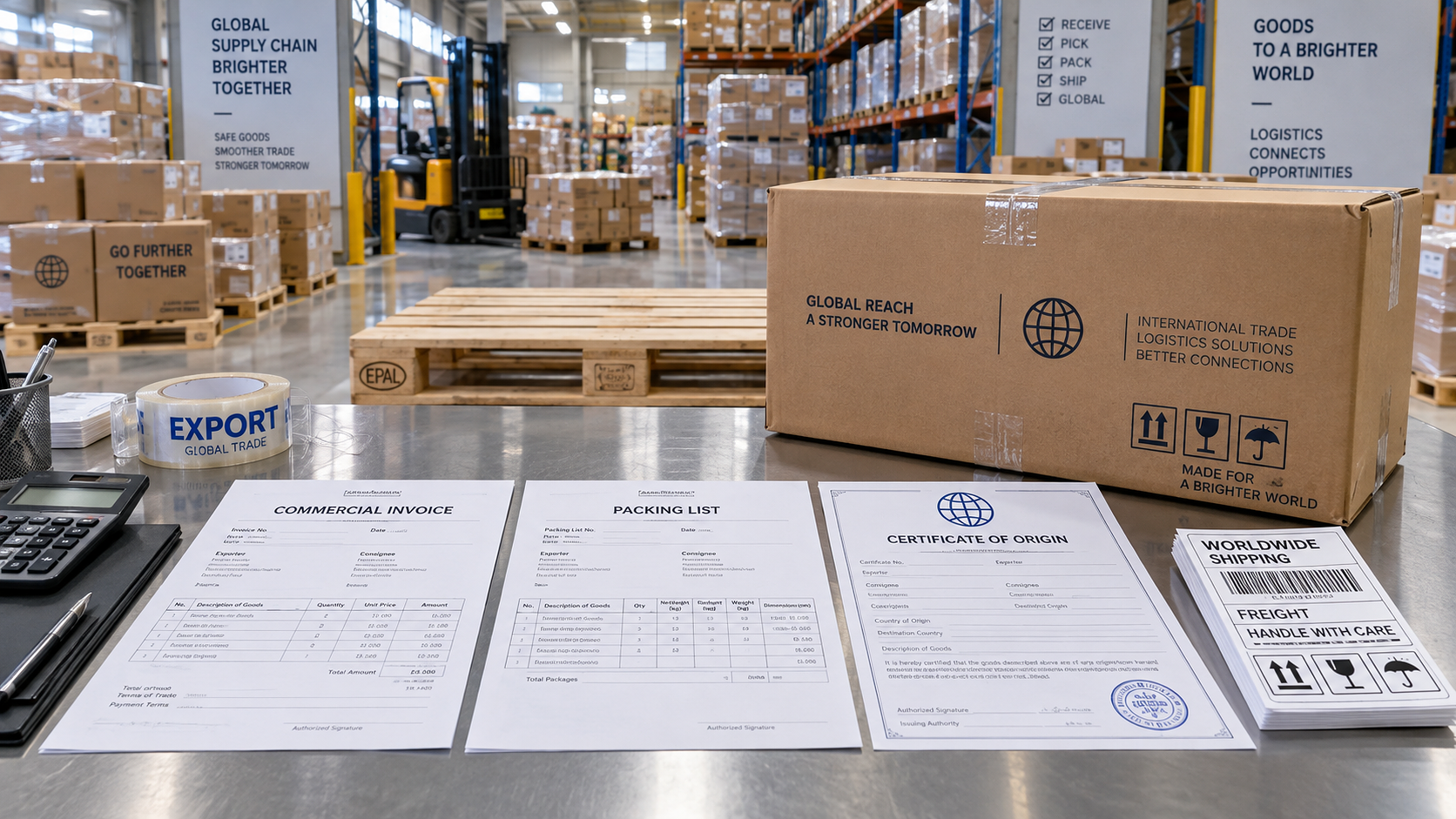
What to look for in a customs compliance management system
What to Look for in a Customs Compliance Management System
For companies moving goods across borders, customs compliance is rarely a single filing task. It is a chain of decisions made long before a shipment reaches a port: product data is created, tariff codes are assigned, origin is determined, suppliers provide documents, licences are checked, values are calculated, and brokers receive instructions. A weakness at any point can turn into a delayed clearance, a corrected declaration, an audit finding, or an avoidable duty exposure.
That is why selecting a customs compliance management system requires more than reviewing whether it can generate declarations or store commercial invoices. Technical evaluators should assess whether the platform can establish reliable controls across classification, origin, valuation, restricted-party screening, document management, regulatory change, and enterprise data integration. The useful question is not simply, “Can the system submit customs data?” It is, “Can it make our trade decisions traceable, repeatable, and defensible across markets?”
Start with the operating model, not the feature list
A customs compliance management system should fit the actual structure of the organization. An importer relying on several customs brokers faces a different control problem from an exporter filing declarations internally. A manufacturer shipping spare parts, capital equipment, chemicals, and software-enabled products may also need different review paths for each category. Systems often look capable in a demonstration because the sample workflow is clean; real trade operations are not.
Before comparing vendors, map the flow of a typical shipment from master-data creation to post-entry record retention. Identify where tariff classification is decided, who owns country-of-origin evidence, how broker instructions are approved, and where commercial documents are amended. Also document exceptions: split shipments, repairs and returns, free-of-charge items, temporary imports, preferential-origin claims, dual-use concerns, and goods shipped through third countries. These exceptions reveal whether a platform supports genuine operational control or only standard transactions.
For organizations with distributed procurement and production networks, trade compliance cannot be evaluated separately from sourcing data. Supplier location, material composition, manufacturing process, Incoterms, transport route, and customer destination can all change the compliance outcome. This is particularly relevant when supply chains are being reconfigured in response to tariffs, sanctions risk, logistics disruption, or regional content requirements.
Product classification must be governed, not merely stored
Tariff classification is a core test of system maturity. Many platforms can hold an HS code or national tariff code against a product record. That alone is insufficient. Evaluators should examine how the system supports the decision behind the code: product descriptions, technical attributes, ruling references where applicable, classification notes, reviewer comments, supporting files, approval status, effective dates, and change history.
A robust solution should distinguish between a global product identifier and country-specific classifications. The same item may require different levels of tariff detail depending on the destination, while customs authorities may revise nomenclature or interpret goods differently. The system should therefore make it clear which classification applies to which legal entity, jurisdiction, date range, and transaction type.
Look closely at workflow controls. Can a proposed code be used before approval? Can high-risk goods be routed to a specialist? Are reclassifications propagated to open orders and future shipments in a controlled way? Can users find products through engineering descriptions, part numbers, material data, or historical declarations? Classification research is not eliminated by software, but the right architecture prevents undocumented judgment from becoming embedded in thousands of transactions.
Origin and preference need evidence-level discipline
Country of origin is frequently oversimplified as the shipping country. In practice, non-preferential origin and preferential origin may follow different rules, and both can depend on manufacturing steps, bill of materials, supplier declarations, and product-specific requirements. A system should allow teams to record the basis for an origin decision rather than treating origin as an editable text field.
When preferential treatment is relevant, assess whether the platform can collect and monitor supplier evidence, link it to items and validity periods, flag missing or expired documentation, and preserve the calculation logic used to support a claim. It should also accommodate cases where origin cannot be determined with sufficient confidence. A forced “yes” or “no” field is a poor substitute for an evidence status that prompts review.
This matters beyond duty savings. Origin can affect trade remedies, labelling, public procurement requirements, sanctions exposure, and supply-chain reporting. As GTIIN’s supply chain research repeatedly highlights, a sourcing shift that appears commercially straightforward may alter the compliance profile of components, assemblies, and final goods. Trade data needs to be assessed alongside physical supply-chain design, not after the supplier has already been approved.

Test data quality at the integration boundary
Most compliance failures are not caused by an inability to calculate duty. They begin with incomplete, inconsistent, or late data. Product dimensions may be maintained in one system, prices in another, supplier origin declarations in a shared folder, and shipment details in a freight platform. A customs compliance management system must work with those realities without creating uncontrolled manual rekeying.
Integration should be evaluated at a practical level. Ask which data fields can move between ERP, product lifecycle management, procurement, warehouse, transportation, broker, and compliance applications; whether interfaces are batch-based or event-driven; how errors are surfaced; and whether failed records can be corrected without technical intervention. APIs may be available, but availability is not the same as a usable integration model.
A useful proof-of-concept uses a small set of actual, suitably anonymized transactions. Include a normal import, an urgent shipment with a missing data element, a changed supplier origin statement, and a product whose classification requires review. The objective is not to test every function. It is to see how the system behaves when the data is imperfect, deadlines are real, and accountability has to be assigned.
Regulatory content is valuable only when it is actionable
Regulations evolve, tariff schedules change, sanctions lists are updated, and country-specific filing requirements can be revised. Vendors frequently position regulatory content as a central differentiator. The right evaluation question is more specific: how does an update affect the company’s existing products, suppliers, open orders, and compliance decisions?
Assess content coverage by the countries and trade lanes that matter to the business, not by the length of a vendor’s jurisdiction list. Determine the update process, the effective-date handling, the source or editorial methodology used, and the degree of traceability available to users. A notification that a rule has changed is helpful; a workflow that identifies affected records, assigns review, and records the resolution is substantially more useful.
No technology subscription removes the need for legal or specialist judgment. This is especially true for areas such as export controls, anti-dumping and countervailing duties, valuation adjustments, preferential-origin rules, and emerging environmental trade measures. A system should help teams organize and evidence those decisions, while clearly showing where external advice or internal subject-matter review is required.
Auditability should be designed into the workflow
A compliance platform is most valuable when someone needs to explain a historical transaction. Can the organization reconstruct which product data was used, who approved the classification, what evidence supported origin, which screening result was reviewed, and what information was transmitted to a broker? If those answers reside in separate email threads, spreadsheets, and employee memory, the system has not created a defensible control environment.
Evaluate immutable or controlled audit trails, role-based permissions, approval delegation, record retention options, and the ability to export a coherent case file. The level of retention and documentation required depends on jurisdictions and company policy, so implementation teams should confirm local obligations rather than applying one global rule by default. Also examine how the system handles corrections. A sound platform preserves the original record, documents the reason for change, and makes the effective version clear.
Broker collaboration deserves special attention. If declarations are outsourced, the company still needs visibility into what was filed in its name. The system should support controlled exchange of instructions and documents, status visibility, discrepancy management, and reconciliation where appropriate. Sending a spreadsheet to a broker may be quick, but it does little to establish a reliable record of review and acceptance.
Security, resilience, and ownership are technical selection criteria
Trade compliance systems hold commercially sensitive information: supplier identities, prices, product specifications, shipping routes, customer data, and potentially controlled technical details. Security review should cover identity management, user provisioning, encryption practices, segregation of customer data, logging, backup arrangements, and incident-response responsibilities. The exact questions will depend on enterprise security policies, but compliance software should not bypass the same governance expected of finance or procurement systems.
Resilience is also operational. Ask what happens when a customs interface is unavailable, a broker connection fails, a data feed is delayed, or the platform itself experiences an outage. Teams need a documented fallback process for time-sensitive shipments, followed by a method to reconcile temporary manual actions into the system. A platform that functions only under ideal connectivity is not adequate for global trade operations.
Finally, clarify data ownership and exit options. Can historical classifications, documents, audit logs, and master records be exported in usable formats? Are implementation configurations documented? A compliance program may operate for years, while technology choices change. Retaining control of institutional knowledge is as important as choosing a capable platform today.
A practical decision framework
The strongest selection process balances technical fit with compliance governance. Build a weighted evaluation that reflects the company’s trade profile rather than relying on generic scorecards. For one organization, multi-country classification and broker connectivity may dominate. For another, origin evidence, supplier collaboration, and integration with manufacturing data may be decisive. Include compliance owners, customs operations, IT architecture, procurement, finance, information security, and users who manage exceptions every day.
It is also worth separating “available functionality” from “deployable functionality.” A vendor may offer a module, but its value depends on the quality of underlying data, local process ownership, configuration effort, and the ability of internal teams to maintain it. Implementation planning should therefore address master-data remediation, policy design, user training, migration of legacy decisions, testing with brokers and logistics partners, and a governance model for regulatory updates.
GTIIN’s work across global sourcing, market trends, industry standards, and supply-chain resilience points to the same conclusion: customs compliance should be treated as a decision system embedded in trade operations, not as a final administrative check. The suitable customs compliance management system is the one that makes critical trade data visible, routes uncertain decisions to the right people, preserves evidence, and remains workable when supply routes, suppliers, and regulations change. Before committing, test those conditions using your own products, trade lanes, and exception scenarios.
Weekly Insights
Stay ahead with our curated technology reports delivered every Monday.
Recommended News
 Global SourcingOct 09, 2026What to look for in a customs compliance management system
 Market TrendsOct 08, 2026What the global manufacturing outlook means for exporters' order planning
 Global SourcingOct 09, 2026Trade Documentation Checklist: Invoices, Packing Lists, and Origin Certificates
 Supply ChainOct 08, 2026What Drives CNC Beam Saw Cost Over Its Operating Life Cycle?