Heavy Equipment Lifecycle Cost: What Drives Total Ownership Expense?
Heavy equipment lifecycle cost rarely begins and ends with an invoice. The purchase price matters, but ownership expense is shaped over years by fuel burn, service cycles, parts lead times, financing structure, productivity loss, and resale strength.
That makes the topic especially relevant in global industrial operations, where machines are tied to cross-border sourcing, freight volatility, compliance shifts, and uneven service networks. A low entry price can quickly become an expensive asset if uptime falls or logistics friction grows.
For capital allocation, the real question is not only what a machine costs to buy. It is what it costs to own, operate, support, and exit under actual working conditions.
Looking Beyond the Sticker Price
At its core, heavy equipment lifecycle cost is the full economic burden of an asset from acquisition to disposal. It includes direct cash outflows and the hidden costs created when the asset fails to deliver planned output.
In practical terms, total ownership expense usually combines six layers. These layers interact, so a weakness in one area can magnify another.
- Acquisition cost, including base price, options, freight, duties, installation, and commissioning.
- Operating cost, especially fuel, lubricants, tires, and operator-related efficiency effects.
- Maintenance cost, covering scheduled service, major overhauls, and wear components.
- Downtime cost, often the most underestimated line in the model.
- Financing and compliance cost, which can change sharply across markets.
- Residual value, trade-in value, or disposal cost at the end of the holding period.
A machine with a higher list price may still show a lower heavy equipment lifecycle cost if it consumes less fuel, requires fewer repairs, and maintains stronger value in secondary markets.
Why the Topic Has Moved Up the Agenda
Several industry shifts have made lifecycle analysis more urgent. Equipment fleets are larger, projects are more time-sensitive, and global procurement is now exposed to trade policy, shipping disruption, and regional compliance changes.
Fuel and energy prices remain volatile. Emissions regulation is tightening in many regions. Service labor is harder to secure. Spare parts availability can vary dramatically between suppliers, even when machine specifications look similar on paper.
This is where GTIIN’s broader trade and supply chain perspective becomes useful. Equipment economics no longer depend only on technical performance. They are also shaped by export trends, customs timing, sourcing resilience, and the structure of regional support ecosystems.
In other words, heavy equipment lifecycle cost has become a supply chain question as much as an engineering question.
The Cost Drivers That Matter Most
Fuel and energy consumption
Fuel is often the largest operating expense over a machine’s useful life. Small efficiency differences become large financial gaps when utilization is high and holding periods extend across several years.
The right comparison is rarely liters per hour alone. Load profile, idle time, terrain, duty cycle, and operator behavior all change the true cost outcome.
Maintenance intervals and parts support
Routine service affects both cost and availability. Longer intervals may reduce planned downtime, but only if maintenance quality and parts reliability remain strong.
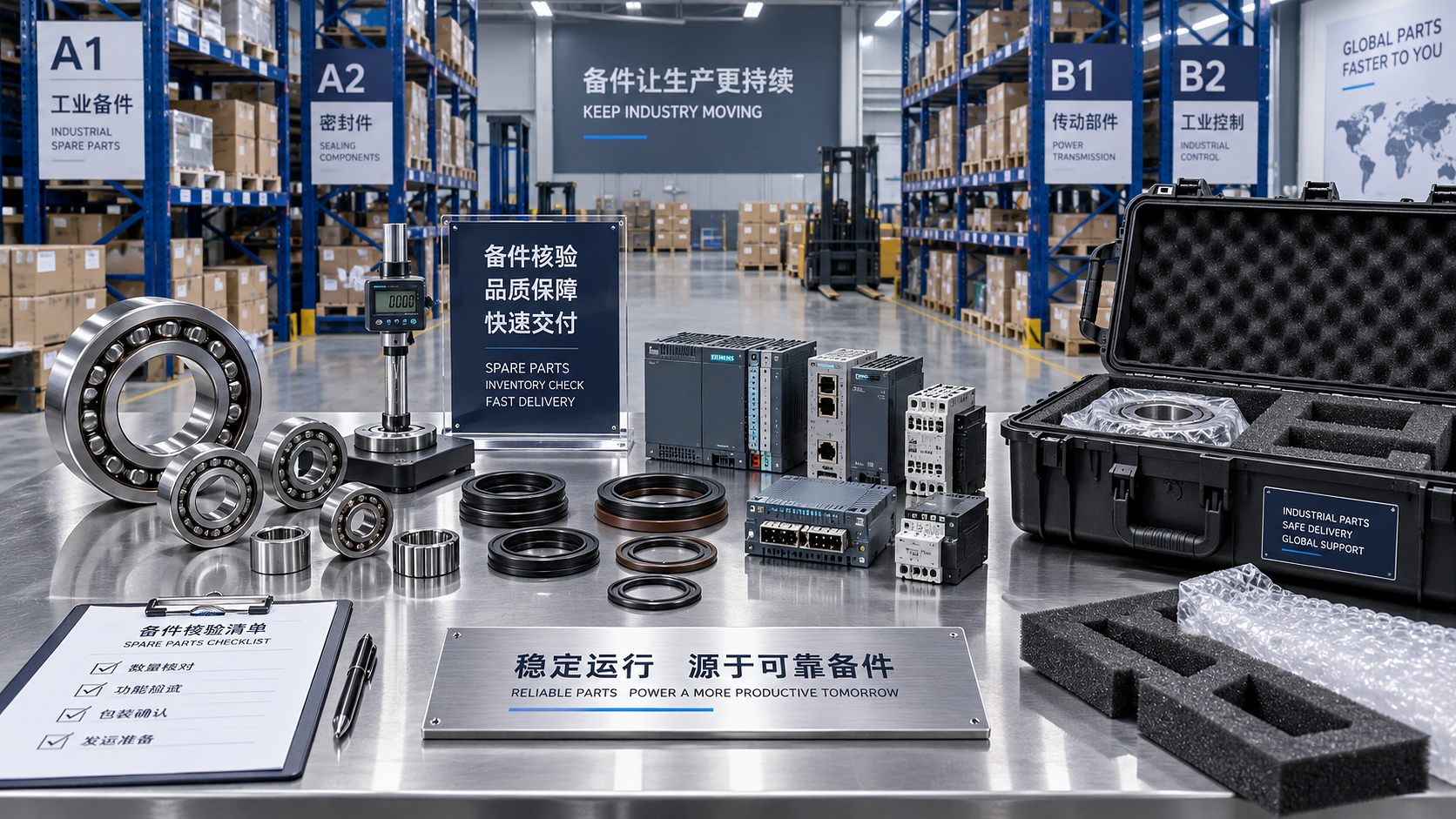
Parts availability is equally important. A lower-cost machine can become expensive when filters, hydraulic components, or electronic modules require long international lead times.
Downtime and lost production
Downtime is where many ownership models break down. The repair bill may be manageable, but lost output, delayed shipments, contract penalties, and idle labor create a much larger burden.
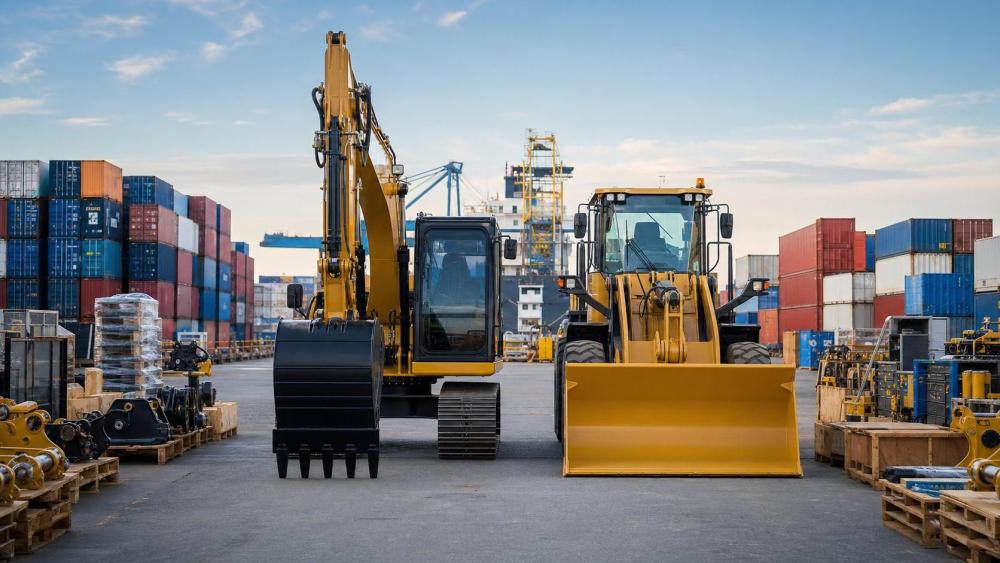
For equipment working in ports, mining, infrastructure, agriculture, or bulk handling, one failed machine can interrupt an entire workflow. That interruption must be priced into procurement decisions.
Financing, tax, and residual value
Interest rates, lease terms, insurance, depreciation rules, and local tax treatment all influence heavy equipment lifecycle cost. These factors can outweigh moderate differences in purchase price.
Residual value deserves special attention. Established brands with broad aftermarket acceptance often retain value better, especially where secondary demand remains active and service records are transparent.
How Global Sourcing Changes the Equation
When heavy equipment is sourced across borders, ownership cost becomes more complex. Freight rates, inland delivery, import duties, local certification, and customs delays all affect the true landed cost.
But the larger issue appears after delivery. If technical support depends on overseas dispatch, warranty resolution may take longer. If replacement parts move through congested routes, downtime risk rises again.
GTIIN’s trade intelligence approach is relevant here because supplier evaluation should include market access conditions, regional stockholding, export consistency, and geopolitical exposure. Those variables influence total ownership expense even when machine performance data looks competitive.
Where Ownership Models Commonly Miss Risk
Many reviews treat the machine as a standalone purchase. That creates blind spots. Heavy equipment lifecycle cost should be modeled around a working scenario, not a brochure specification.
One common error is using ideal fuel consumption figures. Another is assuming parts are always available at published prices. A third is ignoring climate, corrosion, dust load, or operator variability.
The same asset may perform well in one region and poorly in another. Coastal exposure, extreme heat, remote location, or unstable grid power can all shorten component life and alter maintenance economics.
That is why scenario-based analysis works better. Instead of one average case, compare best case, expected case, and disruption case.
A Practical Framework for Better Decisions
A useful ownership review does not need to be overly complicated. It needs to be disciplined, comparable, and tied to actual operating reality.
- Build a five to ten year cost model using expected annual hours, fuel rates, and service intervals.
- Separate planned maintenance from failure-driven repair assumptions.
- Assign a financial value to downtime based on lost throughput or delayed delivery.
- Check landed cost and aftermarket support by region, not only by supplier promise.
- Stress-test residual value under weaker resale conditions.
- Review compliance exposure, especially for emissions, safety, and import documentation.
This process makes heavy equipment lifecycle cost easier to compare across brands, sourcing routes, and financing structures. It also creates a clearer basis for approval decisions and post-purchase tracking.
What to Watch Next
Ownership economics will keep shifting as digital monitoring improves, emissions rules tighten, and industrial supply chains reorganize. Telematics, predictive maintenance, and more regionalized parts strategies may reduce cost volatility, but only when suppliers can support them consistently.
The next step is to turn lifecycle cost from a one-time procurement exercise into a recurring review standard. Compare assumptions against field performance, revisit supplier risk by region, and update models as freight, regulation, and utilization patterns change.
That approach does more than improve a single purchase. It builds a stronger decision framework for global equipment investment, where heavy equipment lifecycle cost is measured by operational reality rather than by headline price.
Weekly Insights
Stay ahead with our curated technology reports delivered every Monday.
Recommended News
 Supply ChainOct 15, 2026How to choose a supply chain strategy for unpredictable demand
 Supply ChainOct 14, 2026How to assess an industrial equipment supplier's spare parts support
 Supply ChainOct 14, 2026EU Updates CSDDD Guidance on Global Supply Chain Due Diligence
 Global SourcingOct 13, 2026How to assess industrial automation suppliers for legacy integration