Steam Turbine Spare Parts: What to Verify in Supplier Lead Times
A supplier’s quoted lead time is useful only when its starting point, delivery endpoint, and technical assumptions are clear. “Available from stock” may describe an unfinished blank rather than an installation-ready component. “Delivery after drawing approval” leaves the approval period outside the quoted schedule. Either interpretation can disrupt an outage plan even when the supplier meets the wording of its quotation.
For procurement teams buying steam turbine spare parts, the central question is therefore not simply how quickly a supplier can ship. It is whether the proposed schedule covers the correct component, required manufacturing and inspection activities, documentation release, transport, and receipt before the maintenance team needs it. A credible quotation makes those dependencies visible and provides evidence that its critical milestones are achievable.
Define the delivery endpoint before comparing quotations
Start with the date the maintenance team needs the part available for installation, then work backward. The required site-receipt date should leave time for receiving inspection, document review, preservation checks, and any agreed preparation. A shipment arriving at the gate is not necessarily ready for issue to the workshop.
Ask suppliers to state whether their quoted period ends at manufacturing completion, inspection release, dispatch, arrival at a named destination, or another contractual event. These are different commitments. Where Incoterms are used, record the rule, named place, and edition. Incoterms allocate specified delivery obligations, costs, and risks; they do not replace a detailed production schedule or acceptance specification. The reference is the International Chamber of Commerce’s Incoterms® 2020 rules.
The starting point deserves equal precision. Does the clock begin when the purchase order is acknowledged, the advance payment clears, drawings are approved, or all technical questions are closed? If several conditions apply, ask the supplier to identify the last condition that must be satisfied. Otherwise, an apparently firm lead time can remain unstarted while both parties assume the order is progressing.
Freeze component identity and scope early
A delivery promise made against incomplete identification is provisional, even if the quotation does not say so. Establish the turbine manufacturer, model, serial number, component description, part number, drawing revision, and quantity wherever those records are available. Provide modification history when it affects the requested item. A historical part number alone may not describe the current installed configuration.
When reviewing steam turbine spare parts, separate catalog availability from suitability for a particular machine. Bearings, seals, valve components, and rotating parts require different supporting information. The procurement package should identify which dimensions, materials, interfaces, and supporting records the responsible engineer needs to establish suitability.
Clarify the supply boundary as well. A valve component might be quoted individually or with associated fittings; a bearing assembly might include or exclude instrumentation and mounting items. Missing accessories can create a second procurement cycle after the main component arrives.
If an existing component must be measured, agree who will perform that work and when access is possible. For a part only accessible during an outage, distinguish a budgetary manufacturing estimate from a committed schedule based on approved dimensions. Do not let an unresolved site-measurement requirement disappear inside a general delivery statement.
Request a milestone schedule that exposes dependencies
A single duration hides the activities most likely to change the delivery date. Request a concise milestone schedule rather than an unnecessarily elaborate project plan. The detail should match the component’s complexity and the consequences of delay.
Ask which activities can proceed in parallel and which depend on a preceding approval. Material purchasing might begin before final manufacturing drawings are released, but only if the technical basis is sufficiently settled and the commercial risk is agreed. Treating every activity as parallel can produce an attractive schedule that is difficult to execute.
Also establish whose working calendar applies. Calendar weeks, working weeks, shutdown periods, and transport cutoffs can create different interpretations of the same quoted duration.
Test what “in stock” and “expedited” actually mean
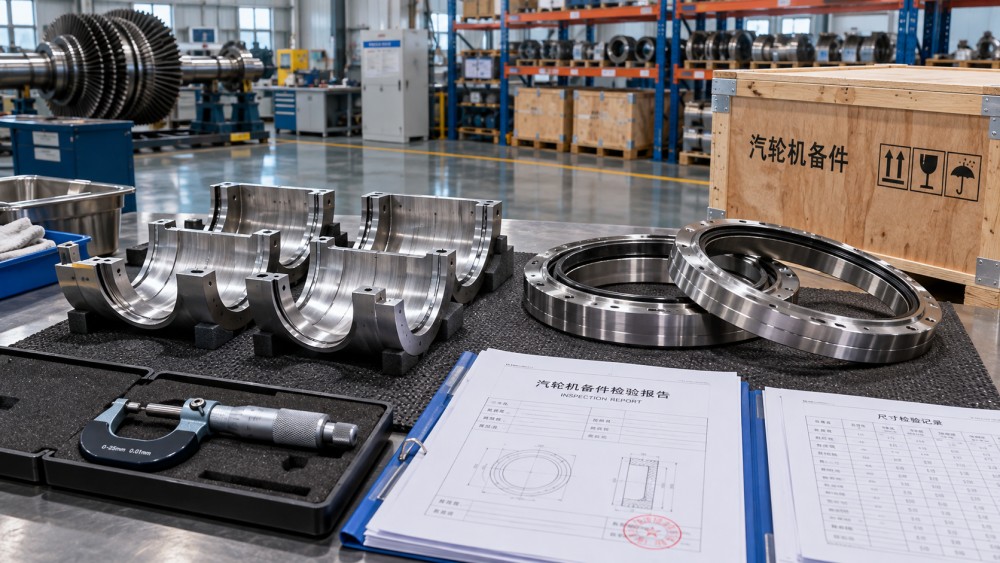
Stock status should describe the component’s condition, not merely its existence. Ask whether the item is finished, partly machined, awaiting inspection, or held as raw material. Confirm quantity, location, ownership, reservation status, and whether the available revision matches the purchase requirement.
For finished stock, request the identification and records needed for engineering review. For older inventory, ask about storage conditions, preservation status, packaging, and any inspection required before release. A dated photograph may help establish physical presence, but it does not establish material identity or dimensional acceptance.
Made-to-order parts need a different check. Ask whether the quotation assumes a new material purchase, forging or casting supply, specialist machining, heat treatment, or an outside testing service. Where these activities apply, establish which are confirmed and which remain estimates. The supplier’s own workshop capacity cannot resolve an unconfirmed subcontractor slot.
An expedited quotation should identify exactly what changes: earlier material availability, a reserved machine slot, additional shifts, faster document review, or a different transport service. If the critical constraint remains unchanged, paying an expedite premium may not advance the site-receipt date. Record the revised milestones and the conditions attached to them before authorizing the extra cost.
Put inspection and documentation inside the lead time
Quality requirements affect the schedule most constructively when agreed before order placement. Ask engineering and quality personnel to define the required acceptance evidence for the specific component. Depending on the part and purchase specification, this may include material records, dimensional reports, process records, nondestructive examination reports, or balancing documentation.
Do not impose every available test on every item, and do not accept a generic “standard inspection” statement where the acceptance criteria remain unclear. Identify the applicable specification, report content, acceptance authority, and any review or witness points. The correct scope depends on the component and the machine’s requirements; procurement should not decide technical adequacy from the delivery promise alone.
For organizations using ISO 9001-based purchasing controls, relevant references include ISO 9001:2015, clause 8.4 on externally provided processes, products, and services; clause 8.6 on release; and clause 8.7 on nonconforming outputs. These are quality-management requirements, not component-specific acceptance criteria or proof that a particular replacement part is suitable.
Ask how witness arrangements will work. Who gives notice? How long does the purchaser have to respond? Can inspection proceed if a representative is unavailable, and under what agreed authorization? An unplanned hold point can stop an otherwise completed order.
Document submission also needs a milestone. If the purchase order requires records to be accepted before dispatch, their preparation and review belong in the delivery schedule. Agree how nonconformities will be reported and who can authorize a disposition. A supplier should not assume that an unresolved deviation can be accepted simply because the outage date is close.
Match the purchasing strategy to the outage scenario
For a planned overhaul, the strongest opportunity is often early clarification rather than late expediting. Resolve drawings, inspection requirements, and supply boundaries while there is still time to address gaps. Where practical, set a site-receipt target that allows incoming inspection before the outage begins.
An unplanned failure changes the commercial pressure, but it does not eliminate the need to verify suitability. Separate what can be accelerated administratively from what needs engineering approval. Faster purchase-order release or courier collection is different from substituting a material, changing a fit, or omitting a specified inspection.
If an alternative component or repair route is proposed, obtain a documented technical review by the responsible engineering authority. Ask what supporting information is available and whether associated components, clearances, or installation procedures are affected. A shorter quoted lead time is not enough to establish interchangeability.
For repeat-use items, compare planned inventory with emergency procurement exposure. The decision should consider consumption history, failure consequences, storage requirements, obsolescence, and whether one stocked item can genuinely support several machines. A common description does not establish common fit.
Compare delivery confidence, not just quoted duration
A bid comparison should show the supplier’s commitment date alongside the assumptions supporting it. A shorter duration with unresolved material sourcing may offer less confidence than a longer schedule supported by allocated stock and agreed inspection arrangements. Avoid converting incomplete information into a precise delivery-risk score without a defensible basis.
A practical evaluation can classify schedule statements as:
- Confirmed: supported by a specific commitment or identifiable evidence, such as allocated finished stock.
- Conditional: achievable if a named action occurs by an agreed date, such as purchaser drawing approval.
- Unverified: dependent on an unresolved activity, such as an unconfirmed outside processing slot.
Use these classifications to direct clarification. Ask what evidence would move an unverified milestone into a confirmed or conditional position. This produces a more useful discussion than repeatedly requesting a shorter overall lead time.
Commercial terms should reinforce that schedule. Record milestone reporting, notice of likely delay, purchaser response deadlines, and the process for approving changes. Any proposed delay remedies need review under the governing contract and applicable law; they should not be treated as a substitute for an executable supply plan.
Keep verification active after the purchase order
Order placement does not close the lead-time review. Agree a reporting cadence proportionate to the order’s risk, with updates tied to completed milestones rather than repeated percentage-complete estimates. When a milestone slips, request its effect on the critical path and the evidence behind the recovery proposal.
Before dispatch, check that the agreed release requirements are satisfied, packing matches the transport and storage plan, and receiving personnel have the necessary documents. Confirm handling arrangements where the shipment’s size, weight, or configuration requires advance preparation.
The purchasing decision should ultimately rest on a traceable chain: a defined component, an agreed technical scope, evidence-backed milestones, controlled release, and a realistic route to site. The most useful lead time is not the shortest number in the quotation table. It is the date whose assumptions procurement, engineering, quality, and the supplier have made explicit and can continue to verify.
Have questions about this sector analysis, or seeking best practices specific to your niche? Drop us a line below and let the senior consultants at GTIIN assist you.
“We respect your privacy. Your information is strictly confidential.”
Tags
Weekly Insights
Stay ahead with our curated technology reports delivered every Monday.
Recommended News
 Market TrendsOct 29, 2026Germany's Asia-Pacific Trade Deficit Forecast to Hit Record €146 Billion in 2026
 Global SourcingOct 28, 2026How to compare Southeast Asian suppliers using landed cost analysis
 Market TrendsOct 28, 2026World Bank’s 2026 Off-Grid Solar Market Trends Report: Users Reach 149 Million
 Supply ChainOct 27, 2026How to account for chargeable weight in air freight cost analysis