Landed Cost Analysis Model: How to Compare True Import Costs
Landed Cost Analysis Model: How to Compare True Import Costs
For procurement teams comparing international suppliers, a landed cost analysis model is the difference between a cheap quote and a smart decision.
A low unit price can look attractive at first glance.
But once freight, duties, insurance, inspection, compliance, and delay risk appear, the picture changes fast.
That is why a landed cost analysis model matters in practical sourcing, especially when supplier options span multiple countries, ports, and trade terms.
A strong model does more than total visible charges.
It helps compare true import costs, expose hidden supply chain risk, and support more resilient purchasing decisions.
Why a Landed Cost Analysis Model Matters More Than Unit Price
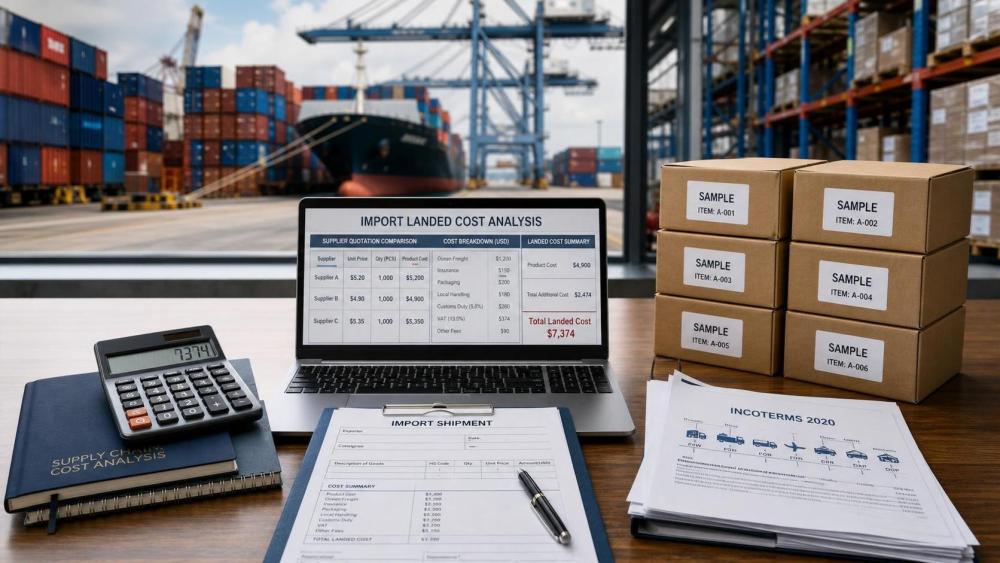
Many sourcing mistakes begin with a narrow comparison.
Buyers review supplier quotations, compare product specifications, and select the lowest factory price.
That approach ignores the full path from supplier gate to final warehouse.
A landed cost analysis model captures every cost layer along that path.
It turns fragmented charges into a single decision framework.
This is especially useful when supplier A offers lower pricing but ships from a higher-duty country.
Or when supplier B quotes slightly more but provides better packaging, faster transit, and lower customs risk.
In both cases, the landed cost analysis model reveals which option truly protects margin and continuity.
Core Cost Elements in a Practical Landed Cost Analysis Model
A useful landed cost analysis model should be detailed enough to reflect reality, but simple enough to update quickly.
In most import scenarios, the model should include these core inputs:
- Unit product price
- Incoterm structure, such as EXW, FOB, CIF, or DDP
- Origin inland transportation
- Export documentation and handling fees
- International freight by ocean, air, rail, or truck
- Marine or cargo insurance
- Import duty, VAT, GST, or other taxes
- Customs brokerage and destination port charges
- Inspection, testing, and certification expenses
- Domestic delivery to final receiving point
- Cost of delays, rework, stockouts, or quality claims
Not every category applies equally to every purchase.
Still, the landed cost analysis model should force each line item into view before supplier selection is finalized.
That discipline reduces surprises after the purchase order is issued.
How to Build a Landed Cost Analysis Model Step by Step
The best landed cost analysis model usually starts with a simple spreadsheet structure.
One supplier per column is often the clearest format.
Then list cost categories in rows and standardize all values into one currency.
- Define the comparison unit, such as per shipment, per SKU, per pallet, or per usable unit.
- Lock the Incoterm for each quotation before comparing numbers.
- Capture direct logistics costs from actual lane data, not broad assumptions.
- Apply the correct HS code and calculate duties and taxes carefully.
- Add quality, compliance, and inspection costs where relevant.
- Estimate risk-adjusted costs for delays, damage, and variability.
- Calculate total landed cost and compare against service level requirements.
This process sounds basic, but its value comes from consistency.
When every supplier is measured through the same landed cost analysis model, negotiation becomes more grounded and less emotional.
It also gives internal stakeholders a cleaner basis for approval.
Hidden Cost Drivers That Distort True Import Cost Comparisons
A landed cost analysis model fails when it excludes costs that are hard to forecast but easy to feel later.
Recent market changes make this even more important.
Freight volatility, port congestion, sanctions, carbon-related regulation, and customs scrutiny can all change the economics of a sourcing decision.
More visibly, small operational weaknesses can create major cost gaps.
- Poor packaging increases breakage and claims.
- Weak export documents trigger customs holds.
- Inconsistent lead times force buffer inventory.
- Low process control raises defect and sorting costs.
- Single-port dependency increases disruption exposure.
In real operations, these items rarely appear on the supplier quotation.
Yet they absolutely belong in a landed cost analysis model.
Even a rough risk allowance is better than pretending these costs do not exist.
Example Framework for Comparing Suppliers
Below is a simple comparison structure.
It shows how a landed cost analysis model can change supplier ranking.
This is where many sourcing teams change their view.
A supplier with the best quoted price may produce the worst real import economics.
The landed cost analysis model makes that visible before the commitment is made.
How to Use the Model in Procurement Decisions
A landed cost analysis model should not sit in a file after one bid review.
It should become part of the sourcing workflow.
That means using it at supplier onboarding, annual cost reviews, contract renegotiation, and contingency planning.
It also works best when linked to market intelligence.
Freight benchmarks, export controls, regulatory changes, and port performance data all improve model accuracy.
This is where broader trade insight becomes valuable.
A sourcing decision is rarely about price alone.
It is also about resilience, service reliability, and exposure to future cost shocks.
That is exactly what a disciplined landed cost analysis model is designed to support.
Common Mistakes to Avoid
- Comparing quotes under different Incoterms without normalizing cost responsibility.
- Using outdated freight rates or tax assumptions.
- Ignoring minimum order quantity effects on inventory cost.
- Leaving out quality failure, returns, and production interruption costs.
- Treating all lead times as equally reliable.
- Failing to update the landed cost analysis model after market changes.
Avoiding these mistakes improves both cost visibility and decision speed.
Final Takeaway
A landed cost analysis model is no longer optional in global sourcing.
It is one of the clearest tools for comparing true import costs across suppliers, countries, and logistics routes.
When built carefully, it helps procurement decisions move beyond headline pricing and toward measurable total value.
The practical next step is straightforward.
Review current supplier comparisons, rebuild them through a standardized landed cost analysis model, and test where hidden import costs are changing the ranking.
That exercise often reveals immediate savings.
More importantly, it creates a stronger basis for resilient cross-border purchasing in a volatile trade environment.
Weekly Insights
Stay ahead with our curated technology reports delivered every Monday.
Recommended News
 Global SourcingOct 16, 2026How importers use industrial trade analysis to compare sourcing countries
 Supply ChainOct 15, 2026How to choose a supply chain strategy for unpredictable demand
 Supply ChainOct 14, 2026How to assess an industrial equipment supplier's spare parts support
 Supply ChainOct 14, 2026EU Updates CSDDD Guidance on Global Supply Chain Due Diligence