
Buy Poultry Cage in Nigeria: A Practical Buyer Checklist for Layer Farms
Why Poultry Cage Purchasing Deserves More Attention in Nigeria
For layer farms in Nigeria, housing equipment is not a minor line item. It affects bird health, labor efficiency, egg collection routines, manure handling, maintenance costs, and the pace at which a project can move from planning to production. In many operations, the cage system also shapes how well the farm can scale later. That is why buyers who are preparing to invest in layer infrastructure usually need more than a price comparison. They need a practical checklist that supports technical review, budget control, and long-term operational stability.
This issue matters to more than farm owners alone. Procurement teams need clear specifications to compare suppliers fairly. Finance approvers need to understand lifetime value rather than only upfront cost. Project managers need to know whether installation requirements match the site reality. For researchers and early-stage planners, cage selection is often one of the first decisions that reveals whether the entire production model is realistic. In that context, buying poultry cages in Nigeria is best treated as a system decision, not a simple equipment order.
The Nigerian market adds several practical considerations. Farms may operate under different power conditions, transport constraints, humidity levels, road access challenges, and labor availability. A cage system that looks acceptable on paper may create avoidable problems if replacement parts are hard to source, if corrosion protection is weak, or if the farm building cannot support the intended layout. Buyers who ask the right questions early usually reduce the risk of delays, hidden costs, and poor production performance after installation.
Start with the Farm’s Actual Operating Model
Before comparing suppliers, the first task is to define what the farm is trying to achieve. A small or mid-sized layer project may prioritize simple management and controlled capital expenditure. A larger commercial operation may focus more on automation, labor savings, and consistent throughput. The right cage configuration depends on flock size, target stocking density, planned expansion, feeding workflow, manure removal approach, and whether the farm expects to integrate automated water, feeding, or egg collection systems over time.
A practical internal checklist often begins with a few direct questions: How many birds will be housed in phase one? Is the building already constructed, or will the building be designed around the equipment? What level of automation can the farm maintain reliably? How sensitive is the project to future labor cost increases? What maintenance skill level is available on site? These answers help narrow the field and prevent a mismatch between equipment complexity and daily operating capability.
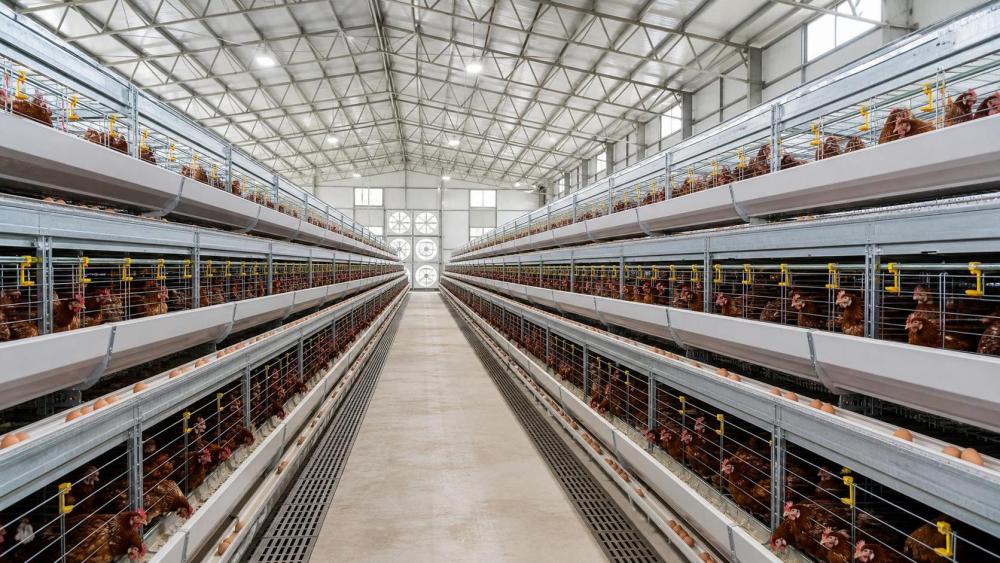
Core Buyer Checklist for Layer Cage Evaluation
When procurement moves into supplier discussions, the review should cover more than dimensions and unit pricing. The most useful buyer checklist usually includes the following areas.
- Material quality: Buyers should verify the steel grade, wire thickness, coating process, and general corrosion resistance. In many poultry environments, poor finishing can shorten service life and increase replacement needs.
- Structural stability: Frame design, connection points, and load-bearing capacity should be examined carefully, especially for multi-tier systems. Weak structure can create safety and maintenance issues over time.
- Bird welfare and management practicality: Cage spacing, feeder access, drinker placement, egg rolling performance, and manure discharge pathways all affect routine farm management.
- Automation compatibility: Even if a farm starts with a lower automation level, the equipment should ideally leave room for later upgrades where feasible.
- Cleaning and maintenance: The design should allow regular sanitation, inspection, and repair without excessive downtime or complicated labor input.
- Installation requirements: Buyers should confirm building dimensions, floor conditions, ventilation interaction, power needs, and assembly complexity before placing orders.
- After-sales support: Spare parts availability, technical guidance, installation supervision, and response time can matter as much as the equipment itself.
In many purchasing processes, technical suitability and after-sales support become the main differentiators after the initial price screen. A low-cost offer may appear attractive, but if the cage system wears quickly, causes egg breakage, or requires frequent repairs, the total cost picture changes fast.
Supplier Questions That Help Expose Risk Early
A disciplined buyer should treat supplier engagement as a verification exercise. The most useful questions are usually concrete and operational. Ask what coating method is used and how it performs in humid poultry house conditions. Ask how the supplier recommends matching the cage system to bird capacity and house dimensions. Ask what parts are considered wear items and how quickly replacements can be arranged. Ask whether installation drawings, assembly guidance, and commissioning support are included. Ask what assumptions have been made about water pressure, manure handling, and building clearance.
It is also wise to request clarity on packaging, shipping preparation, and site readiness expectations. For projects entering Nigeria through complex logistics routes, packaging quality and labeling discipline may influence how smoothly the installation phase begins. If components arrive mixed, damaged, or poorly documented, the project team may lose valuable time on site.
For teams assessing buy poultry cage in Nigeria within a broader sourcing process, these supplier questions can help separate a merely available product from a workable farm solution. The stronger conversations usually connect cage design to operating conditions, maintenance planning, expansion potential, and the buyer’s actual project constraints.
Common Mistakes in Cage Procurement
One common mistake is to compare quotations without normalizing specifications. Two offers may look similar in name yet differ in wire thickness, coating durability, cage density, accessory scope, or automation readiness. Another mistake is to overlook the farm building itself. A cage layout that works well in one house may fit poorly in another because of ventilation design, aisle width, drainage planning, or roof height.
Buyers also sometimes underestimate the cost of weak coordination between equipment supply and site construction. If the poultry house is completed without confirming equipment dimensions, the result may be inefficient use of space, difficult installation adjustments, or compromised workflow. In larger projects, this can delay production schedules and add rework costs that were not included in the original budget.
Another frequent issue is focusing entirely on purchase price while ignoring operating cost. Better manure removal, easier feeding routines, lower egg breakage, and reduced labor pressure may justify a higher initial investment in many scenarios. Finance reviewers often benefit from seeing the discussion framed around lifecycle performance rather than equipment price alone.
How Different Buyer Roles Should Review the Decision
Different stakeholders usually evaluate the same cage purchase through different lenses. That is normal, and it is often useful if the review is structured clearly.
- Procurement personnel should focus on specification clarity, quote comparability, supplier responsiveness, and contract scope.
- Business decision-makers should assess whether the system supports planned production scale and operational consistency.
- Finance approvers should review expected service life, maintenance exposure, labor implications, and possible hidden costs.
- Project managers and engineers should confirm installation sequence, structural fit, utility requirements, and construction coordination.
- Researchers and information gatherers should map supplier claims against practical operating needs rather than collecting product descriptions only.
When these perspectives are aligned early, the buyer is less likely to approve equipment that solves one department’s need while creating operational friction for another.
A Simple Comparison Framework
Choosing for Today Without Blocking Tomorrow
A sensible purchasing decision usually balances present affordability with future flexibility. Not every farm needs a highly automated solution at the beginning, but many farms benefit from equipment planning that does not close off later efficiency improvements. If the business expects to expand flock size, formalize management systems, or tighten labor control, it may be worth selecting a cage setup that can integrate more advanced functions over time, provided the site and budget can support that path.
That said, expansion potential should not be used as an excuse for overbuying. A farm that lacks the management capacity, utility support, or maintenance discipline for a more complex system may be better served by a simpler configuration that performs reliably. Good purchasing discipline means matching technical ambition to operating reality.
Final Takeaway
For Nigerian layer farms, cage procurement is a decision with long operational consequences. The strongest buyers typically move beyond surface-level pricing and review the full chain of material quality, farm fit, workflow efficiency, installation readiness, and supplier support. That approach is useful for procurement teams, executives, finance reviewers, and project managers alike. In a market where practical constraints can shape project outcomes as much as equipment choice, a disciplined checklist is often the most effective way to reduce risk and improve the chances of stable production.
Have questions about this sector analysis, or seeking best practices specific to your niche? Drop us a line below and let the senior consultants at GTIIN assist you.
“We respect your privacy. Your information is strictly confidential.”
Tags
Weekly Insights
Stay ahead with our curated technology reports delivered every Monday.
Recommended News
 Supply ChainNov 10, 2026China Extends Pause on 24% Additional Tariff on US Goods by Two Months
 Industry StandardsNov 10, 2026Which imports are subject to EU carbon border compliance?
 Global SourcingNov 09, 2026USTR Extends 178 China Section 301 Tariff Exclusions to January 2027
 Supply ChainNov 09, 2026How can a tariff risk management dashboard track cost exposure?



