Supply Chain Resilience and Trade Compliance: Where Risk Costs Are Rising
Trade volatility is no longer a background issue. It is now a direct cost driver across sourcing, logistics, customs, and market access.
That is why supply chain resilience trade compliance has moved from an operational topic to a strategic one.
Tariff shifts, export controls, sanctions screening, carbon reporting, and supplier concentration are creating new layers of financial exposure.
Many of those costs stay hidden until shipments stall, documents fail review, or a market suddenly becomes harder to serve.
For cross-border industry, the issue is not only whether goods can move, but whether they can move compliantly, predictably, and profitably.
Why resilience and compliance now sit in the same conversation
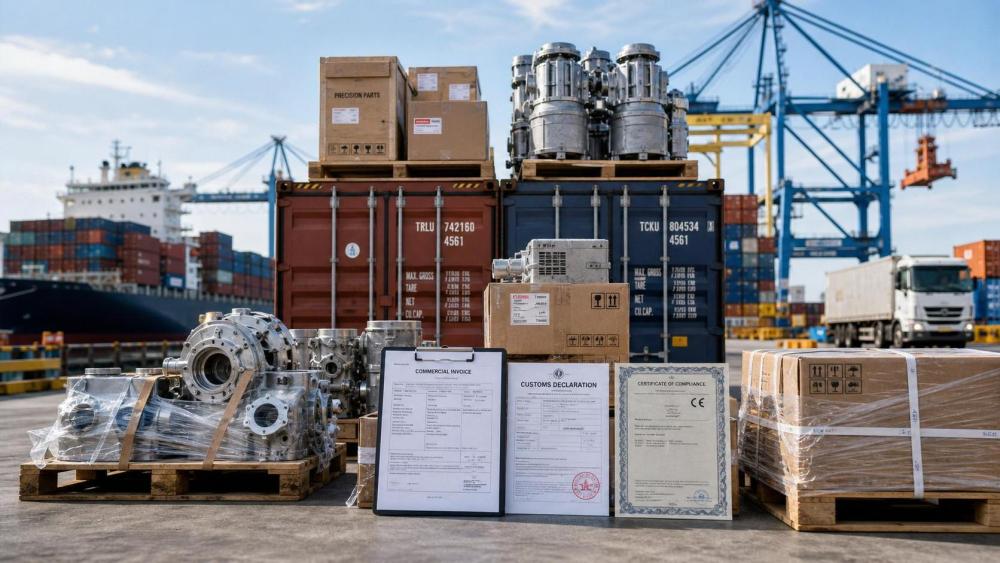
A resilient supply chain can absorb disruption. A compliant supply chain can continue operating within legal, regulatory, and commercial requirements.
In practice, these two ideas are now tightly linked.
A second supplier may reduce geopolitical risk, yet create origin complications, product classification issues, or documentation gaps.
A faster routing option may lower lead times, yet increase transshipment scrutiny or sanctions exposure.
A new export market may offer growth, yet require more demanding labeling, ESG reporting, technical certifications, or customs declarations.
This is the core of supply chain resilience trade compliance: decisions made for flexibility must also hold up under regulatory review.
That is especially true in industrial trade, where product complexity, multi-tier supply networks, and long replenishment cycles increase the cost of mistakes.
Where risk costs are rising fastest
The biggest cost increases usually do not come from one headline event. They come from accumulated friction across the trade cycle.
Tariff and duty uncertainty
Frequent tariff revisions can quickly change landed cost assumptions. Margin plans built on stable duty treatment are now more fragile.
Misreading origin rules or free trade agreement eligibility can erase expected savings and trigger retroactive corrections.
Customs delays and documentation failure
Border procedures have become more data-intensive. Missing certificates, inconsistent HS codes, and incomplete commercial invoices create expensive slowdowns.
For time-sensitive industrial inputs, customs latency can disrupt production windows far beyond the freight bill itself.
Sanctions, export controls, and restricted-party screening
Regulatory scope has widened across sectors, technologies, and jurisdictions. A transaction can be commercially attractive but legally high-risk.
The cost of non-compliance here is rarely small. It can include shipment seizure, fines, lost licenses, and reputational damage.
ESG and carbon-linked reporting
Rules such as CBAM and broader sustainability disclosure requirements are changing trade readiness standards.
The burden is moving upstream. Suppliers now need traceable emissions, material inputs, and process data, not just price and delivery terms.
Supplier concentration and regional shocks
A narrow supplier base reduces bargaining power and raises outage risk. It also amplifies compliance risk when one region faces new controls or disruption.
In many industries, the true exposure sits below tier one, where visibility is still weak.
How this plays out across industrial supply chains
Cross-border supply chains do not face identical pressure. Risk costs rise differently depending on product structure, logistics profile, and regulatory category.
This variation is why generic risk dashboards often miss the point.
Useful decision support needs to connect product-level facts with trade rules, logistics performance, and regional policy movement.
That is where platforms such as GTIIN have practical value.
A strong trade intelligence model does more than track headlines. It links industrial sourcing realities with customs latency, freight benchmarks, export trends, and compliance signals.
What better visibility actually looks like
Visibility is often discussed as if more data automatically lowers risk. It does not.
What matters is decision-grade visibility: data that helps explain exposure before disruption turns into loss.
Three layers matter most
- Supplier-layer visibility, including ownership, production location, and sub-tier dependency.
- Trade-layer visibility, including origin treatment, classification accuracy, and documentation readiness.
- Route-layer visibility, including port risk, transit volatility, and customs clearance performance.
When these layers are disconnected, supply chain resilience trade compliance becomes reactive.
When they are integrated, risk can be priced, prioritized, and managed earlier.
GTIIN’s Full-Dimensional Supply Chain Mapping Model reflects that integrated approach.
It combines micro-level trade and material data with macro-level policy and market changes, which is closer to how real supply chains behave.
Practical ways to reduce rising risk costs
There is no single control that solves supply chain resilience trade compliance. Results usually come from disciplined adjustments across sourcing and governance.
Recheck landed cost models
Landed cost should include duty variability, inspection probability, documentation rework, inventory buffering, and compliance administration.
A low quoted unit price can be misleading when regulatory friction is high.
Treat classification and origin as strategic data
HS codes and origin rules are often handled too late. They should be validated during sourcing decisions, not only before shipment.
That becomes critical when supply bases are shifting across countries.
Build alternate capacity with compliance in mind
Dual sourcing improves resilience only if alternate suppliers can meet documentation, standards, and audit expectations.
Operational backup without compliance readiness is only partial protection.
Monitor policy signals earlier
Waiting for a regulation to become active is expensive. Early monitoring gives time to redesign routes, contracts, and data collection practices.
This is especially relevant for carbon-linked trade rules and technology-related export controls.
What to evaluate next
The next step is not to chase every risk equally. It is to identify where resilience gaps and compliance gaps overlap.
That overlap is where cost escalation tends to be fastest and least visible.
- Map high-value or high-dependency products to their true country, route, and supplier exposure.
- Test whether current trade data supports origin claims, classification accuracy, and restricted-party controls.
- Review where carbon, ESG, or technical reporting may affect future market access.
- Compare alternate sourcing options on compliance readiness, not only price and lead time.
Supply chain resilience trade compliance is becoming a durable management discipline, not a temporary response to turbulence.
The organizations that adapt best will be the ones using clearer trade intelligence, better supplier mapping, and more realistic cost assumptions.
In that environment, a structured view of global sourcing, freight movement, export trends, and industrial standards offers a stronger basis for the next decision.
Tags
- industrial sourcing
- global sourcing
- supply chain resilience
- port congestion
- customs clearance
- trade compliance
- bulk commodities
- supply chain mapping
- geopolitical risk
- industrial standards
- carbon reporting
- export controls
- industrial supply chains
- industrial machinery
- ESG reporting
- customs latency
- sanctions screening
- trade intelligence
- cross-border supply chains
- supply chain resilience trade compliance
Weekly Insights
Stay ahead with our curated technology reports delivered every Monday.
Recommended News
 Supply ChainOct 15, 2026How to choose a supply chain strategy for unpredictable demand
 Supply ChainOct 14, 2026How to assess an industrial equipment supplier's spare parts support
 Supply ChainOct 14, 2026EU Updates CSDDD Guidance on Global Supply Chain Due Diligence
 Global SourcingOct 13, 2026How to assess industrial automation suppliers for legacy integration