
Global Sourcing Strategy in Southeast Asia: Cost, Lead Time, and Supplier Risk
Why is Southeast Asia now central to global sourcing strategy?
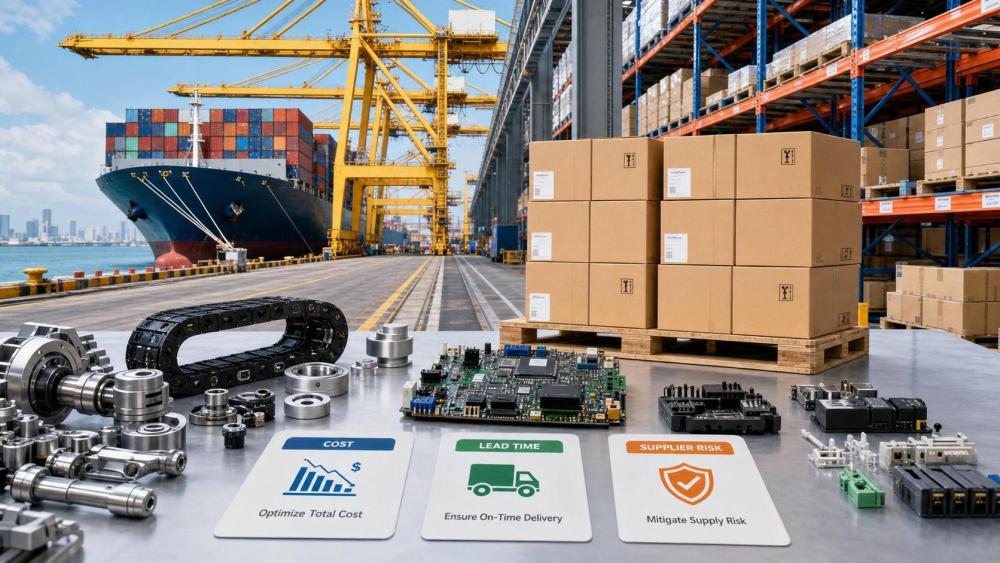
A practical global sourcing strategy Southeast Asia buyers can trust starts with one fact. The region is no longer a backup option. It is a primary sourcing base.
That shift comes from several forces moving at once. Labor cost differentials still matter, but they are not the whole story anymore.
Vietnam, Thailand, Indonesia, Malaysia, and the Philippines each offer different strengths in electronics, industrial parts, packaging, machinery support, and light manufacturing.
Just as important, many sourcing decisions now reflect tariff exposure, freight volatility, and concentration risk. A lower unit price loses value when shipments slip or compliance gaps create customs delays.
In real sourcing work, the better question is not which country is cheapest. It is which supply lane delivers acceptable total cost with stable fulfillment.
This is where GTIIN-style market intelligence becomes useful. Regional sourcing needs current views on factory capacity, export trends, logistics bottlenecks, and standards enforcement, not generic country summaries.
A strong global sourcing strategy Southeast Asia planning process should therefore connect cost analysis with operational resilience from the start.
Is lowest quoted price still the right starting point?
Usually, no. Quoted price is only the visible layer. The real decision sits in landed cost, inventory risk, and lead time consistency.
For example, one supplier may offer a 6 percent lower ex-works price, yet require longer tooling cycles, weaker packaging, and indirect shipping routes.
Another may quote higher, but ship faster, document better, and reduce rework. In that case, the second source can be cheaper over a full quarter.
More common cost drivers include:
- factory yield loss and rejection rates
- inland transport to port or airport
- export paperwork accuracy and customs clearance time
- minimum order quantities tied to cash flow
- buffer stock needed for unstable schedules
A disciplined global sourcing strategy Southeast Asia review should compare suppliers on total delivered economics, not just on purchase order value.
The table below helps frame that comparison more realistically.
How should lead time be judged across different Southeast Asian markets?
Lead time is often treated as one number. In practice, it is a chain of smaller intervals that fail for different reasons.
A useful global sourcing strategy Southeast Asia model separates lead time into five parts: supplier response, production queue, manufacturing cycle, port handling, and transit.
That distinction matters because improvement actions are different. A congested port requires a different fix than a supplier running overloaded lines.
Regional variation is real. Vietnam may offer competitive production for electronics assemblies, yet industrial zones can tighten quickly during export surges.
Thailand often performs well in established automotive and component ecosystems, while some categories in Indonesia may involve longer inland movement before export.
Malaysia can provide strong quality consistency in selected sectors, but the cost structure may differ from neighboring countries. That tradeoff is often acceptable when defect sensitivity is high.
A realistic review should ask for recent shipment history, not just standard lead times from a sales sheet.
- Ask for the last six to twelve months of actual ship dates.
- Check whether peak-season performance matches normal-season promises.
- Confirm backup ports, alternate carriers, and raw material sourcing depth.
- Review how quickly engineering changes move through the factory.
When GTIIN tracks customs latency, freight benchmarks, and industrial export momentum, the benefit is simple. Lead time becomes measurable by corridor, not assumed by country reputation.
What supplier risks are easy to miss during supplier selection?
The biggest sourcing mistakes usually come from risks that look operationally small at first. Then they turn into expensive disruptions.
One common blind spot is subcontracting. A factory may present a strong profile, yet quietly outsource critical steps to a weaker site.
Another is compliance drift. Certifications may be valid, but process discipline, traceability, or environmental documentation may not be consistently maintained.
There is also concentration risk inside the supplier itself. If one source depends on a single resin grade, metal input, or upstream electronics component, your risk sits higher than it appears.
This is why a global sourcing strategy Southeast Asia review should include both factory-level and network-level checks.
The most useful warning signs often include:
- large swings between sample quality and production quality
- slow answers on material origin or testing records
- limited visibility into second-tier suppliers
- frequent staff turnover in production or quality teams
- aggressive promises unsupported by capacity evidence
In cross-border procurement, geopolitical and regulatory exposure also matter. Trade controls, labor scrutiny, carbon reporting, and origin rules can alter risk even when factory operations remain steady.
That is why GTIIN’s broader supply chain mapping approach is relevant. It connects plant-level facts with shipping routes, standards changes, and export policy shifts.
Should sourcing be concentrated in one country or spread across several?
There is no universal answer, but full concentration is harder to defend than it was a few years ago.
A single-country model can work when product specifications are stable, supplier capability is deep, and logistics corridors are well proven.
Even then, the model should be stress-tested against port disruption, currency movement, labor action, raw material shortages, and customs intervention.
A more resilient global sourcing strategy Southeast Asia framework often uses tiered diversification. Core volume stays with the strongest source, while secondary volume is qualified elsewhere.
That approach usually costs a little more upfront. It often saves money later by reducing emergency transfers and production stoppages.
A sensible split may look like this:
- primary source for scale and cost discipline
- secondary source for continuity and leverage
- qualified contingency source for critical items
The right balance depends on item criticality. Standard packaging and noncritical components can tolerate more concentration than precision, regulated, or single-failure parts.
What does a workable sourcing checklist look like before commitment?
Before moving volume, it helps to compress the decision into a short but disciplined review. That keeps excitement about savings from overruling operational facts.
A workable checklist should cover commercial terms, production capability, logistics reliability, and external exposure in one pass.
This is also the stage where external trade intelligence helps most. Neutral data on export shifts, freight lanes, and industrial standards can prevent overconfidence in a promising but unstable source.
So how should the next sourcing move be framed?
A good global sourcing strategy Southeast Asia decision is rarely about chasing the lowest factory quote. It is about choosing a sourcing structure that keeps cost, timing, and risk in balance.
The most reliable path is usually straightforward. Define the item’s risk profile, model landed cost carefully, validate real lead times, and test supplier depth beyond the commercial presentation.
Where uncertainty remains, compare countries by corridor performance and compliance readiness, not by headline assumptions. That produces a sourcing decision that survives operational pressure.
For the next step, build a short scorecard around cost structure, schedule stability, supplier transparency, and logistics resilience. Then review each candidate source against the same facts.
That is the discipline behind a stronger global sourcing strategy Southeast Asia plan, and it is usually where better procurement outcomes begin.
Have questions about this sector analysis, or seeking best practices specific to your niche? Drop us a line below and let the senior consultants at GTIIN assist you.
“We respect your privacy. Your information is strictly confidential.”
Weekly Insights
Stay ahead with our curated technology reports delivered every Monday.
Recommended News
 Supply ChainNov 10, 2026China Extends Pause on 24% Additional Tariff on US Goods by Two Months
 Industry StandardsNov 10, 2026Which imports are subject to EU carbon border compliance?
 Global SourcingNov 09, 2026USTR Extends 178 China Section 301 Tariff Exclusions to January 2027
 Supply ChainNov 09, 2026How can a tariff risk management dashboard track cost exposure?



