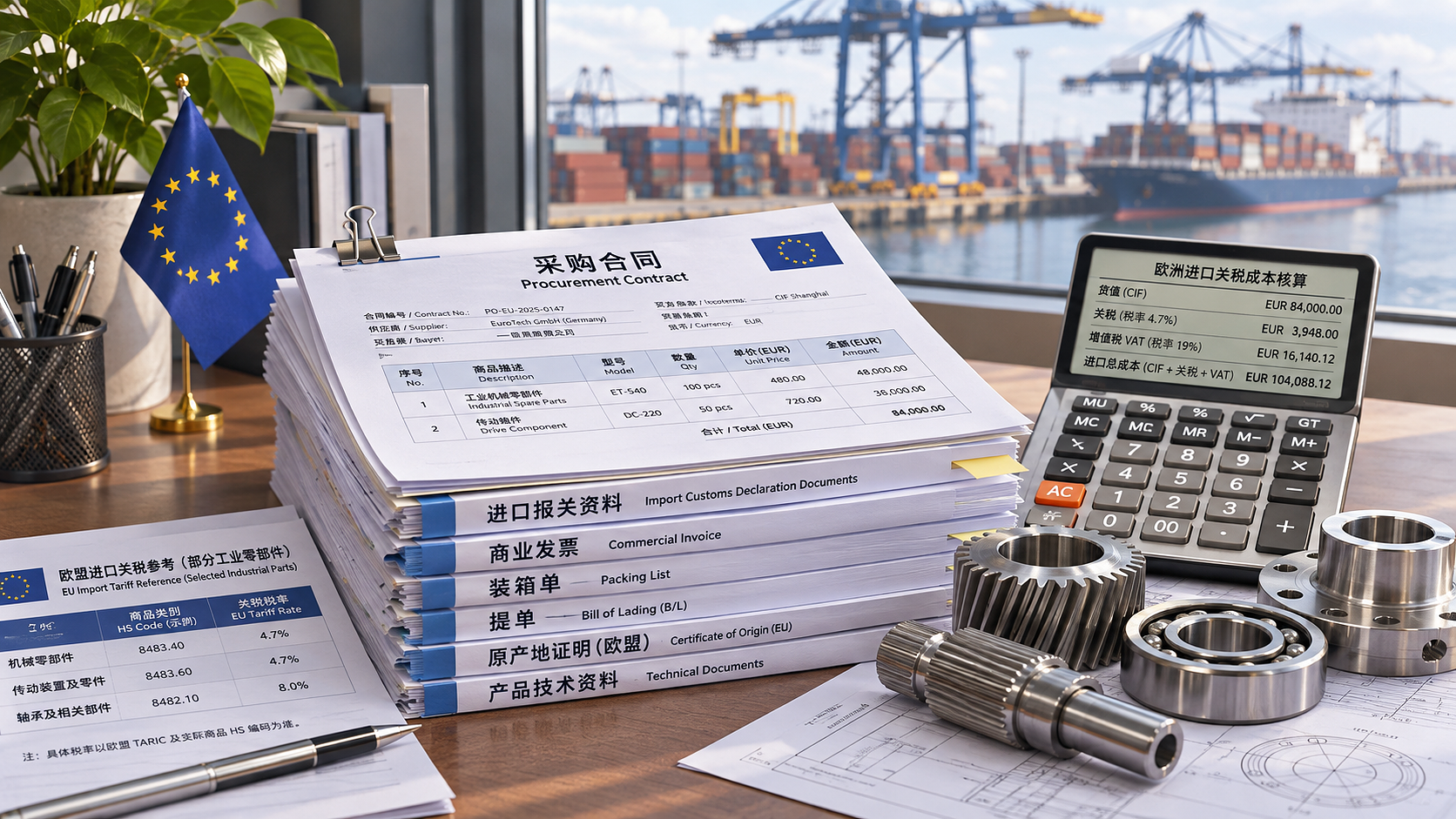
How to prevent customs delays caused by trade documentation errors
A missing invoice detail or an inconsistent product description can hold a shipment at customs, disrupt delivery schedules, and create unexpected costs. For logistics and trade operations teams, accurate trade documentation is essential to keeping goods moving across borders. This guide explains how to identify common paperwork errors, check key documents before dispatch, and coordinate with suppliers, carriers, and customs brokers to reduce the risk of costly delays.
Start with the information customs needs to verify
Customs documentation is not simply a collection of forms. It is a set of connected statements about a transaction: what the goods are, who is moving them, where they originated, how much they are worth, and whether any special controls apply. A problem in one statement can raise questions about the rest.
The commercial invoice, packing list, transport document and customs declaration serve different purposes, so they do not need to look identical. But their shared facts must be reconcilable. If the invoice shows 100 units while the packing list accounts for 10 cartons of 12, the discrepancy needs an explanation before the declaration is filed.
Create a shipment record that brings together the approved product data, parties, quantities, value, origin and document versions. Use it as the reference for preparing documents rather than copying information from an old shipment. A previous invoice may be a useful starting point, but a changed supplier, product specification or destination can make its details unsuitable.
Catch the errors that cause the most difficult questions
Descriptions that do not identify the goods
Descriptions such as “parts,” “samples” or “industrial equipment” may make sense to the seller but tell a customs officer very little. A useful description identifies the item and its relevant characteristics, such as material, function, composition or model. For example, “steel mounting brackets for conveyor equipment” is more informative than “machine parts.” Add technical specifications where they affect classification or controls.
Keep the description consistent across documents, while allowing for the different space and terminology used by carriers and customs systems. A short transport description can be acceptable if it does not contradict the more detailed invoice and declaration.
Incorrect classification or unsupported origin
The Harmonized System provides the international basis for tariff classification, but importing countries may use additional national digits. Do not assume an export code is automatically the correct import code. Give the broker a product specification, material breakdown and intended use; ask who will confirm the destination classification and retain the reasoning used.
Country of origin is also more complicated than the country from which goods are shipped. Manufacturing in more than one country can require an origin assessment under the applicable rules. Preferential tariff claims may have separate product-specific rules and evidence requirements. A supplier’s statement is useful only if it supports the claim required for the destination and trade arrangement.
When origin or classification is uncertain, resolve it before dispatch where possible. Depending on the jurisdiction, a formal advance ruling may be available. Check the relevant customs authority’s process and allow time for its response; submitting a request does not guarantee an immediate decision.
Values and quantities that cannot be reconciled
Check the invoice currency, unit prices, extended amounts and total. Distinguish the transaction price from the customs value: adjustments and supporting information may be required under the destination’s valuation rules. Freight, insurance, assists, royalties or related-party circumstances can matter, depending on the transaction and local requirements. A zero-price replacement or sample may still need a declared customs value; ask the broker how to support it.
Compare the quantities actually packed with the invoice and packing list. Check units of measure as well as numbers: pieces, pairs, kilograms and sets are not interchangeable. Net and gross weights should be identified clearly, and package counts should agree with carrier information or have a documented explanation.
Build a practical pre-dispatch check
A good review happens while there is still time to correct the shipment, not after the truck has left. Use a risk-based process: a repeat shipment of unchanged goods may need a shorter review than a new product, supplier or destination. The following sequence gives operators a workable control point.
- Confirm the transaction. Check the seller, buyer, importer of record and delivery details against the purchase order and agreed shipping instructions. Confirm that the named legal entities and identification numbers are correct where required.
- Validate the product data. Match each line to an approved description, destination tariff classification and origin determination. Flag changes in materials, manufacturing location or function for review.
- Reconcile the shipment. Compare quantities, values, currency, weights and packages across the invoice, packing list and booking details. Investigate differences rather than assuming another party will correct them.
- Check special requirements. Confirm whether the goods, destination or end use trigger permits, certificates, agency filings or other controls. Establish who obtains each document and when it must be available.
- Release one approved version. Send the final document set to the broker and relevant logistics partners through the agreed channel. Record the version, approval and filing deadline.
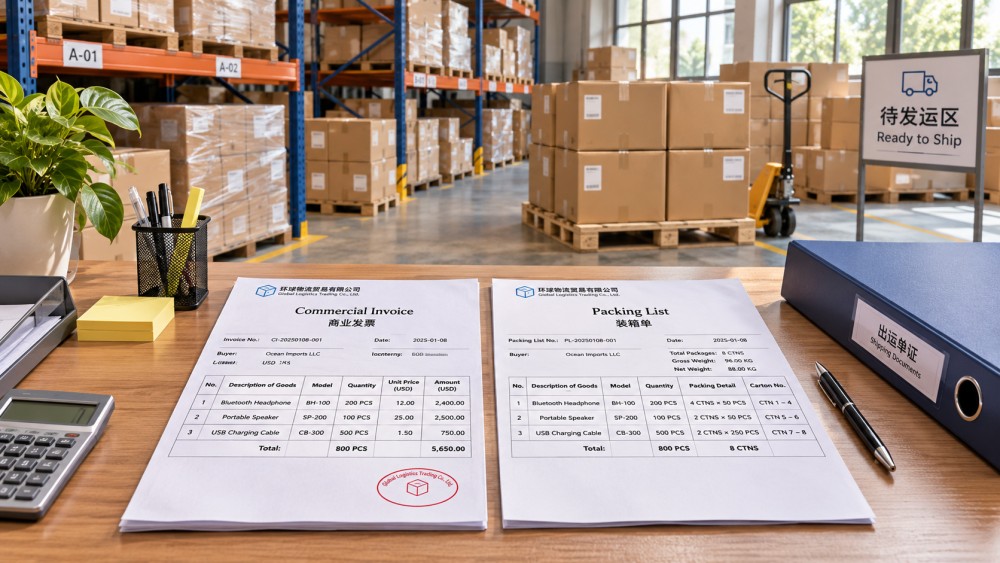
For an operational team, the most valuable part of this process is the exception step. If an item fails a check, assign an owner and a deadline. “Broker to review” is not enough if the broker is waiting for a specification that only the supplier can provide.
Check the documents against their actual purpose
Most shipments begin with a commercial invoice and packing list, but neither is a substitute for a complete customs declaration. The invoice should contain the transaction and goods information required by the importing jurisdiction. The packing list should help identify what is in each package, especially when a consignment contains multiple products or partial order lines.
The bill of lading or air waybill records transport information. Check the shipper, consignee, routing, package count and other relevant details against the booking and final shipping instructions. Where an original negotiable document is used, agree in advance on how it will be issued and made available; an otherwise compliant shipment can be delayed if the party collecting the goods lacks the required transport document.
Certificates of origin, licences, inspection documents and product-specific declarations are conditional, not universal. A certificate required by a buyer or bank is not necessarily the same as evidence needed for a preferential customs claim. Equally, an invoice statement may be acceptable in one situation but not another. Confirm the form, issuer, validity and submission method with the relevant authority or a qualified local broker.
Electronic submission does not eliminate these checks. Data can be truncated, mapped to the wrong field or sent before a revised document reaches the broker. Where possible, compare the declaration data or draft entry with the approved shipment record, not just the PDF attachments.
Give each party a defined responsibility
Suppliers know what was manufactured and packed; importers typically know the destination transaction and compliance requirements; brokers understand local filing procedures. Problems appear when each assumes someone else has verified the underlying facts. A broker can prepare an entry, but cannot reliably classify an unfamiliar product from a vague description alone.
Agree on a simple responsibility matrix before the first shipment on a route. Identify who supplies technical data, determines origin, approves invoice values, obtains permits, files the declaration and responds to customs queries. Confirm the Incoterms rule and named place in the sales agreement, but do not treat the trade term as a complete compliance plan: filing obligations and the importer of record must still be established under applicable law.
Share documents early enough for a meaningful review. Ask the broker for a cutoff that reflects the transport mode and destination requirements, then build internal time ahead of it. For controlled goods or unfamiliar classifications, send product information before booking rather than waiting for the final invoice.
Use a single contact path for changes. If a supplier changes the packing count after the invoice is approved, the update must reach the carrier and broker as well as the buyer. Mark superseded versions clearly and keep a record of what was submitted; otherwise, several parties may work from different files with the same name.
What to do when customs places a shipment on hold
Find out what kind of hold has been issued and what response is requested. A document query, physical inspection and permit issue require different actions. Ask the broker for the authority’s notice or a precise explanation, the response deadline, and whether storage, demurrage or other charges may accrue while the issue is resolved.
Preserve the submitted documents and identify the source of the discrepancy. If the declared quantity differs from the packed quantity, obtain the warehouse record and a corrected packing list. If classification is questioned, provide product literature or a material breakdown. If a value is challenged, assemble the purchase order, invoice and relevant transaction records. Do not alter an issued document silently: coordinate any correction or amendment with the broker and follow the applicable customs procedure.
Tell the receiving team what is known, what remains uncertain and when the next update is due. Avoid promising a release date until the authority has responded. Once the shipment is cleared, record the cause and corrective action in a shared log. A recurring error calls for a change to the source data or approval process, not another reminder to “be careful.”
Make the checks useful beyond one shipment
Review exceptions by product, supplier, route and cause. Separate errors caught before filing from customs queries and operational holds; otherwise, a team that finds more mistakes early may appear to perform worse. Track the time needed to obtain missing information as well as the number of corrections. That can reveal whether the constraint is product data, supplier response or a late internal handover.
Market intelligence can help teams identify routes and sourcing changes that deserve a closer compliance review. Global Trade Insights & Industry Network (GTIIN) examines sourcing, industry standards and supply chain conditions in that wider context. For an individual shipment, however, the final check should remain tied to current requirements from the relevant customs authority and other competent agencies, supported by local professional advice where needed.
Before the next dispatch, choose one recurring lane and trace its documents from the supplier’s source data to the declaration. The gaps between those handoffs are often more useful to fix than the formatting of the forms themselves.
Have questions about this sector analysis, or seeking best practices specific to your niche? Drop us a line below and let the senior consultants at GTIIN assist you.
“We respect your privacy. Your information is strictly confidential.”
Weekly Insights
Stay ahead with our curated technology reports delivered every Monday.
Recommended News
 Supply ChainNov 22, 2026Nvidia Server Partners Pause Southeast Asia Shipments Amid US Export Controls
 Global SourcingNov 22, 2026How to manage tariff risk when importing into Europe
 Supply ChainNov 21, 2026EU Ban on Plastic Waste Exports to Non-OECD Countries Takes Effect
 Industry StandardsNov 21, 2026How to use ESG standards for procurement supplier assessments