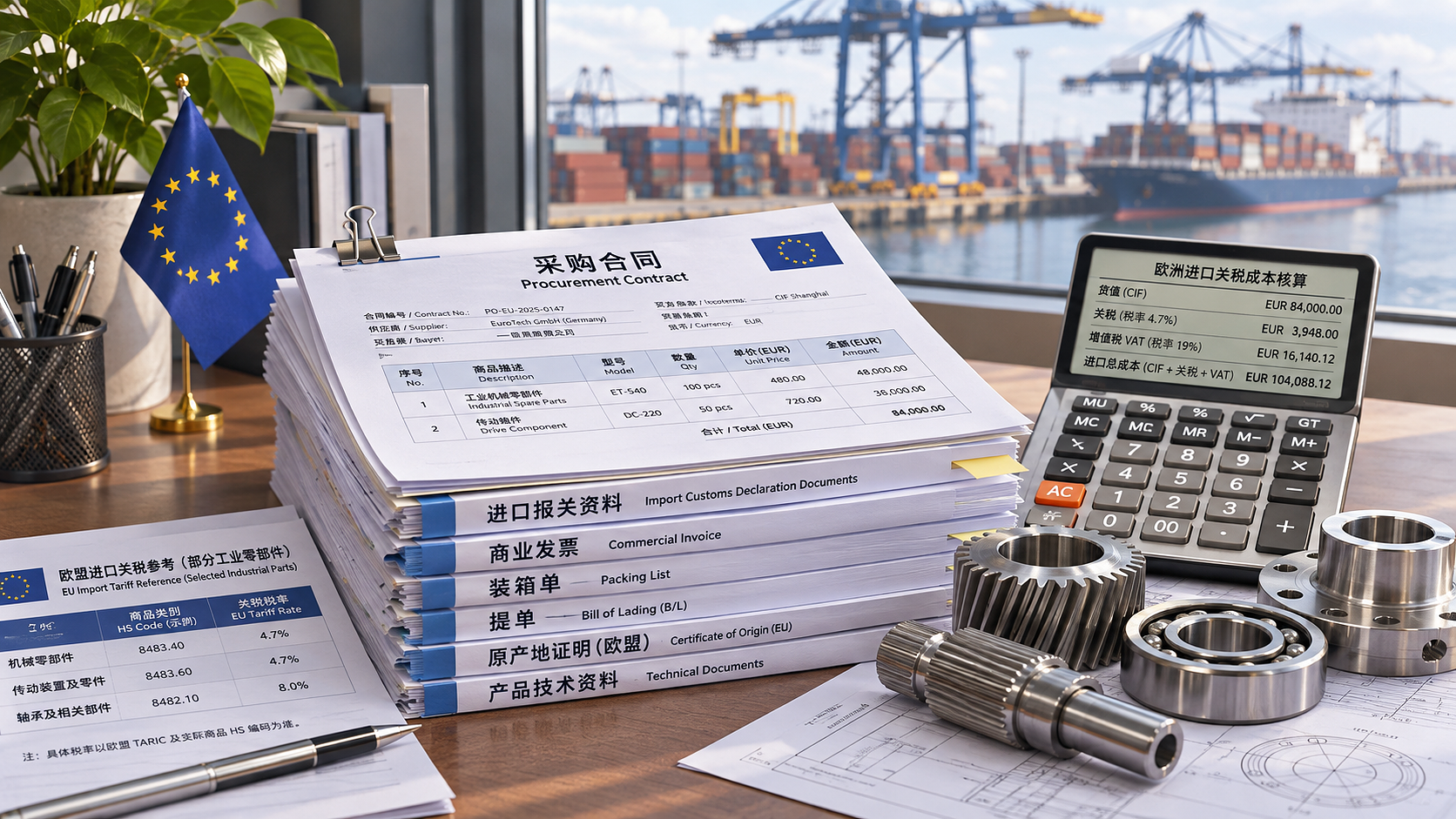
How to manage tariff risk when importing into Europe
A sourcing decision can look competitive until customs duties, trade remedies or a loss of preferential origin change the landed cost. For procurement teams importing into Europe, the first priority is to identify which products are exposed, establish the customs facts behind each cost estimate, and decide who carries the financial risk if a measure changes before importation.
Effective tariff risk management in Europe starts with a distinction that can alter the whole calculation: the European Union applies a common customs tariff, but Europe also includes countries with separate customs regimes, such as the United Kingdom, Switzerland and Norway. Build the assessment around the actual customs territory of import, the product and its origin. A supplier’s location or the port used for entry is not enough to establish the duty payable.
Start with the shipments that could change the purchasing decision
Not every purchase needs the same depth of analysis. Prioritize products with high annual import values, thin margins, long lead times, concentrated sourcing or exposure to additional trade measures. A low-value component may also deserve attention if it is essential to production and an unexpected customs delay could stop an assembly line.
For each priority product, create a record that connects the purchase order to the customs declaration. It should identify the importing entity, destination customs territory, product description, proposed commodity code, manufacturing origin, supplier, expected entry date, customs value assumptions and relevant contract terms. Include any intermediate processing and the countries involved; these details may determine origin and whether a trade measure applies.
Then put a financial figure against the uncertainty. Compare the estimated annual duty exposure with the margin on the finished product or the procurement budget. A small percentage change on a high-volume material can be more consequential than a dramatic headline about a product the business buys only occasionally.
Separate three questions when reviewing a shipment:
- What duty applies under the ordinary tariff? This depends on the product classification, customs territory and other relevant particulars.
- Could a preference reduce that duty? This depends on an applicable trade arrangement, compliance with its origin rules and the required supporting evidence.
- Could an additional measure apply? Anti-dumping or countervailing duties, safeguards, quotas and other measures may depend on product scope, origin, exporter or other conditions.
Do not treat an estimated rate as a permanent property of the supplier. The duty outcome belongs to a specific product, origin, transaction and import date.
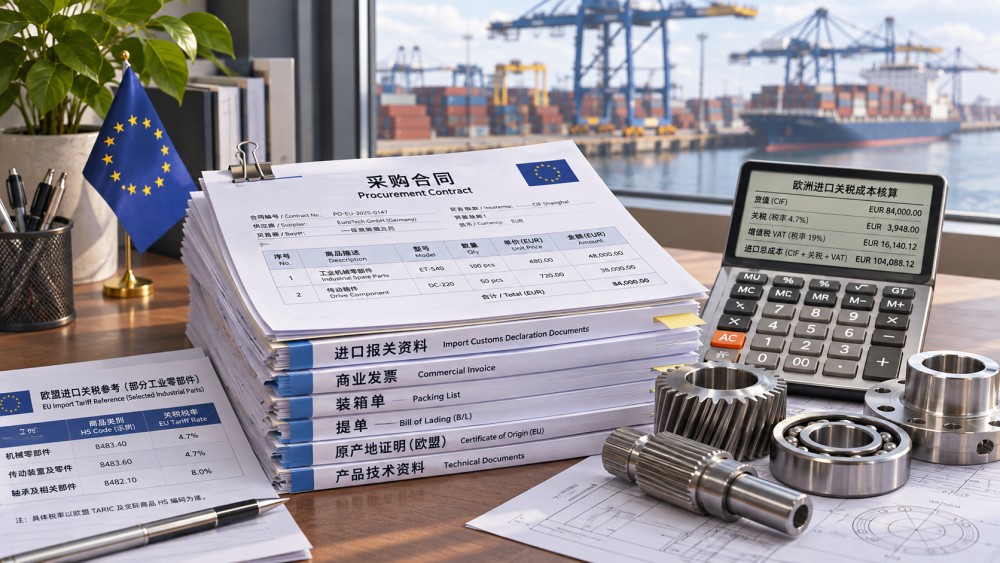
Check classification, origin and value before comparing suppliers
A supplier comparison is only useful when the customs assumptions are consistent. Three suppliers may quote the same commercial description while offering products with different compositions, manufacturing histories or accompanying services. Each difference can change the landed-cost calculation.
Classification: describe what is being imported
The commodity code determines which tariff lines and measures must be checked. Ask for specifications that describe the goods as imported: material composition, intended function, degree of processing, dimensions or technical characteristics where relevant. A catalogue label such as “metal component” rarely provides enough detail on its own.
Classification can be especially sensitive where a product is a mixture, a part of a larger machine, an unfinished article or a kit. Ask the customs broker or classification specialist to document the reasoning, including the descriptions and technical information used. When uncertainty is material or recurring, consider a binding tariff information decision in the EU, subject to its conditions and validity. Other customs territories have their own ruling procedures.
Review the code when the product changes. A new alloy, design or level of processing may affect classification even if the purchase-order description remains unchanged.
Origin: follow production, not the invoice
The country where goods are shipped from, the supplier’s registered address and the country of customs origin can differ. For tariff purposes, procurement teams should distinguish non-preferential origin, which can be relevant to ordinary duties and trade remedies, from preferential origin under a particular trade arrangement.
Preferential treatment is conditional. Goods must meet the agreement’s product-specific rules, and the importer must hold the required proof or statement and comply with the relevant procedures. Simple repacking or routing through another country does not automatically confer that country’s origin. Even where the finished product qualifies, a change in inputs or manufacturing operations can affect eligibility.
Ask suppliers for a clear production chain, the basis for any origin claim and a process for reporting changes. Keep supporting records accessible to the importer; a preference claimed at entry may later be challenged, potentially creating duty arrears and other liabilities.
Customs value: reconcile the quote with the declaration
The invoice price is a starting point, not necessarily the complete customs value. Depending on the transaction and applicable rules, freight, insurance, assists, royalties or other adjustments may need consideration. Discounts and related-party pricing can also require closer review.
Use the customs territory’s valuation rules and involve the broker or customs specialist when charges are split across contracts or invoices. Procurement should know which assumptions sit behind the declared value, because an attractive unit price can conceal costs that still affect duty or the total cost of acquisition.
Build a landed-cost comparison that can withstand a tariff change
Compare suppliers on a common delivery basis and use the same demand volume, currency assumptions and destination. A practical model should show the purchase price, international freight and insurance, customs duty, any applicable additional duties, brokerage, inland delivery and other import-related costs. Show import VAT separately: its cash-flow impact and recoverability depend on the importer’s circumstances, so it should not automatically be treated as a permanent cost.
The following illustration shows why the lowest quoted price may not produce the lowest delivered cost. The figures are hypothetical and exclude VAT and other transaction-specific charges.
Supplier B is cheaper on these assumptions, but its zero-duty outcome must have a defensible basis. If it depends on preferential origin and the required conditions cannot be met, recalculate before awarding the contract. Similarly, the example assumes that duty is calculated on the stated customs value; actual valuation and any additional measures require their own assessment.
Run at least three scenarios for material purchases: the expected position, a loss of any claimed preference, and a plausible adverse change in the applicable duty or trade measure. For a product under a tariff-rate quota, add a case in which the shipment enters after the available quota is exhausted. Model the rate that would apply outside the quota rather than assuming access is guaranteed.
Translate the results into a decision threshold. If an additional €8 per unit would eliminate the saving from an overseas source, the buyer knows how much tariff exposure the purchase can absorb. Compare that threshold with the contract term, delivery schedule and probability that sourcing can be changed in time. A long qualification cycle can make an apparently temporary duty increase expensive to escape.
Put tariff risk into the contract and the sourcing plan
The customs authority’s claim and the commercial allocation of cost are separate issues. Identify the importer of record and who is responsible for the declaration in the relevant customs territory. Then read the delivery terms alongside the full contract: Incoterms help allocate delivery obligations and costs, but they do not replace clear wording on tariff changes, origin evidence, declaration responsibilities or reimbursement.
A useful negotiation covers the following points before the purchase order is placed:
- Cost ownership: who pays existing duties and who bears an increase, a newly imposed measure or the loss of a preference.
- Evidence: what product specifications and origin documents the supplier must provide, when they are due and how long records must be retained under applicable requirements.
- Change notification: when the supplier must report a change in manufacturing site, inputs, production process or exporter that could affect the customs outcome.
- Price adjustment: what event triggers a review, what evidence supports the calculation and whether the change applies to orders already accepted.
- Remedies: how the parties handle incorrect information, customs claims, delayed documentation or an inability to supply under the agreed terms.
A tariff clause should be specific enough to operate when prices are under pressure. “Costs may be renegotiated if tariffs change” leaves open which tariff, which orders and what happens if the parties cannot agree. In longer contracts, define a review window and escalation route that fit the shipment cycle.
Supply diversification can reduce exposure, but a second supplier is useful only if it can supply an acceptable product at the required volume. Test the alternative’s classification and origin independently, account for qualification costs, and check whether its inputs or production depend on the same country as the first supplier. Switching the invoicing entity while retaining the same manufacturing chain may leave the tariff position unchanged.
For expensive or slow-moving goods, customs warehousing and other customs procedures may offer duty deferral or relief in suitable circumstances. Their value depends on the goods’ eventual destination, the procedure’s conditions, authorization and administrative costs. Ask a customs specialist to compare the cash-flow benefit with the compliance burden before building the arrangement into a sourcing decision.
Monitor changes against orders that are already moving
A tariff review at supplier selection is not enough for a contract that runs for months. Assign ownership for monitoring priority commodity codes, countries of origin and applicable trade measures. Procurement, customs and logistics should share a single list of exposed products, active purchase orders and expected customs-entry dates.
Use authoritative sources for the customs territory concerned. For EU imports, the European Commission’s TARIC database is a practical starting point for measures associated with a commodity code and origin; the relevant legal acts and national customs guidance remain important for interpreting scope and applying procedures. For imports into the UK or other non-EU European markets, use the applicable national tariff and customs guidance. Record the date and assumptions behind each check.
Set a trigger for action rather than circulating every policy headline. A proposed measure affecting a high-spend product may justify preparing a supplier alternative or a revised quote; a measure that has entered into force requires an immediate review of shipments and declarations. Check the legal details, including effective dates, product scope, any transitional provisions and the circumstances that determine which rate applies.
When a change affects open orders, recalculate landed cost, identify the party responsible under the contract and decide whether to proceed, adjust delivery or activate an alternative. Avoid assuming that shipment date alone fixes the duty outcome: the applicable treatment depends on the customs procedure and the measure’s legal terms. The most useful tariff register is one that lets a buyer see which purchase orders need a decision while there is still time to make one.
Have questions about this sector analysis, or seeking best practices specific to your niche? Drop us a line below and let the senior consultants at GTIIN assist you.
“We respect your privacy. Your information is strictly confidential.”
Weekly Insights
Stay ahead with our curated technology reports delivered every Monday.
Recommended News
 Supply ChainNov 22, 2026Nvidia Server Partners Pause Southeast Asia Shipments Amid US Export Controls
 Global SourcingNov 22, 2026How to manage tariff risk when importing into Europe
 Supply ChainNov 21, 2026EU Ban on Plastic Waste Exports to Non-OECD Countries Takes Effect
 Industry StandardsNov 21, 2026How to use ESG standards for procurement supplier assessments