Which Standards Matter Most When Sourcing Industrial Equipment?
Which Standards Matter Most When Sourcing Industrial Equipment?
Which industry standards matter most when sourcing industrial equipment? The answer depends on what the equipment does, where it will operate, and what happens if it fails. A supplier’s certificate collection is not a reliable starting point. Destination-market requirements, machinery hazards, and measurable operating performance should determine which documents you request—and which claims you challenge.
This guide from Global Trade Insights & Industry Network (GTIIN) separates management-system certification from equipment conformity and explains how to turn standards into practical sourcing requirements. The aim is not to collect more paperwork. It is to avoid buying a machine that clears commercial negotiations but cannot be safely installed, legally commissioned, or operated as intended.
Start with the destination and duty, not the certificate
Before issuing a request for quotation, define the equipment’s intended use, installation country, operating environment, and integration boundaries. A standalone pump, a pressure vessel, and an automated packaging line require different compliance assessments, even when supplied by the same manufacturer.
The purchasing priority should usually follow this order: legally applicable requirements, safety requirements addressing the actual hazards, technical performance and compatibility, then evidence of supplier process control. These layers overlap, but none substitutes for another.
Distinguish legislation, standards, and certification. Legislation establishes legal obligations. Standards provide technical requirements or methods and may be voluntary unless incorporated into law or contract. Certification is an assessment against a defined scope. A recognized standard can be useful without being legally mandatory; a certificate can be genuine without covering the machine you are buying.
For each requirement, record the applicable edition, reason for applicability, evidence required, and responsible party. “Comply with all international standards” leaves too much unresolved to support a meaningful quotation or acceptance decision.
ISO 9001 helps assess the supplier—not approve the machine
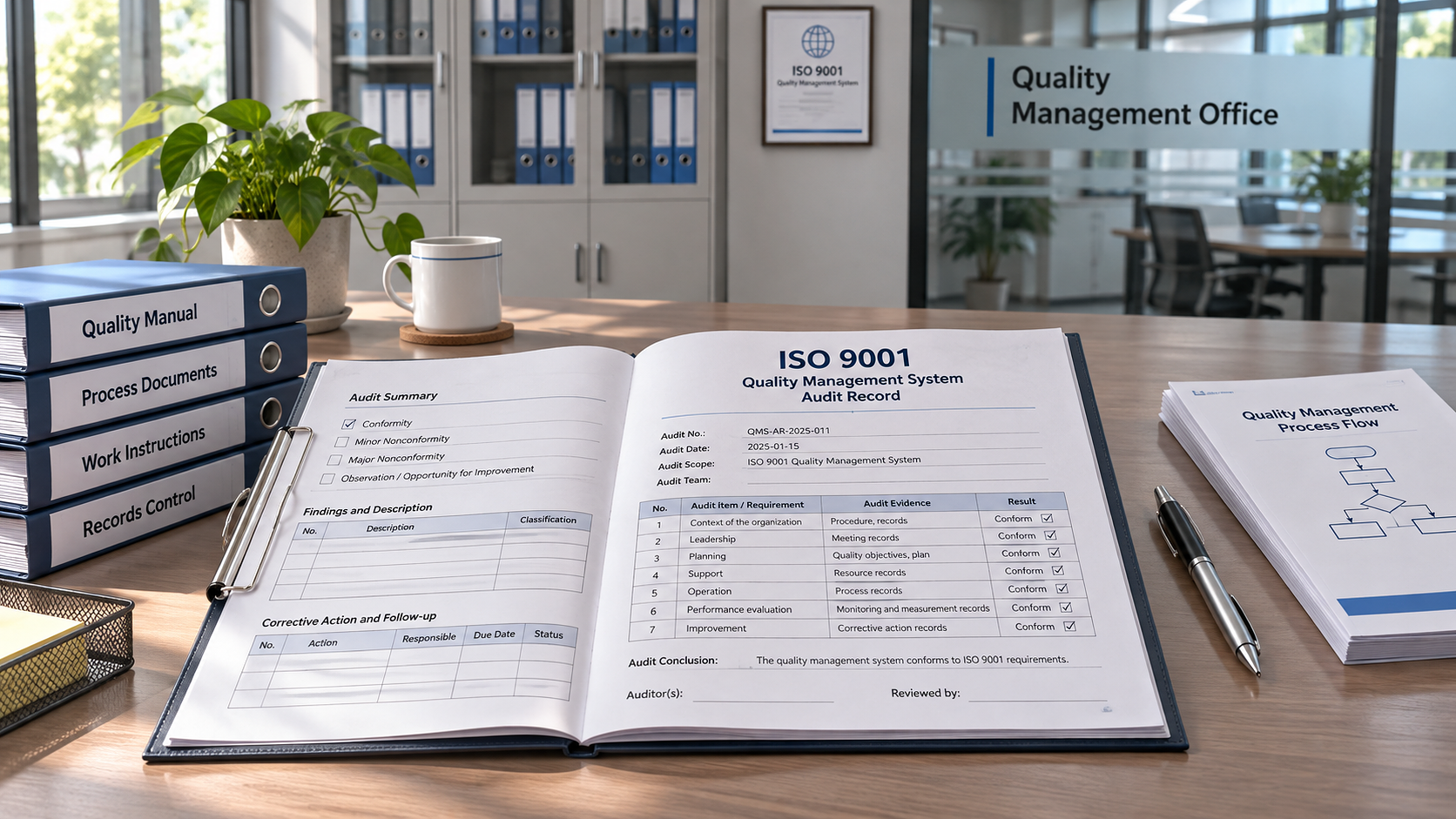
ISO 9001 addresses quality management systems. For industrial sourcing, it can support confidence in document control, corrective action, purchasing processes, and consistent production. It does not certify that a particular machine is safe, meets its rated output, or satisfies destination-market legislation.
Check the certificate’s legal entity, manufacturing location, scope, validity, and issuing body. A certificate covering distribution activities should not be treated as evidence that a factory’s design and manufacturing processes were assessed. Where accredited certification is requested, verify the certification body’s relevant accreditation through authoritative records.
ISO 14001 and ISO 45001 may also matter when environmental management and occupational health and safety form part of supplier qualification. Neither replaces product-level evidence. Use these standards to evaluate organizational controls, then investigate whether those controls reach the production line, subcontractors, and change-management process relevant to your order.
Machinery and electrical safety deserve closer scrutiny
For machinery, ISO 12100 provides a framework for risk assessment and risk reduction. Its value lies in connecting hazards to design decisions: eliminating a trapping point where practicable, adding appropriate safeguards, and communicating residual risks. A generic risk-assessment cover sheet is not enough.
Ask whether the assessment covers setup, normal production, cleaning, fault recovery, and maintenance. Access during a jam or tool change often exposes risks that a normal operating demonstration will not reveal. Where a machine-specific safety standard exists, it should also be assessed for applicability rather than relying only on general standards.
IEC 60204-1 is commonly relevant to the electrical equipment of machines. However, a statement of compliance still needs supporting design and verification records. Confirm supply voltage and frequency, protective bonding, isolation arrangements, enclosure suitability, and compatibility with the installation’s electrical conditions.
Safety-related control functions may require assessment under ISO 13849-1 or IEC 62061, as applicable. Do not specify an arbitrary performance level simply because it appeared in a previous purchase. The required safety performance must follow the risk assessment and relevant machine-specific requirements. A certified safety component alone does not validate the complete safety function.
For connected equipment, the IEC 62443 series can inform industrial cybersecurity requirements. Select the relevant parts and responsibilities for the asset owner, integrator, and product supplier. Remote access, credential management, update support, and recovery arrangements deserve contractual attention—not just a claim that the machine is “cybersecure.”

Market access changes the evidence you need
CE marking is not a general quality award or a universal third-party certificate. For equipment subject to relevant EU legislation, it indicates the manufacturer’s declaration of conformity with applicable requirements. Whether a notified body must participate depends on the legislation, product category, and conformity-assessment route.
EU machinery procurement also needs a transition check. Regulation (EU) 2023/1230 generally applies from 20 January 2027, replacing the Machinery Directive 2006/42/EC. Determine the applicable regime using the relevant placing-on-the-market or putting-into-service circumstances, not merely the purchase-order date. Other legislation, including electromagnetic compatibility or pressure-equipment requirements, may apply alongside machinery rules.
Request the applicable declaration, equipment identification, instructions, and evidence supporting the stated conformity route. Partly completed machinery requires different documentation and cannot be treated as a finished, independently compliant machine. For integrated lines, establish who is responsible for assessing the completed assembly.
In the United States, there is no single equivalent approval covering all industrial machinery. OSHA requirements, electrical codes adopted locally, and the authority having jurisdiction can affect acceptance. NRTL certification or field evaluation may be relevant for electrical equipment, but a listed control panel does not automatically establish acceptance of the complete machine. Confirm requirements with the installation site before production.
Special operating conditions can outweigh general certificates
Some equipment needs a more specific standards strategy. The following examples illustrate where a general machinery checklist falls short.
These systems are not interchangeable. IECEx certification does not automatically satisfy every national hazardous-area requirement, and an IP rating does not establish corrosion resistance or hygienic suitability. Verify the exact equipment configuration and any certificate conditions or exclusions.
Turn compliance claims into acceptance evidence
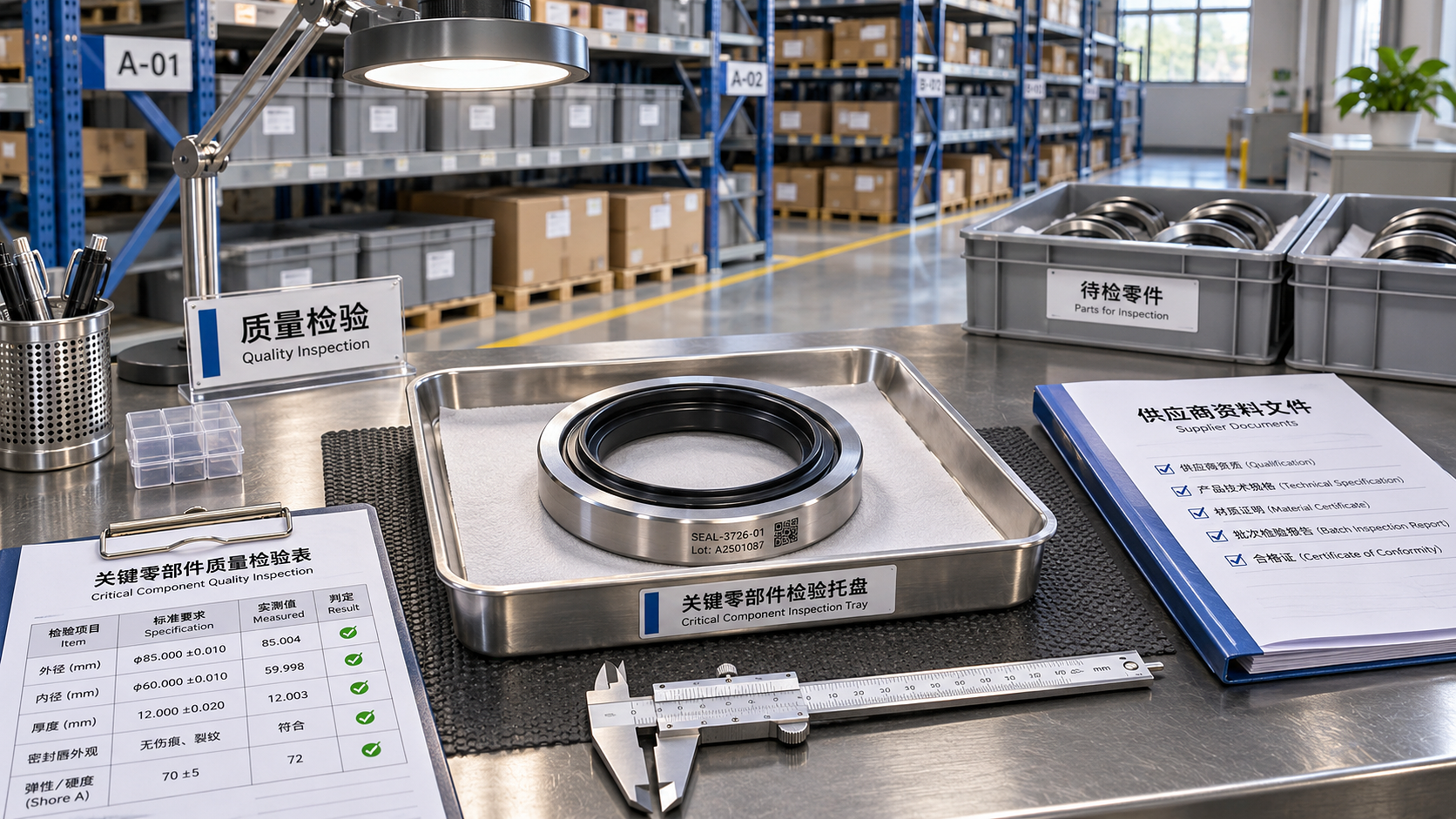
Supplier evaluation becomes more useful when documents can be traced to the offered machine. A test report for a similar model may provide background, but it does not necessarily cover a different motor, control architecture, pressure rating, or enclosure. Ask what changed and whether the change affects conformity.
Laboratory competence also matters. ISO/IEC 17025 accreditation can support confidence in testing or calibration, but check that the laboratory’s accredited scope covers the relevant method. Accreditation is not blanket approval for every report the laboratory issues.
Build evidence delivery into the contract rather than requesting everything before shipment. Useful checkpoints include:
- Before design release: agree the standards matrix, equipment boundaries, site interfaces, and responsibility for conformity assessment.
- Before factory acceptance: approve the test procedure, instruments, operating conditions, acceptance limits, and required witness points.
- Before shipment: resolve critical nonconformities and obtain agreed declarations, test records, drawings, and instructions.
- During site acceptance: verify installation-dependent safeguards, utilities, interfaces, and performance under agreed site conditions.
Factory acceptance testing is not a substitute for statutory conformity assessment. It is a contractual opportunity to verify specified functions and performance before transport makes corrective work more expensive.
Compare the cost of a compliant, usable installation
Two quotations are not comparable if one includes guarding, validation, documentation, and commissioning while the other excludes them. Ask suppliers to identify deviations explicitly. An unexplained “compliant” response can hide more commercial risk than a clearly priced exception.
Performance standards deserve equal precision. For a pump, define the duty point, test method, tolerances, and operating medium. For production machinery, specify throughput together with product characteristics, quality criteria, and test duration. Maximum advertised output is rarely an adequate acceptance criterion.
Lifecycle requirements also belong in the sourcing decision: spare-part availability, software access, calibration needs, maintenance instructions, and approval of component substitutions. A compliant original build can develop new risks when replacement parts or software changes bypass engineering review.
GTIIN’s cross-border sourcing perspective connects these technical questions with supplier capability, delivery planning, and supply-chain exposure. Independent trade intelligence can help frame the investigation; equipment-specific engineering and local regulatory review must resolve the actual acceptance requirements.
Before awarding the order, make sure every critical requirement has an owner, an agreed evidence source, and a verification deadline. If a supplier cannot explain how a certificate relates to the exact machine, destination, and operating duty, the compliance question remains open—regardless of how many logos appear in the proposal.
Have questions about this sector analysis, or seeking best practices specific to your niche? Drop us a line below and let the senior consultants at GTIIN assist you.
“We respect your privacy. Your information is strictly confidential.”
Weekly Insights
Stay ahead with our curated technology reports delivered every Monday.
Recommended News
 Market TrendsNov 08, 2026How to use industrial commodity market analysis to forecast costs
 Supply ChainNov 07, 2026EU Opens Safeguard Investigation into PET Resin Imports
 Industry StandardsNov 07, 2026Which ISO quality management standard can a company be certified to?
 Supply ChainNov 06, 2026How to use a supply chain risk analysis model to prioritize suppliers