How often should CBAM-related supplier emissions data be updated? Use an annual reporting baseline, supported by quarterly completeness checks and prompt reviews after material operational changes.
For EU importers and procurement teams, the key distinction is between regulatory reporting periods, supplier monitoring responsibilities, and internal schedules for refreshing compliance records.
Outdated figures can weaken embedded emissions calculations, complicate verification, and distort sourcing decisions. However, requesting a new emissions intensity for every shipment usually creates unnecessary work.
A practical approach combines reporting-period alignment with checks when production processes, energy sources, or relevant inputs change, while preserving traceable records for every accepted dataset.
What Update Frequency Should Your Team Actually Use?
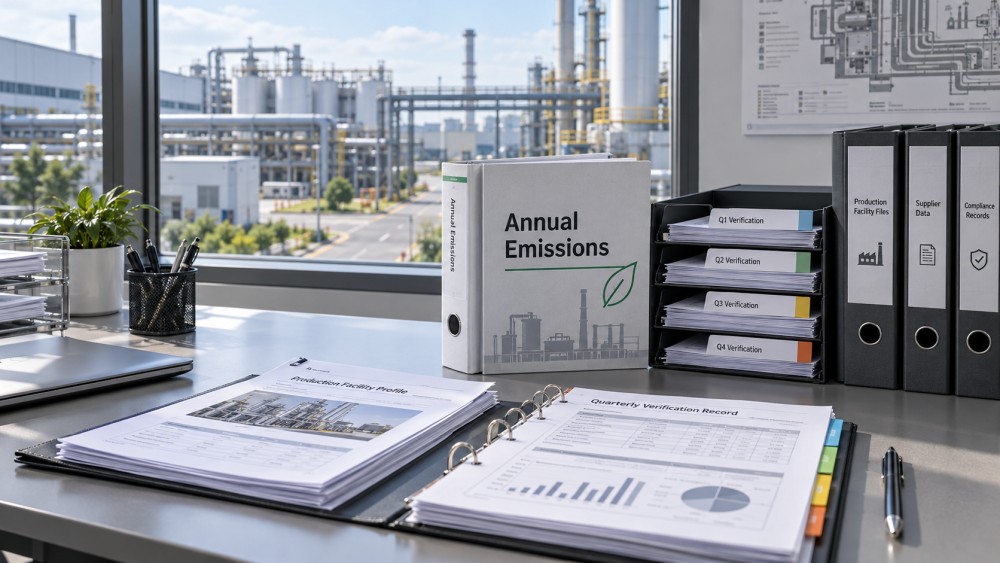
Start with the applicable annual production and emissions dataset. Then use regular checks to confirm supplier coverage, outstanding evidence, and changes affecting calculation validity.
This schedule is an operational recommendation, not a universal statutory requirement to obtain fresh supplier emissions figures every quarter or after every individual delivery.
Higher-risk suppliers may justify monthly follow-ups on missing information. Stable suppliers with complete, verified annual information generally need fewer administrative requests throughout the year.
The objective is to keep information fit for its intended use. Refreshing a spreadsheet without obtaining better evidence does little to improve compliance confidence.
Does CBAM Require Quarterly or Annual Supplier Data?
CBAM’s transitional phase covered imports from October 2023 through December 2025 and involved quarterly reports. Its definitive phase began on 1 January 2026.
Under the definitive framework, declarations operate annually. Consequently, guidance describing quarterly transitional reporting should not automatically determine your ongoing supplier collection schedule for definitive-period imports.
Even during quarterly reporting, a reporting deadline did not necessarily mean that every supplier needed to calculate a completely new emissions intensity each quarter.
Import reporting periods and installation emissions reporting periods serve different purposes. Your process must connect them using the applicable calculation rules and supporting production evidence.
For definitive-period actual emissions, establish which annual installation dataset is applicable, whether verification requirements are satisfied, and how its values connect to imported goods.
Check current legislation and implementing rules before setting deadlines. Internal procurement calendars should allow time for supplier preparation, verification, clarification, and corrections before submission.
Which Supplier Information Needs an Annual Refresh?
Request a structured dataset identifying the operator, production installation, reporting period, relevant goods, production quantities, and the calculation methodology used to determine embedded emissions.
Depending on the goods and applicable methodology, supporting information may include fuel consumption, process emissions, electricity data, and embedded emissions associated with relevant precursors.
Do not assume every CBAM product requires identical inputs. Direct emissions, indirect emissions, and precursor treatment depend on the product and applicable legal provisions.
Ask suppliers to identify the production processes covered and explain how emissions are attributed to goods. An installation-wide total alone may be insufficient for calculations.
For actual emissions subject to verification, obtain the relevant verification evidence and confirm its coverage. A generic sustainability assurance statement may cover entirely different information.
Retain the methodology, source records, calculation version, and approval status alongside the reported figure. These details make subsequent corrections and reviews substantially easier to manage.
Which Changes Should Trigger an Earlier Review?
A material operational change should trigger a review before the next annual collection cycle. It does not automatically require immediate replacement of an annual intensity.
The first question is whether the event changes monitoring requirements, data representativeness, installation coverage, or the inputs needed for the applicable annual emissions calculation.
- Production route: A steel supplier switches production routes, or a cement producer changes the clinker proportion relevant to reported goods.
- Fuel or energy supply: An installation changes its fuel mix, electricity arrangements, or evidence supporting an electricity emissions calculation.
- Relevant precursors: A producer changes the source or composition of inputs whose embedded emissions enter the calculation.
- Installation or outsourcing: Production moves to another facility, or a previously internal production step transfers to another operator.
- Methodology or evidence: Metering changes, verification findings, or calculation errors affect the reliability of previously supplied information.
Require suppliers to notify you promptly, then document the assessment. Some changes require better monitoring now and become visible in the completed annual dataset later.
For indirect emissions, a renewable electricity claim does not automatically justify a lower value. Check whether the applicable methodology permits the proposed evidence and treatment.
Do You Need Fresh Emissions Figures for Every Shipment?
Usually, the priority is reliable shipment mapping, rather than recalculating an installation’s emissions intensity for each consignment. These are separate controls with different update needs.
Each shipment should connect to the correct goods classification, quantity, producer, installation, and applicable emissions information. A supplier’s trading name alone may not establish origin.
This distinction becomes critical when a distributor sources identical products from several plants. One commercial supplier can represent multiple installations with materially different emissions profiles.
Ask the distributor to maintain installation-level traceability and explain allocation arrangements. Avoid applying one plant’s figures to goods produced elsewhere without an appropriate methodological basis.
If production origin changes midyear, update shipment mapping immediately. Then assess which emissions dataset and supporting evidence apply under the rules governing those goods.
When Is Supplier Emissions Data Too Old to Use?
Age alone does not determine validity. The decisive questions concern the permitted reporting period, production coverage, methodology, verification status, and connection to the imported goods.
A recently emailed spreadsheet may still contain obsolete figures. Conversely, a completed annual dataset may remain relevant when the applicable rules support its use.
Record the emissions reporting period separately from the date received. Also distinguish the verification date, internal approval date, and date of any subsequent correction.
Treat missing reporting periods, unexplained reuse across years, changed installations, and unsupported calculation boundaries as review flags. None should disappear simply because a supplier confirms receipt.
Do not substitute a corporate carbon footprint, product marketing claim, or environmental product declaration without checking compatibility. Their boundaries and allocation methods can differ.
Where actual emissions cannot be established adequately, assess the legally available default-value route. Check applicable conditions and financial consequences before incorporating it into planning.
How Can Procurement Build a Workable Collection Calendar?
Build the calendar backward from the applicable declaration deadline. Reserve enough time for verification and corrections, particularly where suppliers have limited CBAM reporting experience.
At onboarding, confirm installation identity, product coverage, responsible contacts, expected data availability, and the supplier’s ability to provide information compatible with the applicable methodology.
During the production year, request change notifications and maintain shipment traceability. Use quarterly reviews to resolve missing evidence and confirm that the supplier list remains complete.
After the relevant annual period closes, collect the completed dataset and verification evidence where required. Run consistency checks before accepting information into your declaration workflow.
Set contractual milestones according to supplier capabilities and regulatory timing. A deadline that precedes realistic production-data closure can encourage estimates or incomplete submissions from suppliers.
Use one reusable request template, supported by product-specific fields. Procurement should coordinate commercial follow-up, while compliance specialists assess methodology and acceptance of the information.
Where Should You Spend the Most Review Effort?
Prioritize suppliers according to potential financial exposure and data uncertainty. Import volume alone does not capture differences in emissions intensity, process complexity, or evidence quality.
A large supplier with consistent verified information may need less intervention than a smaller supplier using several installations and repeatedly submitting unexplained changes to calculations.
For management reporting, track the share of imports mapped to installations, datasets awaiting verification, unresolved discrepancies, and suppliers missing agreed information milestones or change notifications.
These measures reveal where additional effort can improve compliance readiness. Counting emails sent or spreadsheets refreshed provides much less insight into actual evidence quality.
Keep procurement scenarios separate from accepted declaration inputs. Provisional supplier figures can inform budgeting, but their assumptions and limitations should remain visible to decision-makers.
Where comparing suppliers, normalize product scope and methodology first. Apparent emissions savings may otherwise reflect inconsistent calculation boundaries rather than a meaningful production advantage.
What Should Happen When a Supplier Corrects Its Figures?
Preserve the earlier submission and record the replacement version. Document what changed, why it changed, who reviewed it, and which goods or periods are affected.
Assess whether the correction affects internal forecasts, accepted emissions calculations, verification conclusions, or a submitted declaration. The appropriate response depends on its scope and timing.
For example, correcting precursor emissions could affect several downstream products. Review the affected calculation chain instead of updating only the first spreadsheet where discrepancies appeared.
Escalate unresolved material differences to the responsible compliance owner and verifier where relevant. Follow the applicable correction procedure rather than silently overwriting previously accepted records.
A Reliable Schedule Combines Annual Data With Ongoing Controls
For most procurement teams, the practical answer is annual supplier emissions collection, quarterly completeness checks, and prompt assessments when relevant production or evidence changes occur.
Keep those recommendations distinct from legal obligations. The required reporting period, methodology, verification, and declaration rules determine whether a particular dataset can support your submission.
Review the CBAM Regulation and its current consolidated text alongside European Commission CBAM guidance when designing or revising your collection process.
The strongest process connects each import to the right installation and defensible emissions evidence, while giving suppliers clear deadlines and a practical route for corrections.