
EU Tightens Rules for Imported Industrial Fasteners
On August 4, 2026, the European Commission adopted Directive (EU) 2026/1187 under a broader compliance strengthening framework for machinery products, setting a new market-entry requirement for imported industrial metal fasteners from October 2026 onward. The change centers on EN ISO 898-1:2026 and applies to carbon steel and alloy steel bolts, screws, and studs entering the EU, while also adding batch-level hydrogen embrittlement sensitivity verification and updated CE technical documentation obligations. For buyers, distributors, OEMs, exporters, and compliance teams, this matters less as a routine standards update and more as a practical change in how qualification, documentation, and delivery to the EU market may need to be managed.
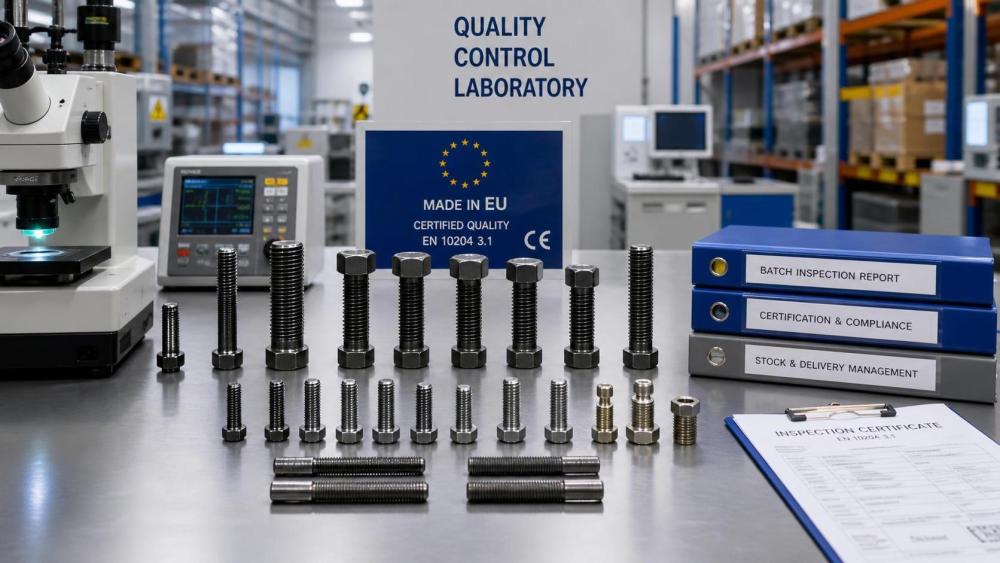
What the new EU requirement formally changes
The confirmed facts are limited but clear. The European Commission passed Directive (EU) 2026/1187 on August 4, 2026. Under that measure, EN ISO 898-1:2026 is elevated to a mandatory access requirement for imported carbon steel and alloy steel bolts, screws, and studs entering the EU.
The rule also requires suppliers to provide batch-level hydrogen embrittlement sensitivity verification reports issued by EU-recognized laboratories. In parallel, CE technical documentation must be updated to reflect the new requirement set. The information provided further indicates that the change directly affects the compliance path and delivery timing for global fastener buyers, distributors, and OEM manufacturers sourcing from China.
Where the pressure is likely to appear across the supply chain
Procurement teams will face a stricter document gate
From an industry perspective, procurement functions are likely to feel the impact early because qualification can no longer be viewed only through product specification and price. The new requirement ties purchasing decisions more closely to whether a supplier can present batch-level verification from an EU-recognized laboratory and whether supporting CE files are current. What deserves closer attention is that sourcing decisions may increasingly depend on document readiness as much as on production capability.
Export manufacturers may need tighter release control
For manufacturers supplying bolts, screws, and studs into EU-bound channels, the practical effect is likely to concentrate around production release, batch traceability, and test-report coordination. Analysis shows that once batch-level hydrogen embrittlement sensitivity verification becomes a mandatory market-entry condition, shipment preparation may depend on whether the testing and documentation sequence is completed in time. The provided information does not define the exact execution process, but it clearly points to compliance and delivery becoming more closely linked.
Distributors and channel operators may carry added conformity risk
Distributors and trading intermediaries are also exposed because they often sit between the originating manufacturer and the final EU customer. Observably, this increases the need to verify whether technical files, test reports, and CE-related records are aligned before goods move further downstream. The issue is not only product availability, but whether the conformity package attached to a given batch is acceptable under the new rule.
OEMs may need to revisit supplier qualification and lead-time assumptions
For OEMs using imported industrial fasteners in broader equipment or machinery assemblies, the rule change may affect supplier onboarding, approved vendor lists, and project delivery planning. Analysis shows that if imported fasteners are now subject to a stricter entry requirement, OEM purchasing and quality teams may need to review whether current suppliers can support the new documentation and testing burden without disrupting delivery schedules.
What companies should watch before the rule takes effect
Check whether technical files are ready for the updated standard
Companies involved in EU-bound fastener trade should first review whether existing CE technical documentation is structured to reflect EN ISO 898-1:2026. The confirmed information states that documentation updates are required, so this is a concrete compliance point rather than a general recommendation.
Confirm the path for batch-level laboratory verification
Another immediate point of attention is the requirement for batch-level hydrogen embrittlement sensitivity verification reports issued by EU-recognized laboratories. The input does not provide execution details such as timing, format, or recognition workflow, so it is more appropriate to understand this as a document and testing requirement that still needs close follow-up in practice.
Reassess procurement schedules and delivery commitments
Because the provided information explicitly links the rule change to compliance pathways and delivery cycles, companies should watch how testing, file updates, and shipment release interact in actual transactions. Analysis shows that procurement planning, quotation validity, and promised delivery windows may all need closer review where EU-bound industrial fasteners are involved.
Watch for changes in tender language and customer documentation requests
What deserves closer attention is whether buyers, distributors, and OEM customers begin to revise tender documents, technical specifications, or supplier qualification checklists to reflect the new requirement. The input does not confirm that such revisions have already occurred, but it is a reasonable compliance signal for market participants to monitor.
Why this looks like an execution signal, not just a standards update
Observably, this development is better understood as a rule with operational consequences rather than a symbolic reference to a technical standard. The key shift is that EN ISO 898-1:2026 is described as a mandatory access requirement, while batch-level hydrogen embrittlement verification and CE file updates are tied directly to market entry. Analysis shows that the industry should read this as a compliance implementation signal, even though important details about enforcement practice, documentation review standards, and market reaction still require ongoing observation.
It is also worth noting that the information provided specifically highlights effects on sourcing from China. That does not by itself establish a broader market outcome, but it does indicate where supply-chain attention is currently focused: cross-border qualification, paperwork completeness, and the possibility of longer compliance handling before shipment.
How the market should read the change for now
At this stage, the most balanced reading is that the EU has converted a technical standard update into a practical import compliance threshold for specific industrial fasteners. The confirmed facts already point to consequences for testing, CE documentation, procurement review, and delivery planning. At the same time, it would be premature to treat all execution outcomes as settled, because the provided information does not define detailed enforcement practice. It is more appropriate to understand this as a landed rule change with immediate compliance relevance and with further market interpretation still to be watched.
Basis of this article and what still needs verification
This article is based on the user-provided news title, event date, and event summary. For developments of this kind, relevant source categories typically include official regulatory notices, releases from supervisory authorities, customs or trade administration information, industry association updates, standard-setting organization documents, and reporting by established industry media.
No specific official source link was provided in the input, so the precise official publication path still needs to be verified on an ongoing basis. Follow-up attention should remain on any further policy detail, certification and testing interpretation, changes in tender documentation, market feedback, and how companies implement the new requirement in actual export and procurement workflows.
Weekly Insights
Stay ahead with our curated technology reports delivered every Monday.
Recommended News
 Supply ChainSep 22, 2026How heavy equipment lifecycle data can reduce unexpected downtime
 Supply ChainSep 21, 2026How export regulations affect logistics lead times and delivery risk
 Industry StandardsSep 20, 2026What evidence is needed to pass a carbon reporting audit?
 Industry StandardsSep 19, 2026When does manufacturing compliance consulting reduce audit risk?