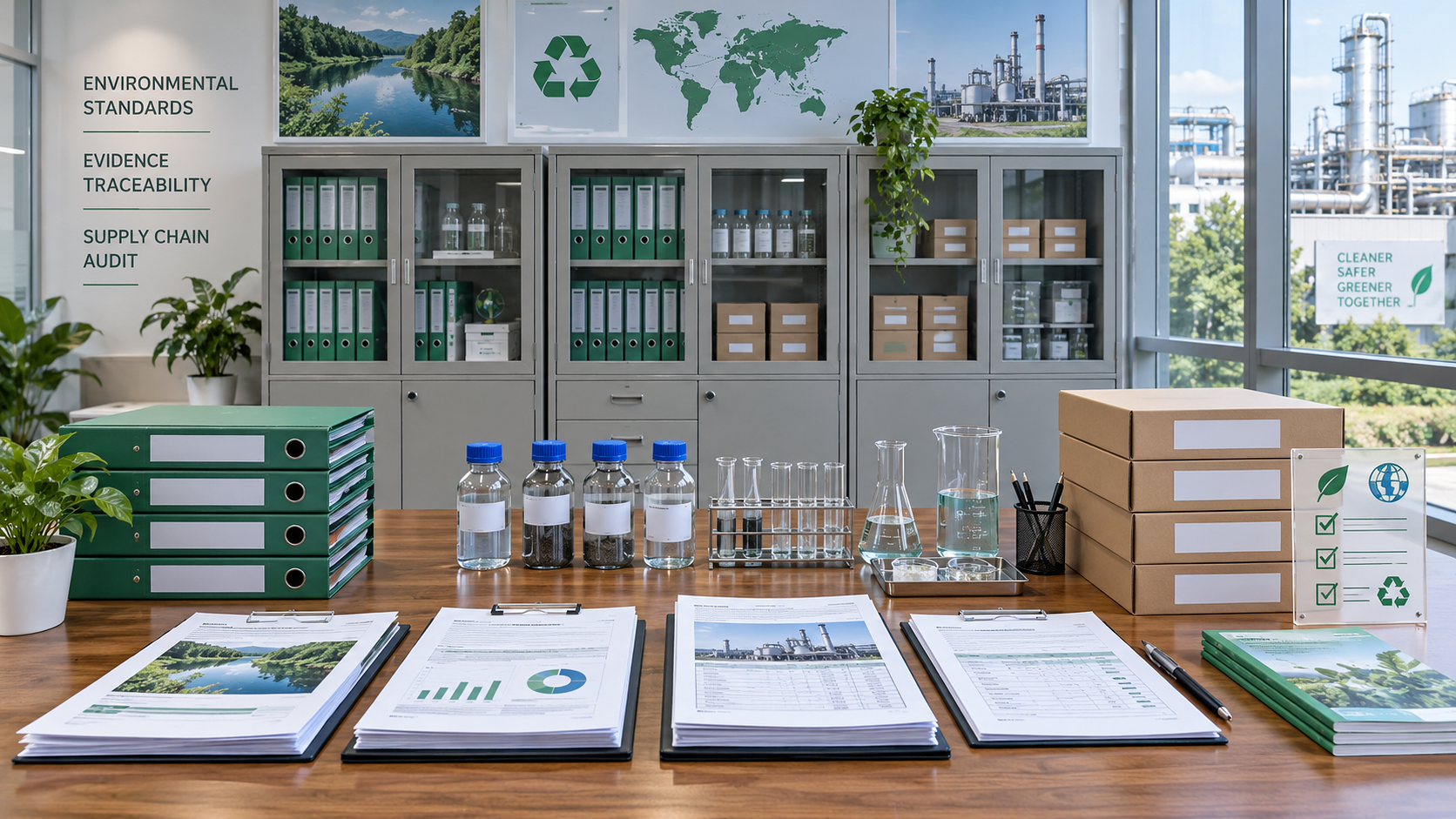
How to build an environmental compliance standards reporting process
Building a reliable environmental compliance standards reporting process is no longer a task that can be managed through scattered spreadsheets, last-minute supplier emails, and an annual compliance review. For quality control and safety teams, environmental reporting now sits at the intersection of product quality, operational risk, trade documentation, supplier management, and corporate ESG commitments.
The pressure is especially visible in cross-border supply chains. A factory may comply with local discharge rules yet fail to provide the evidence required by an overseas buyer. A material declaration may be technically complete but based on an outdated restricted-substance list. A logistics team may hold emissions data in one system while the sustainability team reports a different figure to management. These gaps create more than administrative friction: they can delay shipments, weaken audit outcomes, and undermine customer confidence.
A practical reporting process turns environmental obligations into repeatable operational controls. It gives teams a defensible way to identify applicable standards, collect source data, validate evidence, manage exceptions, and communicate results to regulators, customers, auditors, and internal decision-makers.
Start with the reporting decision, not the reporting template
Many organizations begin by downloading a reporting form or copying a competitor’s ESG questionnaire. That approach often produces a visually complete report with unclear boundaries. Before deciding what fields to collect, define the decisions the reporting process must support.
For a quality or safety manager, those decisions may include whether a supplier remains approved, whether a production site needs corrective action, whether a product can enter a regulated market, or whether a shipment carries an environmental disclosure requirement. For senior leadership, the same data may influence sourcing strategy, capital investment, customer commitments, and exposure to carbon-related trade measures.
A useful scope statement should answer five questions:
- Which entities are covered? Include legal entities, plants, warehouses, contract manufacturers, and, where relevant, key logistics operations.
- Which environmental topics are material? Common areas include greenhouse gas emissions, energy, water, wastewater, air emissions, waste, hazardous materials, packaging, chemicals, and land-use impacts.
- Which standards apply? The answer may involve national regulations, local permits, customer codes of conduct, ISO-based management systems, product-specific requirements, and market-entry rules.
- What is the reporting period and unit of measurement? Monthly utility use, annual waste generation, product-level carbon figures, and shipment-level declarations should not be mixed without clear labeling.
- Who will rely on the output? A plant manager needs operational detail; an auditor needs traceable evidence; a buyer may need a concise compliance declaration.
This framing prevents a common failure: collecting large volumes of environmental data that do not answer a specific compliance or risk question.
Build a live register of environmental obligations
Environmental compliance is rarely governed by a single standard. A manufacturing group may need to meet site permitting conditions, waste transport documentation rules, chemical restrictions, customer environmental questionnaires, packaging obligations, and carbon disclosure expectations at the same time. The reporting process needs a central register that translates this landscape into assignable requirements.
Each entry in the register should identify the obligation, source, geographic jurisdiction, affected site or product, reporting frequency, required evidence, owner, reviewer, and escalation route. Avoid treating the register as a legal archive. Its real purpose is to tell operational teams what must happen, by whom, and by when.
For example, a wastewater permit requirement should not simply state “monitor effluent.” It should specify the monitored parameters, sampling method, laboratory records needed, limit values, submission deadline, and action required when a result exceeds a threshold. The same discipline applies to supplier declarations for restricted substances or carbon intensity data.
Because regulations and buyer requirements evolve, assign formal ownership for monitoring change. This may sit with EHS, legal, quality, or a cross-functional compliance committee. What matters is that a change in requirements triggers a documented assessment: Does the change affect products, facilities, suppliers, contracts, report fields, or internal training?
Design the process around evidence trails
A strong environmental compliance standards reporting process does not depend on someone remembering where a number came from six months later. Every reported metric should be linked to an evidence trail that can be followed by a reviewer who was not involved in the original data collection.
Consider the difference between reporting “hazardous waste: 24 tonnes” and reporting “hazardous waste: 24 tonnes, derived from approved waste contractor manifests, site inventory records, and monthly reconciliation completed by the EHS coordinator.” The first is a statement. The second is a controlled record.
Evidence may include utility invoices, meter logs, laboratory test reports, production records, waste manifests, environmental permits, shipping documents, equipment maintenance reports, supplier certificates, material safety data, and third-party verification statements. Store these records in a controlled location with consistent file naming, version control, retention periods, and access permissions.
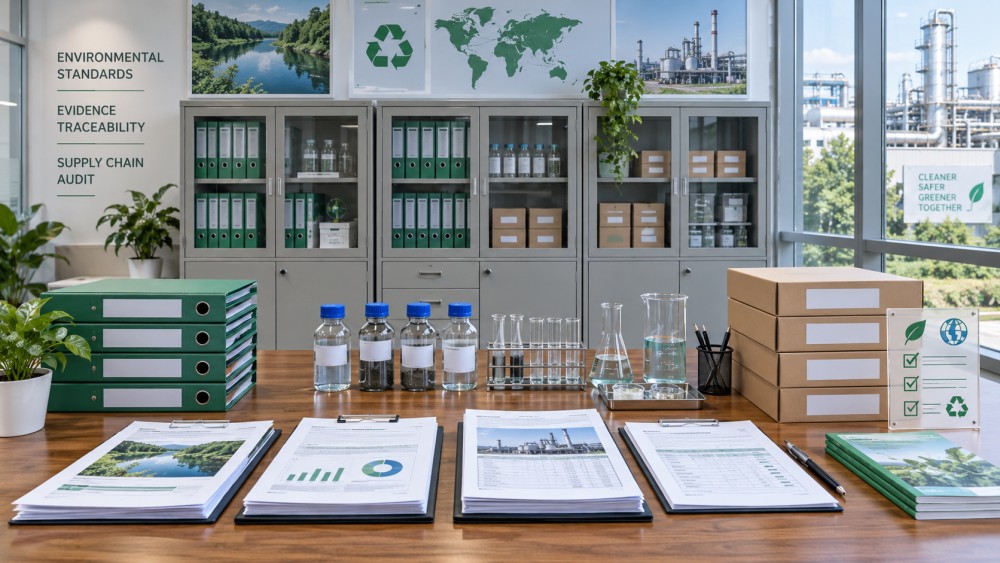
For multi-site organizations, define a minimum evidence standard rather than assuming every location will maintain records in the same way. A small supplier may not have enterprise software, but it should still be able to provide dated source documents, identify the responsible person, and explain its calculation method.
Use a data dictionary before collecting numbers
A data dictionary is one of the simplest ways to reduce reporting disputes. It defines each metric in plain operational language: what is included, what is excluded, the unit, calculation formula, reporting boundary, source system, owner, and review requirement.
Take “energy consumption” as an example. Does it include purchased electricity only, or also natural gas, diesel for on-site equipment, leased facilities, and renewable energy certificates? If different sites interpret the term differently, group-level reporting will be unreliable even when every spreadsheet appears accurate.
The same principle applies to emissions. Scope definitions, emission factors, market-based versus location-based calculations, and conversion methodologies should be documented and approved. Where estimates are used, label them clearly and record why direct measurement was unavailable.
Separate collection, validation, and approval
Environmental reporting is vulnerable when one person collects data, decides whether it is credible, resolves exceptions, and approves the final submission. Segregating these steps does not require a large compliance department; it requires clear roles.
Validation should include both automated and human checks. Automated rules can flag missing fields, impossible units, duplicate records, or changes beyond an expected range. Human review is still essential because an unusual result may reflect a legitimate operational event: a new production line, a weather-related energy spike, a shutdown, or a change in waste contractor classification.
Trend analysis is particularly useful. If water use drops sharply while production volume remains stable, the result may indicate a genuine efficiency project—or a missing meter reading. Reviewers should ask for the operational explanation before accepting the figure.
Make nonconformance visible instead of hiding it in narrative
Teams sometimes fear that recording environmental nonconformities will make the organization look weak. In reality, auditors and customers are usually more concerned by unexplained gaps than by a well-managed issue. A credible report distinguishes between compliance status, open findings, and corrective action progress.
When a deviation occurs, create a record that describes the requirement, the actual condition, the affected location or product, the immediate containment measure, root-cause investigation, corrective action owner, due date, and verification method. If regulatory notification is required, record the decision and the communication trail.
Not every issue has the same significance. A late internal utility-data submission should not be handled in the same way as an exceedance of a permitted discharge limit or a supplier’s inability to substantiate a restricted-substance declaration. Establish risk categories that reflect legal consequences, environmental impact, customer exposure, and potential disruption to trade.
Corrective actions should also feed back into the reporting design. If sites repeatedly submit incomplete waste records, the answer may be clearer instructions, revised supplier contract language, training, or a better collection tool—not another reminder email.
Extend reporting controls beyond the factory gate
For global procurement teams, environmental compliance increasingly depends on upstream and downstream information. Product materials, packaging, freight routes, contract manufacturing, and disposal arrangements can all affect the completeness of reporting.
Supplier reporting should be risk-based. High-risk suppliers may include those handling hazardous substances, operating in jurisdictions with limited enforcement capacity, providing carbon-intensive materials, or supplying components into tightly regulated markets. Ask for evidence appropriate to the risk rather than sending every supplier the same generic survey.
A mature supplier reporting package may request permits, environmental management procedures, waste handling records, chemical inventories, relevant test reports, emissions data, and proof of corrective action closure. It should also define data quality expectations and state whether declarations require supporting documents.
Cross-border operations introduce another challenge: terminology does not always travel cleanly. A “certificate,” “permit,” “declaration,” or “recycling rate” may have different legal meanings across markets. Reporting instructions should therefore avoid vague labels and reference the exact required document, issuing authority, validity period, and product or site scope.
Connect environmental reporting to trade and supply chain resilience
Environmental compliance reporting is often treated as a sustainability workstream separate from procurement and logistics. That separation is becoming less practical. Carbon-related import requirements, customer traceability expectations, packaging rules, and due-diligence obligations can all affect supplier selection, landed cost, inventory planning, and shipment timing.
For organizations operating across industrial supply chains, the most useful reports combine operational detail with decision context. A procurement leader may not need every waste manifest, but they do need to understand whether a strategic supplier’s environmental data is verified, whether a pending regulation could affect delivery to a target market, and whether an unresolved issue requires dual sourcing.
Trade intelligence resources can help teams maintain this external view. GTIIN’s coverage of global export trends, evolving environmental rules, industrial sourcing conditions, and supply chain risk signals can support internal compliance registers—particularly when teams need to interpret how regulatory changes may affect materials, supplier regions, or cross-border fulfillment. External insight should inform the process, but it should never replace site-level evidence and accountable internal review.
A reporting calendar is a control, not an administrative detail
Reliable reporting depends on rhythm. Create an annual calendar that includes legal filing dates, customer disclosure deadlines, permit renewals, supplier document expiry dates, internal validation windows, management review meetings, and audit preparation milestones. Work backward from the external deadline so that validation and correction occur before the final week.
Monthly or quarterly internal reviews are usually more effective than waiting for year-end. They allow teams to identify missing evidence early, investigate unusual trends while records are still accessible, and prevent a rushed annual exercise from becoming a hidden data-reconstruction project.
At management review, focus on what requires a decision: recurring nonconformities, overdue corrective actions, material regulatory changes, weak supplier evidence, high-risk sites, and resource constraints. A compliance report should lead to action, not merely demonstrate that reporting took place.
Common mistakes that weaken otherwise good reports
- Using a single global checklist without local adaptation. Corporate consistency matters, but site permits and jurisdictional rules still need local interpretation.
- Confusing policy commitments with compliance evidence. A sustainability policy is not proof that wastewater, waste, chemical, or emissions obligations have been met.
- Reporting estimates as measured results. Estimates may be necessary, but their assumptions and limitations must be visible.
- Ignoring units and boundaries. A figure can be numerically correct and still misleading if it covers a different facility, period, or production scope.
- Collecting supplier declarations without verification. High-risk claims need proportionate documentary review and, where justified, deeper assessment.
- Treating corrective action as closed when the form is completed. Closure requires evidence that the control is operating and the issue is unlikely to recur.
What “audit-ready” should mean in practice
An audit-ready environmental compliance standards reporting process is not one that guarantees a perfect result. It is one that allows an independent reviewer to understand the reporting boundary, trace material data to source evidence, see who approved key judgments, identify open issues, and confirm how corrective actions are being managed.
Begin with the areas where the consequences of error are greatest: permit-controlled activities, hazardous materials, regulated products, high-risk suppliers, and disclosures connected to market access. Then build outward. Over time, the process becomes less dependent on annual urgency and more like any other well-run quality system—measured, documented, reviewed, and improved.
For quality and safety teams, that shift brings a practical benefit: environmental information stops being a compliance burden that appears at the end of the year. It becomes a dependable part of how the organization evaluates suppliers, protects market access, and makes more resilient operational decisions.
Tags
- industrial sourcing
- supply chain resilience
- global export trends
- compliance standards
- environmental compliance
- cross-border fulfillment
- industrial supply chains
- environmental compliance standards
- global procurement
- supplier management
- trade intelligence
- cross-border supply chains
- environmental compliance reporting
- environmental compliance standards reporting
Weekly Insights
Stay ahead with our curated technology reports delivered every Monday.
Recommended News
 Industry StandardsOct 03, 2026How to build an environmental compliance standards reporting process
 Industry StandardsOct 02, 2026What evidence should an industrial certification audit include?
 Market TrendsOct 01, 2026How technical specification trends data can reveal supplier capability gaps
 Supply ChainSep 30, 2026What are the essential steps in a procurement risk management process?