USTR Extends Section 301 Relief for 352 China Inputs
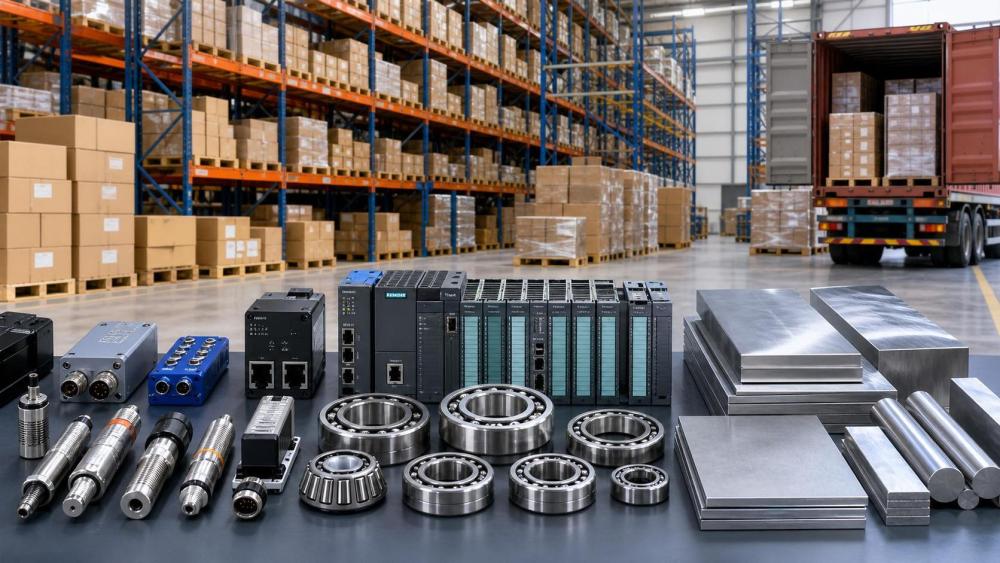
On June 27, 2026, the Office of the United States Trade Representative announced that the Section 301 tariff exclusions for 352 industrial intermediate goods from China will remain in effect through December 31, 2026. The covered products include industrial sensors, PLC modules, precision bearings, and specialty alloy plates. For importers, distributors, procurement teams, and manufacturers that depend on these inputs, the development matters less as a headline and more as an operational signal: the current relief window remains available for now, but the exclusion list has not been expanded and the notice does not indicate a long-term policy shift.
What the June 27 notice actually confirms
According to the information provided, USTR extended the validity of Section 301 tariff exclusions for 352 China-origin industrial intermediate products until December 31, 2026. The listed examples include industrial sensors, PLC modules, precision bearings, and specialty alloy plates. The summary also states that the decision preserves a buffer period for U.S. importers and distributors, does not add new items to the exclusion list, and expressly indicates that the extension should not be read as a long-term policy reversal.
Where the rule change is likely to be felt first
Import planning and distributor inventory decisions
From an industry perspective, distributors and direct importers are among the first groups affected because the extension changes the near-term tariff treatment of already covered items. The practical impact is likely to appear in sourcing schedules, stock planning, landed-cost calculations, and customer quotation timing. What deserves closer attention is whether internal product classification, purchasing documentation, and shipment planning continue to align with the goods that are actually covered by the existing exclusion list.
Manufacturing operations dependent on industrial components
Manufacturers using sensors, control modules, bearings, or specialty materials may see the extension as a temporary planning window rather than a settled trade condition. The effect is most relevant in component procurement, production continuity, maintenance planning, and delivery commitments tied to intermediate inputs. Observably, these companies should pay attention to whether their sourcing assumptions, approved supplier lists, and lead-time commitments rely too heavily on a measure that has been explicitly described as something other than a long-term policy shift.
Procurement and supply chain service teams
Procurement organizations and supply chain service providers may need to reassess contract pacing, replenishment cycles, and local inventory positioning. The rule change does not broaden eligibility, so teams handling cross-border purchasing, customs-facing paperwork, or supply continuity support should focus on product scope, shipment timing, and document consistency. In practice, the issue is not only tariff cost but also whether operational planning is being built on a temporary exception that could narrow again after the stated date.
Practical points companies should follow now
Check whether products truly match the current exclusion scope
Analysis shows that companies should not treat the extension as a blanket easing measure. Because no new items were added, the first practical task is to verify that the products in use or under procurement are within the existing exclusion scope and that supporting trade and technical records remain consistent with that scope.
Watch official wording and execution signals closely
What deserves closer attention is the language indicating that the move does not amount to a long-term policy turn. That makes subsequent official statements, execution interpretations, and any changes in trade administration especially relevant. At this stage, it is more appropriate to monitor these signals than to assume that the current treatment will continue beyond the announced date.
Rebalance sourcing and local stocking decisions
Observably, the extension gives overseas buyers more time, but the summary itself points to the need to evaluate alternative capacity and local inventory pacing in parallel. For procurement and planning teams, this means reviewing whether current sourcing concentration, safety stock strategy, and delivery promises remain appropriate under a time-limited exclusion framework.
Keep technical and transaction records in order
For companies involved in regulated procurement or formal customer qualification, attention should also stay on technical documents, transaction records, and product traceability materials connected to the covered goods. The provided information does not set out detailed execution rules, so businesses should treat documentation readiness as a precautionary compliance step rather than as proof of any settled enforcement outcome.
Why this reads more as a timing signal than a policy reset
Analysis shows that this development is better understood as an extension of an existing operating window than as evidence of a broader change in trade policy direction. The two most important signals in the provided information are that the exclusions were prolonged for a defined period and that no new products were added. Combined with the explicit statement that the move does not represent a long-term policy reversal, the notice looks more like an execution signal that preserves short-term flexibility while leaving longer-term sourcing and trade assumptions open to review.
How the market should frame this development
At this stage, the most reasonable reading is that the extension offers temporary planning room for affected supply chains, especially where industrial intermediate goods remain difficult to replace immediately. It should not be overstated as a durable reset in trade rules. For industry participants, the more disciplined response is to use the current window to review sourcing resilience, documentation readiness, and inventory rhythm while continuing to watch for later rule clarifications and market feedback.
Basis of this article and what still needs verification
This article is based on the user-provided news title, event date, and event summary. For developments of this type, relevant source categories typically include official notices, releases from regulatory or trade authorities, customs or trade-administration information, industry association updates, standards-related documents, and reporting by authoritative media. A specific official source link was not provided in the input, so the exact publication record should still be verified. Further observation is also needed on any later policy detail, execution interpretation, procurement-document changes, tender-language adjustments, industry feedback, and company-level implementation.
Tags
Weekly Insights
Stay ahead with our curated technology reports delivered every Monday.
Recommended News
 Supply ChainOct 15, 2026How to choose a supply chain strategy for unpredictable demand
 Supply ChainOct 14, 2026How to assess an industrial equipment supplier's spare parts support
 Supply ChainOct 14, 2026EU Updates CSDDD Guidance on Global Supply Chain Due Diligence
 Global SourcingOct 13, 2026How to assess industrial automation suppliers for legacy integration