Industrial Automation Costing: Calculate Payback Beyond Equipment Price
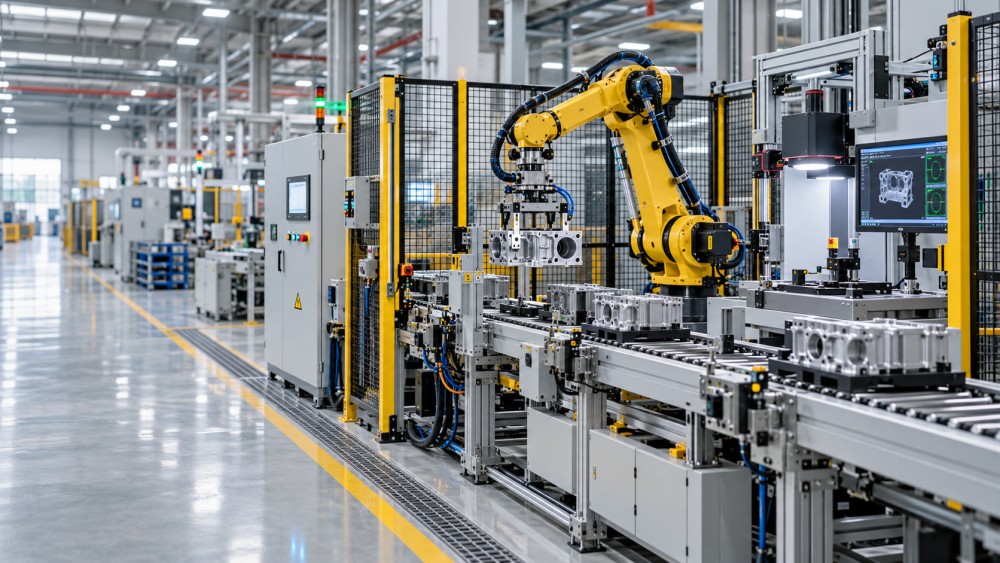
The equipment quote arrives at $600,000. The supplier’s presentation shows faster cycles, fewer operators, and a payback period short enough to attract board approval. Yet the quote excludes electrical upgrades, production-system integration, commissioning scrap, and the technicians needed to keep the line running.
For business leaders, industrial automation costing begins where the equipment quotation ends. A credible investment case connects the full cost of deployment with benefits the business can actually capture. It separates cash savings from theoretical productivity, accounts for the transition period, and tests whether the investment still works when demand softens or commissioning slips.
The central procurement question is not simply, “Which supplier offers the lowest price?” It is, “Which configuration delivers the strongest risk-adjusted return under our operating conditions?”
Define the production problem before pricing the solution
Automation proposals are difficult to compare when suppliers are solving different problems. One bidder may quote a standalone machine; another includes material handling, inspection, guarding, and data integration. Their prices look comparable until implementation begins.
Build a common operating baseline before requesting firm proposals. Record actual output, staffing, scrap, changeover time, maintenance spending, and downtime across a representative production period. Include product mix and shift patterns: a line running one stable product faces a different economic challenge from one handling frequent short batches.
Most importantly, identify the constraint. Automating a non-bottleneck operation may reduce local labor requirements without increasing factory shipments. If downstream inspection or packaging already limits throughput, extra machine capacity may simply create more work in progress.
Specify required performance in terms of saleable output at the agreed quality level, not maximum cycle speed. State operating hours, material characteristics, changeover requirements, and the responsibilities retained by the buyer. This gives procurement a defensible basis for evaluating scope rather than comparing headline prices.
Build industrial automation costing around the installed, operating system
A useful cost model separates initial deployment, recurring ownership costs, and end-of-life obligations. This prevents a low purchase price from hiding expenses that emerge in other departmental budgets.
Assign an owner and evidence source to every material line item. A supplier quotation, utility assessment, maintenance estimate, or internal engineering calculation is more useful than an unexplained percentage allowance.
Contingency still matters, but it should reflect identified uncertainty. An unfamiliar manufacturing process, incomplete interface specifications, or difficult site access warrants a different allowance from a repeat installation with established requirements.
Keep the financial view consistent. Recoverable import taxes may create a temporary funding requirement without becoming a permanent project cost. Depreciation affects accounting profit and potentially taxes, but it is not itself a cash payment. Finance should reconcile these distinctions before approval.
Separate benefits you can bank from benefits you must earn
The most fragile automation business cases combine labor savings, higher throughput, better utilization, and reduced downtime without checking whether these benefits overlap. A disciplined model gives each benefit a mechanism, an owner, and a date.
Labor savings require an executable staffing plan
Reduced operator hours do not automatically become cash savings. If employees move to other tasks while payroll remains unchanged, the immediate benefit is released capacity—not lower labor expenditure.
Cashable savings may come from reduced overtime, lower agency spending, avoided recruitment, or positions removed through an agreed workforce plan. Include any offsetting costs for maintenance technicians, controls engineers, training, or severance. Redeployment can still be valuable, but its financial contribution needs a defined use.
Additional output needs both demand and downstream capacity
Value incremental sales using contribution margin, not revenue. Deduct the variable costs required to produce and deliver the additional units, including materials, energy, packaging, and freight.
Then test whether customers will buy them. Sales forecasts, credible order visibility, and the capacity of adjacent processes should support the estimate. Where demand is uncertain, show throughput upside separately from the base case rather than treating every available machine hour as a sale.
Quality and reliability gains need careful boundaries
Lower scrap can reduce material purchases, rework, disposal, and customer-related costs. Use the cost genuinely avoided, not the finished product’s selling price. If reduced scrap also increases saleable output, check that the same recovered units are not counted twice.
Likewise, value downtime reduction through its consequences: less overtime, fewer repair expenses, or additional profitable shipments. Adding a separate “availability benefit” to those same outcomes would overstate the return.
A worked example: why a two-year claim can become four years
The following figures are illustrative, not market benchmarks. Consider a manufacturer evaluating an automated handling and inspection cell.
Assume the validated annual benefits at stable operation are $180,000 in cashable labor savings, $55,000 in quality savings, and $85,000 in incremental contribution from supported demand. Together, these produce $320,000 in gross annual benefits.
Additional maintenance, software, utilities, and technical support cost $70,000 annually. The resulting steady-state net annual cash benefit is $250,000.
A simplified equipment-only calculation would divide $600,000 by $320,000 and suggest payback in approximately 1.9 years. That calculation ignores deployment costs and recurring expenses. Using the complete investment and net benefit produces:
Simple payback = $900,000 ÷ $250,000 = 3.6 years.
Even 3.6 years assumes full benefits begin immediately. Suppose the first year delivers only $150,000 in net benefits because of commissioning and ramp-up. The remaining $750,000 takes three further years to recover at $250,000 annually, extending undiscounted payback to approximately four years.
This example excludes taxes, financing, and additional working-capital requirements for clarity. A real approval model should incorporate relevant effects consistently and distinguish temporary startup spending from recurring operating costs.
Use cash-flow timing, not just a payback ratio
Simple payback is a useful screening measure, but it ignores both the time value of money and cash flows after recovery. Two projects can have identical payback periods while creating very different lifetime value.
Build a dated cash-flow schedule that includes supplier deposits, installation payments, launch costs, operating benefits, major replacements, and any defensible residual value. Add incremental working capital where higher output requires more inventory or receivables. Show recoveries when justified.
Use net present value to discount those cash flows at the company’s approved project rate. Internal rate of return can provide another comparison, although unusual cash-flow patterns can make it misleading. For mutually exclusive alternatives, compare NPV over a consistent service period and address different equipment lives explicitly.
Avoid mixing financing approaches. If the investment is assessed using unlevered project cash flows and a suitable discount rate, do not also subtract loan principal and interest as operating costs. Treasury and finance should agree the method.
Cross-border procurement changes the economics
For internationally sourced automation, purchase currency and factory location are only part of the exposure. The practical question is how reliably the equipment can reach, enter, and remain operational in the destination market.
- Landed cost: Validate tariff classification, origin, applicable duties, brokerage, insurance, inland transport, and unloading responsibilities. Incoterms allocate specified obligations and risks; they do not resolve every contractual issue.
- Currency and payment: Model exchange-rate exposure against actual payment milestones. Long gaps between deposit and acceptance can affect both landed cost and financing needs.
- Compliance: Confirm destination-market machinery safety, electrical, environmental, and documentation requirements. Identify who pays for required modifications and conformity work.
- Service continuity: Check local technician coverage, response commitments, spare-parts location, replenishment lead times, and remote-support arrangements.
- Technology access: Establish ownership and access rights for programs, configuration files, backups, interfaces, and production data, subject to applicable licensing terms.
This supply-chain perspective is central to GTIIN’s procurement analysis: a lower quoted price is not a lower economic cost if recovery from a failed component requires prolonged international shipping. Evaluate critical spares by failure consequences and replenishment risk, not purchase value alone.
Stress-test the assumptions most likely to change the decision
A single forecast creates false confidence. Build a base case, a downside case, and an upside case, using operationally coherent assumptions rather than arbitrary adjustments to every line.
The downside might combine slower commissioning, lower demand, and higher service costs. Keep dependencies visible: reduced demand may eliminate throughput benefits while leaving most software and maintenance charges unchanged.
Test these decision-sensitive variables:
- Launch delay and the timing of benefit realization.
- Saleable output under the expected product mix and changeover schedule.
- The share of labor savings actually converted into reduced spending.
- Demand-backed incremental contribution.
- Maintenance costs and critical-component replacement timing.
- Exchange rates and import-related costs.
Reverse the calculation as well. Determine the minimum annual net benefit needed to meet the company’s payback limit, or the minimum demand required for a positive NPV. These break-even thresholds give managers something concrete to monitor after approval.
Make the contract support the business case
Before awarding the order, convert important economic assumptions into measurable acceptance criteria. Define throughput, quality, changeover performance, test duration, input-material conditions, and permitted interruptions. Clarify what factory acceptance testing demonstrates and what must be verified after installation.
Payment milestones should align with documented deliverables where commercially feasible. Specify training scope, maintenance documentation, spare-parts lists, warranty boundaries, and responsibility for integration defects. A performance promise has limited value if the contract leaves the operating conditions undefined.
Finally, assign benefit ownership inside the business. Operations validates output, finance confirms cash savings, maintenance tracks ownership costs, and procurement monitors supplier obligations. Compare actual performance with the approved model after stabilization—not merely with the supplier’s original presentation.
The strongest automation investment is not necessarily the cheapest machine or the fastest quoted payback. It is the project whose complete costs are visible, whose benefits survive operational scrutiny, and whose downside remains acceptable. That is what turns industrial automation costing from a purchasing exercise into a durable investment decision.
Weekly Insights
Stay ahead with our curated technology reports delivered every Monday.
Recommended News
 Global SourcingOct 25, 2026How to find active suppliers in a trade intelligence platform dashboard
 Supply ChainOct 25, 2026Trade Tariffs Cause Whiplash at Port Milwaukee, Disrupting Cargo Flows
 Supply ChainOct 24, 2026How to use traceability to verify supply chain sustainability claims
 Market TrendsOct 24, 2026FedEx Report: AI Drives Asia-Pacific Chip and Digital Infrastructure Supply Chain Demand