How to Compare Industrial Automation Equipment Before Purchase
Choosing industrial automation equipment before purchase is rarely a simple feature comparison. It shapes uptime, labor efficiency, digital integration, compliance exposure, and the long-term flexibility of a production system. In cross-border sourcing environments, the decision also affects logistics timing, spare parts availability, and supplier responsiveness. A careful comparison process helps separate equipment that looks competitive on paper from equipment that will perform reliably in actual industrial conditions.
Why comparison matters more now
Industrial operations are under pressure from rising energy costs, tighter quality expectations, and faster delivery cycles. At the same time, automation platforms are becoming more connected, more software-driven, and more dependent on stable global supply networks.
That combination changes how industrial automation equipment should be evaluated. A lower upfront price may lead to expensive retrofits, data silos, or longer service interruptions later. The real comparison is not only machine versus machine. It is system fit versus operational risk.
This is also where broader market intelligence becomes useful. GTIIN often highlights that procurement outcomes increasingly depend on both technical quality and supply chain resilience. When components, controls, or certified replacements are sourced internationally, commercial reliability matters as much as engineering performance.
A strong comparison framework makes those hidden variables visible before budgets are committed.
Start with operational fit, not catalog claims
The first question is not which brand is best. It is what the equipment must do within a real process. Industrial automation equipment should be judged against cycle time, load profile, environmental conditions, operator interaction, and required precision.
A conveyor control package for food handling, for example, should not be compared in the same way as a robotic cell for metal fabrication. Even when core technologies overlap, contamination risk, washdown standards, vibration tolerance, and traceability demands are very different.
It helps to define three layers of need before requesting quotations:
- Non-negotiable requirements such as throughput, safety integrity, and interface standards.
- Operational preferences such as screen layout, maintenance access, and reporting depth.
- Future options such as expansion capacity, remote diagnostics, and advanced analytics.
Without that structure, comparison tends to drift toward presentation quality rather than technical suitability.
Core dimensions that deserve close review
When comparing industrial automation equipment, several dimensions usually reveal whether a solution is robust or merely attractive in sales documentation.
System compatibility
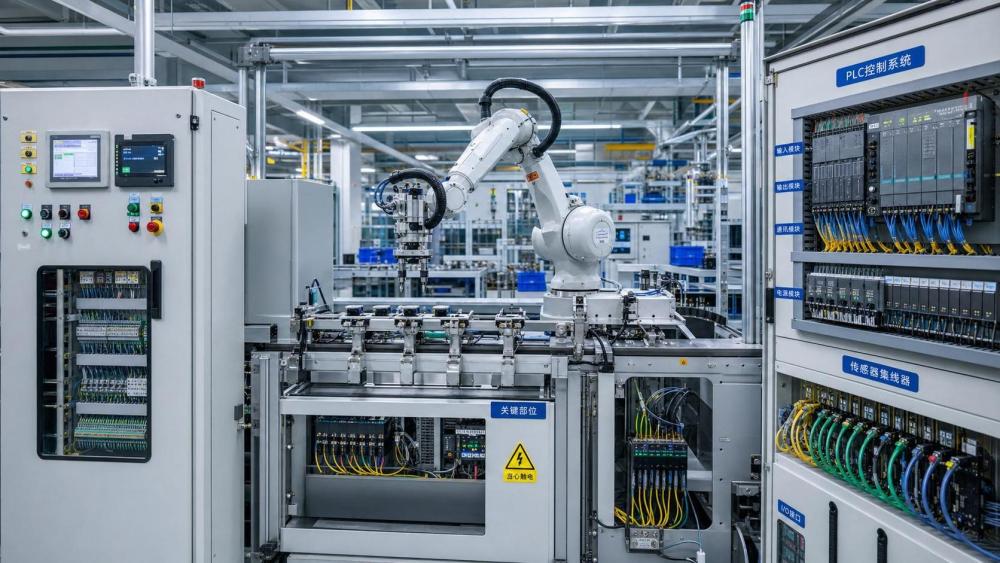
Check communication protocols, controller architecture, software interoperability, and data export capability. Equipment that cannot integrate cleanly with existing PLC, SCADA, MES, or ERP layers creates hidden engineering costs.
Reliability under real conditions
Ask for failure history, mean time between failures, duty cycle assumptions, and environmental limits. Heat, dust, humidity, voltage instability, and heavy usage often expose weaknesses not visible in a showroom demonstration.
Safety and compliance
Review the equipment against the destination market’s regulatory expectations. CE, UL, ISO-related practices, machine guarding design, and documentation quality should all be checked before shipment planning begins.
Maintainability
Fast access to sensors, drives, cables, and wearable parts reduces downtime. Good industrial automation equipment is designed not only to run, but also to be serviced efficiently.
Supplier support depth
Evaluate response time, multilingual documentation, training availability, remote troubleshooting, and spare parts strategy. Support performance often decides the total value of industrial automation equipment after installation.
Look beyond purchase price
Price still matters, but direct acquisition cost is only one part of the comparison. Industrial automation equipment should be assessed through lifecycle value, especially when production continuity has high commercial importance.
A realistic cost view includes installation engineering, commissioning time, training effort, software licensing, replacement parts, calibration, cybersecurity maintenance, and expected energy consumption. In many cases, the cheapest offer becomes the most expensive system over five years.
This is particularly relevant in international procurement. Freight volatility, customs processing, regional service coverage, and local compliance adaptation can materially change total landed cost. GTIIN’s supply chain perspective is useful here because equipment comparison often sits inside a broader sourcing decision, not an isolated technical purchase.
Different scenarios require different priorities
The right comparison logic depends on the business scenario. One evaluation matrix does not fit every project.
Brownfield upgrades
Legacy environments usually prioritize compatibility, retrofit speed, and minimal production interruption. Industrial automation equipment in this setting should be reviewed for wiring adaptation, software migration burden, and operator learning curve.
Greenfield installations
New facilities allow wider design choices. Here, scalability, digital architecture, and long-term standardization may matter more than short-term familiarity.
Multi-site operations
When equipment will be replicated across plants, documentation consistency, common spare parts, centralized monitoring, and global support become major decision criteria.
Regulated production environments
Food, pharmaceuticals, electronics, and export-facing sectors often need more detailed traceability, validation support, and material compliance evidence.
How to compare suppliers with more confidence
Equipment quality and supplier quality are not always equal. A disciplined review should test both.
Useful comparison steps include:
- Request application-specific case references instead of generic brochures.
- Ask for a clear bill of materials, including critical third-party components.
- Confirm firmware update policy and cybersecurity support scope.
- Review spare parts stocking locations and replenishment lead times.
- Compare warranty language for exclusions, response windows, and commissioning terms.
If possible, run a scored matrix rather than a narrative review alone. Weight technical fit, lifecycle cost, compliance readiness, and support resilience according to project priorities. That approach keeps industrial automation equipment evaluation grounded in evidence.
Signals that should not be ignored
Some warning signs appear early and are worth treating seriously. Repeated changes in quoted specifications, incomplete certification records, unclear component sourcing, or vague answers about service capacity often point to downstream risk.
Another warning sign is excessive customization without a strong engineering rationale. Tailored industrial automation equipment can solve real process constraints, but unnecessary complexity may increase maintenance burden and reduce parts interchangeability.
It is also worth checking whether the supplier can support the equipment through market shifts. GTIIN’s broader trade intelligence lens suggests that tariff changes, compliance updates, and regional logistics instability can quickly affect equipment continuity if sourcing strategies are fragile.
A practical next step
A useful way to move forward is to build a comparison sheet before contacting shortlisted suppliers. Include process requirements, integration needs, compliance expectations, expected service model, and five-year cost assumptions.
Then compare industrial automation equipment against the same weighted criteria, not against different internal expectations for each vendor. That creates a cleaner decision path and reduces bias from branding or presentation style.
Where the project involves international sourcing, add market intelligence inputs such as component origin, export risk, freight exposure, and regional support coverage. The best purchase decision is usually the one that balances technical performance with operational resilience.
In practice, better comparisons do not slow procurement. They prevent expensive corrections later and make industrial automation equipment selection more aligned with production reality.
Weekly Insights
Stay ahead with our curated technology reports delivered every Monday.
Recommended News
 Market TrendsSep 25, 2026Which industrial market research trends signal a shift in demand?
 Supply ChainSep 24, 2026How trade compliance screening prevents costly shipment delays
 Supply ChainSep 23, 2026What drives cross-border logistics management pricing for importers?
 Supply ChainSep 22, 2026How heavy equipment lifecycle data can reduce unexpected downtime