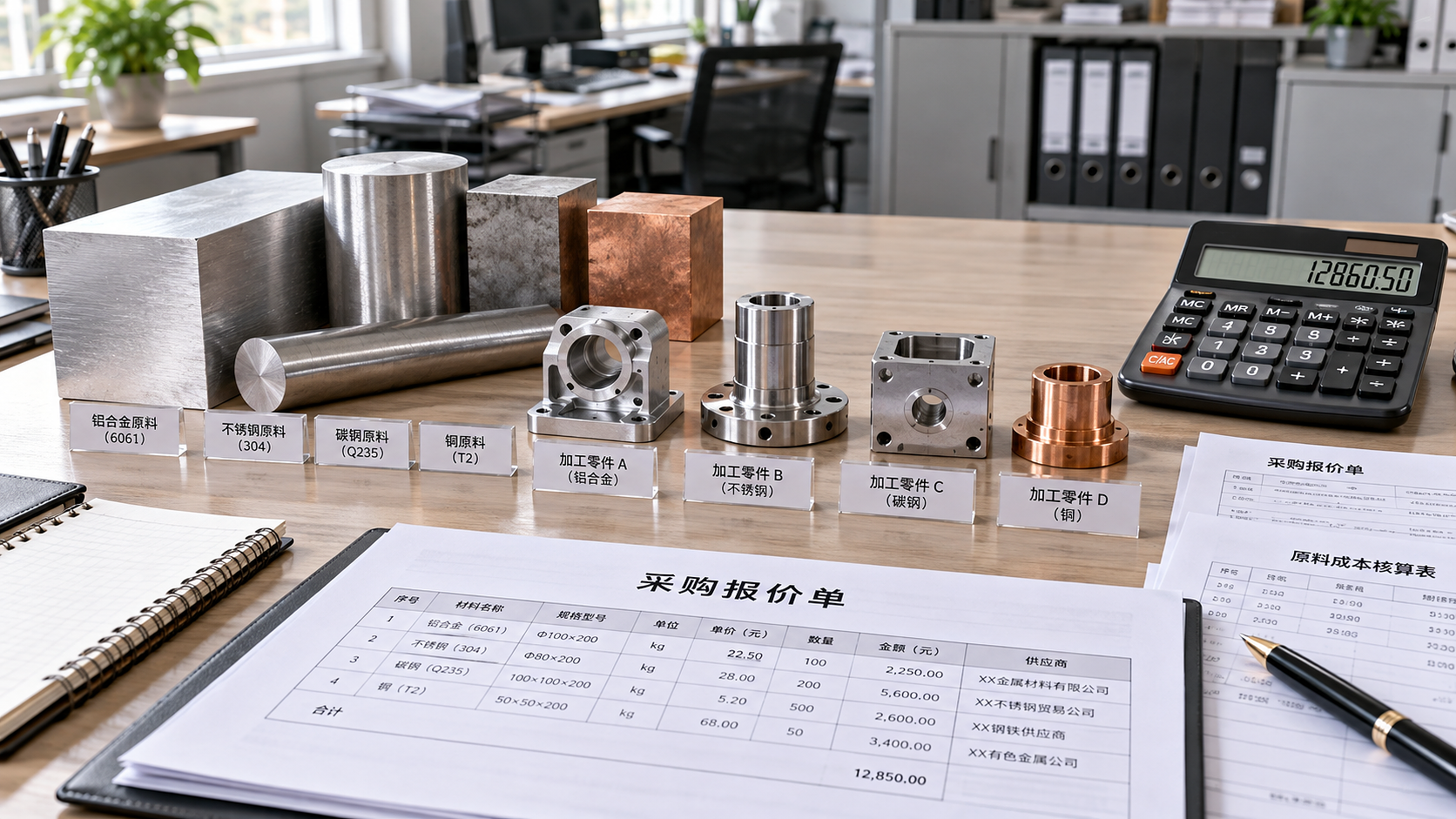
How Should Buyers Validate Technical Specifications Before Ordering?
To validate technical specifications before placing an order, turn each critical requirement into a measurable acceptance criterion, agree on how it will be checked, and obtain evidence that applies to the exact product being purchased. A supplier’s datasheet helps define the offer, but it rarely establishes everything needed to accept or reject a delivery.
The practical question—“How do I validate technical specifications before placing an order?”—comes down to connecting four things: operating conditions, documented requirements, verification evidence, and purchase terms. If any connection is missing, a product can match its catalog description yet fail in service.
Start with the conditions the product must withstand
Before comparing specifications, describe the intended application. Include normal operation, startup, cleaning, storage, and foreseeable variations. A component that performs adequately at room temperature may behave differently under heat, vibration, chemical exposure, or repeated loading.
For equipment, record the available power supply, installation space, utilities, control interfaces, and expected operating cycle. For materials, identify the properties that affect processing and finished performance. For replacement parts, establish mating dimensions and functional interfaces instead of relying solely on a photograph or a claimed equivalent part number.
Separate requirements into three groups:
- Mandatory: Conditions necessary for safety, compatibility, compliance, or essential performance.
- Preferred: Features that improve operation but allow an agreed alternative.
- Informational: Details useful for comparison that do not determine acceptance.
This distinction prevents unnecessary precision from increasing cost while essential requirements remain vague. A cosmetic dimension may tolerate variation; a sealing surface or electrical interface may require much tighter control. Assign scrutiny according to the consequence of failure.
Convert descriptions into acceptance criteria
Words such as “heavy duty,” “high accuracy,” and “corrosion resistant” describe intentions without defining a pass or fail result. Even a numerical specification can remain ambiguous if it omits tolerances, conditions, or measurement methods.
A usable requirement normally identifies the characteristic, acceptable limit, test conditions, verification method, and evidence required. For dimensions, specify units, tolerances, and relevant reference surfaces. For performance, define the operating point and whether the stated value is a minimum, maximum, nominal value, or typical result.
Watch for requirements that interact. Higher machine speed may reduce output quality with a difficult material. A coating may alter a finished dimension. A motor’s nameplate power does not establish the usable output of the complete machine. Assess the combination needed in service, rather than approving each attractive figure separately.
Reconcile the quotation, drawings, and datasheet
A common procurement problem is having several documents that describe slightly different products. The quotation may offer a standard model, the drawing may show a customized arrangement, and the datasheet may list an optional feature as though it were included.
Create a controlled specification package identifying the exact model, configuration, drawing revisions, accessories, software or firmware where relevant, and excluded items. Ask the supplier to respond to each requirement with a clear status: compliant, compliant with a stated condition, or proposed deviation. A general reply such as “all confirmed” leaves too much room for interpretation.
Resolve deviations before approval. An alternative material or component may be acceptable, but assess its effect on function, service life, maintenance, and regulatory obligations. Similar designations from different standards systems should not be treated as interchangeable without comparing the properties that matter.
Agree on document precedence within the purchase terms. If a quotation conflicts with an approved drawing, both parties should know which requirement governs. Identify documents by number, revision, and date, and require approval before subsequent technical changes.
A useful review path is: operating requirement → acceptance criterion → supplier response → supporting evidence → purchase requirement. An unresolved link should remain visible until it is closed.
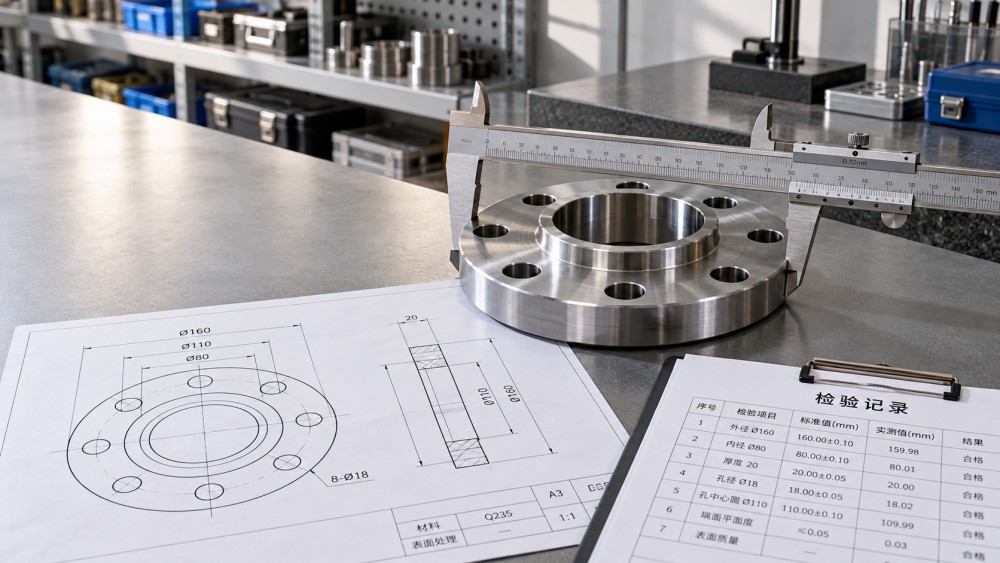
Check what certificates and test reports actually prove
Document validation involves more than checking whether a certificate looks professional. Establish what was assessed, who performed the assessment, which method was used, and whether the result applies to the supplied configuration.
A quality management certificate concerns an organization’s management system within its stated scope. It does not, by itself, demonstrate that a particular product meets your dimensional, material, or performance requirements. Product certificates, material records, declarations, and laboratory reports serve different purposes.
For each relevant document, examine:
- Identity: Does the manufacturer, model, material, batch, or serial reference match the proposed supply?
- Scope: Does it cover the property, product variant, and application being claimed?
- Method: Are the test procedure, conditions, and acceptance limits suitable for your requirement?
- Results: Are actual findings provided, including units and relevant qualifications?
- Traceability: Can the tested item or sample be connected to the goods you will receive?
Where laboratory competence matters, examine whether its accreditation scope covers the relevant testing activity. An accreditation logo alone does not establish coverage for every test. For consequential claims, validate the report or certificate reference through the issuing organization’s verification channel.
Cross-border orders also need a separate review of destination-market obligations. Identify requirements relevant to the product’s function and intended use, then specify the necessary documents, markings, and instructions. A declaration acceptable for one market or configuration may not cover another.
Choose verification that matches the risk
Not every order needs a laboratory test or factory visit. A standard, low-consequence item from an established source may justify document review and receiving inspection. A customized assembly, unfamiliar material, or product whose failure would stop production warrants stronger evidence before commitment.
Choose the method according to what could go wrong. Dimensional inspection can establish fit-related characteristics, but cannot prove fatigue resistance. Chemical analysis may confirm composition without establishing heat treatment or mechanical performance. A brief demonstration can show basic operation while leaving sustained output untested.
Use samples to answer specific questions
Define what a sample must demonstrate before requesting it. It may be suitable for checking assembly, finish, packaging, or performance under realistic conditions. Record the sample’s identity and configuration, along with the assessment results.
Ask how the sample was produced. A specially prepared prototype may differ from routine production in tooling, materials, or process controls. Sample approval should specify which characteristics were accepted and how production units will remain consistent. An approved visual sample is useful for appearance; it cannot replace measurable requirements for hidden properties.
Define equipment acceptance tests before ordering
For machinery, agree on a factory acceptance test when meaningful performance can be demonstrated before shipment. Specify test inputs, operating settings, duration, measurement equipment, acceptable output, and treatment of interruptions or failures.
Some functions depend on the installed environment. These may require site acceptance testing after connection to actual utilities, upstream equipment, and control systems. Define which checks occur at each stage and how unresolved results affect shipment approval, final acceptance, and payment.
If a sample or prototype requires a paid order, make that a limited development stage with defined deliverables. Keep authorization for bulk production separate until the agreed evidence is available.
Make inspection results reproducible
Two parties can obtain different results from the same item when they use different methods. Measurement location, surface preparation, temperature, fixture arrangement, and instrument resolution can all affect the outcome.
Specify enough detail for another competent inspector to repeat the check. Measurement equipment should have suitable resolution and current calibration appropriate to the task. Where measurement uncertainty could affect a pass or fail decision, agree on the decision rule before testing. A result close to a tolerance boundary can otherwise become a dispute.
For batch orders, distinguish between checking every unit and accepting a lot through sampling. A sampling plan should define the lot, selection method, characteristics inspected, and acceptance or rejection rules. It provides a basis for a decision about the lot; it does not establish that every uninspected unit is defect-free.
Reserve stronger controls for characteristics whose failure has serious consequences. Depending on the product, that may mean complete inspection, process evidence, destructive testing of selected samples, or a combination. If testing consumes or damages goods, agree on specimen quantities and responsibility for their cost.
Put the validation outcome into the purchase order
Technical approval needs to become part of the order requirements. Attach or reference the approved specification package, deviation list, inspection plan, and required delivery documents. Make the supplier’s acceptance of these requirements explicit.
Define what happens when inspection finds nonconforming goods. Possible routes include rework, replacement, rejection, or a documented concession for a specific deviation. Require approval before shipment of affected goods, and establish how corrective work will be verified.
Include change controls for materials, critical components, manufacturing location, and other features that could invalidate earlier approval. Requiring notification and approval for defined changes helps preserve the connection between the product assessed and the product delivered.
Packaging deserves attention where moisture, impact, contamination, or corrosion could destroy otherwise acceptable goods. Define protection appropriate to the transport route and storage conditions, plus identification needed to preserve batch or serial traceability.
Decide whether the order is ready to release
Before committing to production, review the remaining gaps with the people responsible for engineering, quality, operations, and purchasing. Each critical requirement should have an agreed limit, suitable verification method, and evidence available at the appropriate stage.
Proceed when the technical package is consistent, deviations are approved, and outstanding checks have clear owners and acceptance consequences. Use a staged order when tooling trials or production samples are still needed. Hold release when a critical property lacks evidence, test conditions do not represent the application, or the supplier will not commit to the agreed configuration.
The most useful final check is practical: could an inspector determine whether the delivered goods comply using the agreed documents alone? If the decision still depends on interpreting “standard quality,” remembering a sales conversation, or assuming what a catalog figure means, resolve that ambiguity before placing the order.
Have questions about this sector analysis, or seeking best practices specific to your niche? Drop us a line below and let the senior consultants at GTIIN assist you.
“We respect your privacy. Your information is strictly confidential.”
Weekly Insights
Stay ahead with our curated technology reports delivered every Monday.
Recommended News
 Industry StandardsNov 01, 2026How to build an ESG compliance framework for your business
 Supply ChainNov 01, 2026China-Peru FTA Upgrade Takes Effect, Adding Global Supply Chain Chapter
 Global SourcingOct 31, 2026How to use raw material analysis for procurement cost forecasting
 Supply ChainOct 31, 2026G20 Foreign Ministers Meet as Rubio Calls for Cooperation on Supply Chains and Trade