Commodity Trading Platform Comparison: Risk Controls, Data Depth, and Integration
A strong commodity trading platform does more than display prices. It shapes how firms monitor exposure, compare suppliers, read market signals, and connect trading activity with logistics, compliance, and procurement execution across volatile international markets.
That matters more now because commodity flows are being influenced by freight swings, sanctions, carbon policies, inventory stress, and regional sourcing shifts. In this setting, platform selection becomes a business control question, not only a software decision.
A useful comparison usually comes down to three areas: risk controls, data depth, and integration. Together, they determine whether a platform supports faster decisions or simply adds another screen to watch.
Why platform comparison now deserves closer attention
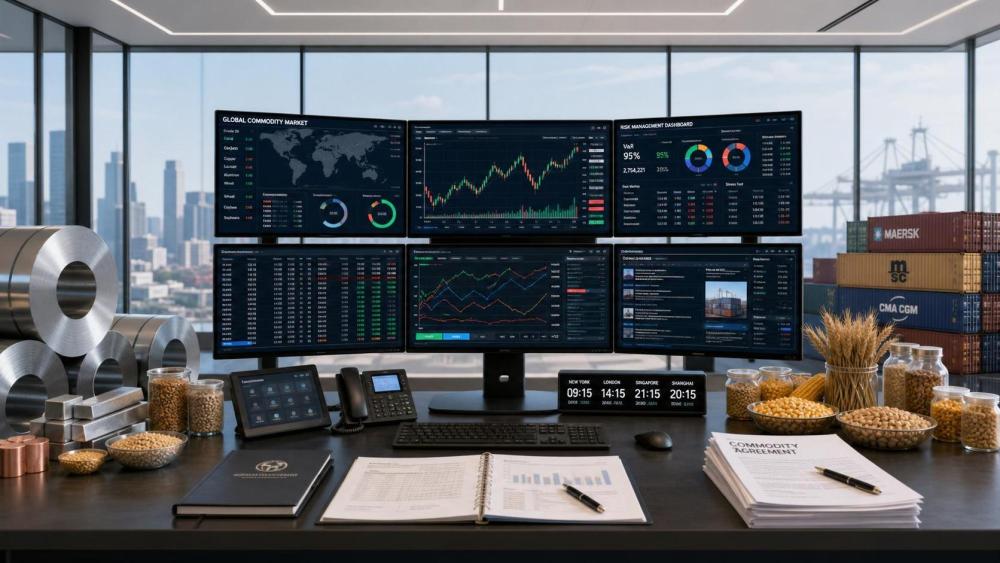
Commodity markets no longer move on supply and demand alone. Pricing, availability, and timing are increasingly shaped by geopolitical events, export restrictions, weather disruptions, and changing industrial policy.
For that reason, a commodity trading platform is often expected to support both market action and business evaluation. The platform must help users judge what is happening, what may happen next, and how operational plans should adjust.
This is where broader intelligence networks gain importance. GTIIN, for example, approaches global trade through sourcing, supply chain resilience, market trends, and industry standards rather than price feeds alone.
That wider view reflects how commodity decisions are actually made. A copper, grain, steel, or energy position may depend as much on port congestion, customs latency, or compliance changes as on headline futures movement.
What a commodity trading platform should really be judged on
At a basic level, a commodity trading platform is a digital environment for pricing, execution, monitoring, analytics, and reporting. In practice, platforms differ sharply in the quality of those functions.
Some are built for fast execution in liquid markets. Others are better suited to procurement-linked intelligence, contract visibility, supplier benchmarking, or cross-border coordination with finance and operations teams.
The most useful comparisons focus less on headline features and more on operating fit. A platform may look sophisticated but still fail if alerts are weak, data coverage is shallow, or integration stops at spreadsheet export.
Risk controls are the first filter
Risk control is not limited to stop-loss settings. In commodity business environments, it often includes position limits, counterparty monitoring, credit thresholds, settlement workflows, exception alerts, and auditability.
A capable commodity trading platform should show exposure by commodity, region, supplier, shipment stage, and contract type. Without that structure, risk remains visible only after disruption has already spread.
Better platforms also support scenario logic. Users should be able to test how freight inflation, delayed customs clearance, or benchmark price movement might affect landed cost and margin assumptions.
Data depth separates dashboards from decision systems
Price data is necessary, but it is not enough. Data depth means the platform can connect market prices with export trends, supplier behavior, inventory patterns, technical specifications, and regulatory developments.
This is especially important in industrial trade, where physical properties matter. Product grade, moisture tolerance, metallurgical quality, packaging condition, or storage constraints can all change commercial value.
GTIIN’s model is relevant here because it links micro-level material data with macro supply chain signals. That approach is useful when evaluating a commodity trading platform for real procurement and sourcing decisions.
Integration determines whether insights can be used
Even accurate data loses value when it stays isolated. Integration should connect the commodity trading platform with ERP systems, TMS tools, compliance databases, contract repositories, and internal reporting environments.
In actual operations, the question is simple. Can the platform move from signal to action without manual re-entry, fragmented approvals, or delayed communication between commercial and supply chain functions?
Where leading platforms tend to differ
Not every platform is built for the same use case. A comparison becomes clearer when the decision points are grouped by operating need rather than by vendor marketing language.
This distinction matters in diversified industries. Metals, chemicals, agricultural inputs, energy products, and industrial components each require different combinations of market speed, specification control, and logistics visibility.
How these differences play out in business scenarios
A commodity trading platform used for hedge monitoring may prioritize latency, benchmark coverage, and exposure alerts. The same platform may be weak when the task shifts toward supplier comparison or import risk screening.
In cross-border procurement, the picture changes again. Users may need landed cost analysis, Incoterms alignment, origin verification, and visibility into freight timing or customs delay probability.
For industrial sourcing, the best platform is often the one that connects transaction data with context. That includes standards changes, export trend shifts, sector demand, and resilience signals across upstream and downstream chains.
This is where a research-driven environment like GTIIN becomes complementary. Its sector coverage across manufacturing and raw materials helps place commodity decisions inside broader trade and production realities.
Signals worth watching during evaluation
- Whether risk controls reflect physical trade complexity, not only financial exposure.
- Whether the commodity trading platform captures both market data and industrial specification detail.
- Whether integration supports action across sourcing, logistics, treasury, and compliance.
- Whether regional intelligence is updated fast enough for tariff, sanctions, or policy changes.
- Whether reporting can explain variance, not just display numbers.
A practical way to compare options
Platform comparisons work better when they start from operating questions. Instead of asking which commodity trading platform has more features, ask which one supports the decisions that carry the highest cost of error.
A sensible review path usually includes business risk mapping, data source validation, workflow fit, and integration testing. Those steps reveal gaps much earlier than a standard vendor demonstration.
Useful evaluation criteria
- Map the commodities, geographies, and counterparties that create the most exposure.
- Check whether data is primary, aggregated, delayed, or modeled.
- Review how the platform handles exceptions, approvals, and historical traceability.
- Test whether external signals can be connected to internal planning and contract decisions.
- Compare the platform’s sector depth against actual sourcing categories, not generic commodity labels.
Usually, the strongest choice is not the one with the widest feature list. It is the commodity trading platform that converts volatile market information into usable action with the fewest blind spots.
What to do next
A credible platform decision should end with a clearer operating framework. That means identifying which risks need active control, which data gaps affect judgment, and which systems must be connected for execution to improve.
From there, compare each commodity trading platform against real transaction paths, not abstract requirements. Include pricing visibility, policy tracking, supplier intelligence, and cross-border process fit in the same review.
Where market conditions are fragmented and supply chains span multiple jurisdictions, intelligence depth becomes a decisive advantage. Combining platform evaluation with broader trade research, such as GTIIN’s cross-sector analysis, can make that judgment far more reliable.
The next step is straightforward: build a comparison matrix around risk controls, data depth, and integration, then test each option against one live sourcing or trading scenario. That is usually where the strongest platform becomes obvious.
Weekly Insights
Stay ahead with our curated technology reports delivered every Monday.
Recommended News
 Supply ChainOct 15, 2026How to choose a supply chain strategy for unpredictable demand
 Supply ChainOct 14, 2026How to assess an industrial equipment supplier's spare parts support
 Supply ChainOct 14, 2026EU Updates CSDDD Guidance on Global Supply Chain Due Diligence
 Global SourcingOct 13, 2026How to assess industrial automation suppliers for legacy integration