
Tariff Barriers Monitoring: Early Warning Indicators for Supply Chain Disruption
Tariff barriers monitoring has moved from a trade policy topic to an operational discipline. In cross-border supply chains, tariff shifts rarely stay on paper for long. They quickly reshape landed cost, customs clearance time, sourcing choices, and delivery reliability.
That matters across industrial sectors, from heavy equipment and metals to electronics, packaging, chemicals, and energy inputs. When procurement cycles are tied to project milestones, even a small tariff adjustment can trigger budget revisions, supplier changes, or schedule pressure.
In practice, tariff barriers monitoring works best as an early warning system. It helps organizations detect policy signals, customs friction, and changing trade patterns before disruption becomes visible in production, installation, or site delivery performance.
What Tariff Barriers Monitoring Actually Covers
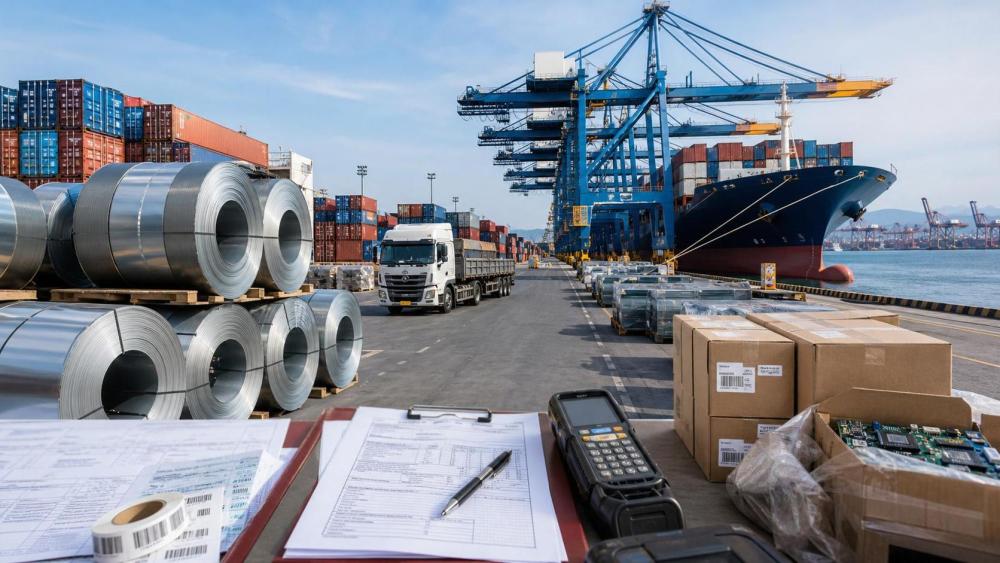
The issue is broader than published duty rates. Effective tariff barriers monitoring includes the full set of trade frictions that change import economics or slow cargo movement.
Some barriers are direct. These include new import tariffs, retaliatory duties, anti-dumping measures, safeguard actions, and quota restrictions.
Others are less visible at first. Revised customs valuation rules, stricter origin verification, licensing changes, product classification disputes, and documentary checks can create similar disruption.
This is why tariff barriers monitoring should not sit only within legal or compliance teams. It belongs in the operating rhythm of supply chain planning, sourcing governance, and project execution.
A practical definition
A useful definition is simple: tariff barriers monitoring means tracking policy, customs, and market signals that may increase cross-border cost, delay clearance, or narrow sourcing options.
That definition matters because disruption often starts before a tariff is formally imposed. Consultation papers, political negotiation, trade investigations, and customs scrutiny usually appear earlier.
Why the Current Market Makes Early Warning More Important
Global trade now operates under overlapping pressures. Geopolitical rivalry, industrial policy, carbon regulation, export controls, and domestic manufacturing incentives increasingly affect procurement decisions.
Tariffs are also being used more strategically. They are no longer only revenue tools. In many regions, they are part of broader efforts to protect local capacity, redirect supply chains, or influence technology flows.
For industrial buyers, the result is not just higher cost uncertainty. The deeper issue is planning uncertainty. A component may remain technically available, yet become commercially unattractive or operationally risky.
This is where GTIIN’s trade intelligence model becomes relevant. Cross-border decisions improve when tariff news is read alongside sector demand, freight dynamics, origin exposure, customs latency, and supplier concentration.
Why standard dashboards often miss the problem
Many organizations still rely on quarterly sourcing reviews or static landed-cost models. Those tools are too slow when trade measures evolve within weeks and customs enforcement changes without much warning.
Tariff barriers monitoring becomes valuable when it is linked to live signals. Examples include customs hold times, broker escalation volume, sudden rerouting, or unusual changes in supplier quoting behavior.
The Early Warning Indicators That Deserve Attention
Not every policy headline turns into disruption. The point is to identify indicators that have a credible connection to project cost, material flow, or delivery timing.
The strongest signal usually comes from combinations, not single data points. A pending anti-dumping review matters more when supplier prices rise and customs holds increase at the same time.
Where Supply Chain Disruption Usually Appears First
In many projects, disruption first appears in routine procurement activity rather than headline events. Lead times stretch. Validity periods on quotations shrink. Brokers ask for additional origin documents. Shipment release becomes less predictable.
Industrial categories with complex bills of materials face a sharper challenge. A finished system can be delayed by a low-value but compliance-sensitive imported part.
That is especially true in sectors with technical certification, controlled materials, or dual-use concerns. In those cases, tariff barriers monitoring should be integrated with engineering change control and supplier qualification.
Typical high-exposure scenarios
- Projects dependent on a single country for fabricated steel, electrical assemblies, or process equipment.
- Long-duration contracts with fixed pricing but imported material exposure.
- Specialized components with uncertain HS classification or origin transformation rules.
- Fast-track delivery schedules with little customs delay tolerance.
- Programs entering markets with new carbon, sustainability, or localization requirements.
How to Apply Tariff Barriers Monitoring in Daily Decision-Making
The goal is not to predict every policy move. The goal is to make sourcing and schedule decisions less fragile.
A practical approach starts with exposure mapping. List imported materials, components, and systems by country of origin, HS code sensitivity, substitution difficulty, and schedule criticality.
Next, connect that map to a small set of recurring signals. These may include tariff consultations, customs enforcement notices, port release trends, freight route changes, and supplier declaration quality.
Then define decision triggers. For example, if customs hold time rises above a threshold, the response may be to pre-clear documents, split shipments, or pull in alternative supply.
Useful decision questions
- Is current landed cost still valid if a temporary duty becomes permanent?
- How much schedule float exists if customs inspection rates double?
- Can an alternative source meet the same technical and compliance requirements?
- Are origin documents, product descriptions, and classifications defensible under audit?
- Which imported items would create the largest downstream delay if blocked?
Why Cross-Sector Intelligence Matters
Tariff barriers monitoring works better when it is not isolated to one commodity or one lane. Trade measures often spread through connected sectors.
A tariff on steel products can affect fabricated structures, machinery housings, fasteners, and logistics equipment. A customs action on electronics can ripple into automation controls, sensors, and industrial service inventories.
This is one reason platforms such as GTIIN add value beyond news tracking. The combination of industrial sourcing guidance, export trend analysis, customs latency insight, and supply chain resilience assessment helps put tariff signals into commercial context.
The real advantage is interpretive, not merely informational. Data becomes more useful when policy developments are linked to supplier ecosystems, freight conditions, and sector-specific material risk.
Common Misreads and Avoidable Gaps
One common mistake is treating tariff barriers monitoring as a customs-only activity. By the time a shipment is held, many response options are already limited.
Another gap is overreliance on supplier reassurance. A supplier may understand production conditions well, yet still lack visibility into destination-market enforcement trends.
There is also a tendency to focus only on direct duty cost. In reality, delay cost, engineering rework, inventory repositioning, and contract exposure can outweigh the tariff itself.
Strong tariff barriers monitoring therefore combines policy reading, operational metrics, and product-level trade classification discipline.
Turning Monitoring Into a Practical Next Step
A useful next step is to review the most schedule-critical imported items and rank them by tariff exposure, customs complexity, and substitution difficulty.
From there, build a small dashboard with indicators that support real decisions, not passive reporting. Three to five well-defined signals are usually more effective than a broad but inactive watchlist.
Where exposure spans multiple sectors or trade corridors, external intelligence becomes important. Sector-specific analysis, export trend tracking, and customs latency benchmarks can help separate noise from meaningful warning signals.
Tariff barriers monitoring is most valuable when it changes timing, sourcing, documentation, or contracting before disruption reaches the project plan. That is the point where trade intelligence becomes operational resilience.
Have questions about this sector analysis, or seeking best practices specific to your niche? Drop us a line below and let the senior consultants at GTIIN assist you.
“We respect your privacy. Your information is strictly confidential.”
Tags
Weekly Insights
Stay ahead with our curated technology reports delivered every Monday.
Recommended News
 Supply ChainNov 10, 2026China Extends Pause on 24% Additional Tariff on US Goods by Two Months
 Industry StandardsNov 10, 2026Which imports are subject to EU carbon border compliance?
 Global SourcingNov 09, 2026USTR Extends 178 China Section 301 Tariff Exclusions to January 2027
 Supply ChainNov 09, 2026How can a tariff risk management dashboard track cost exposure?



