
CPSC Sets ICPS Filing Rule for Imported Kids’ Products
On June 26, 2026, the U.S. Consumer Product Safety Commission (CPSC) issued Final Rule 2026-1872, introducing a new compliance screening requirement for imported children’s products bound for the U.S. market. From October 1, covered goods including toys, nursery furniture, and learning products must pass an AI-driven Intelligent Compliance Pre-Screening System (ICPS) before customs clearance. For exporters, manufacturers, testing partners, and supply chain teams, the immediate issue is no longer only whether supporting documents exist, but whether material safety data, traceability records, and testing metadata can be submitted in the structured format now required at the front end of clearance.
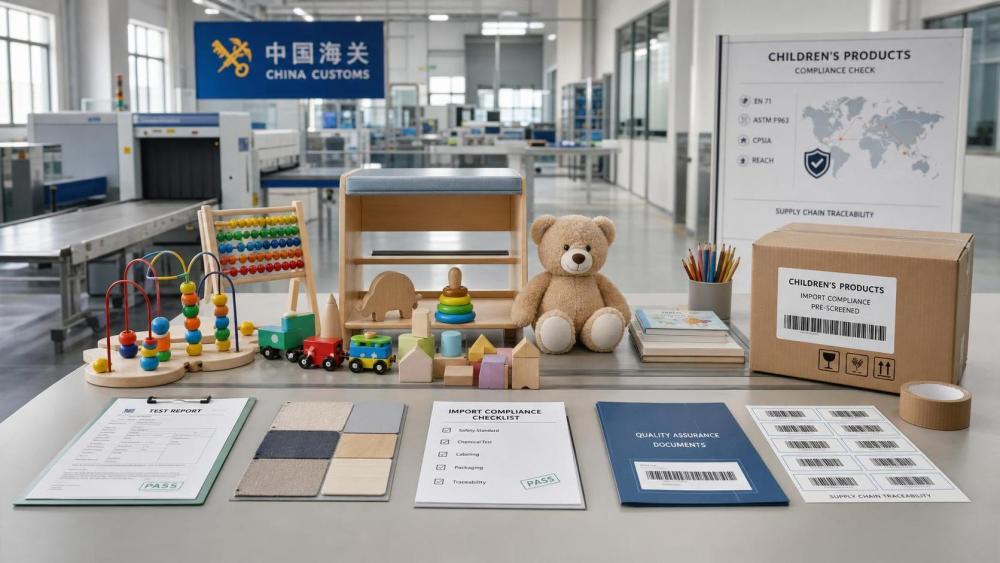
What the New Rule Requires
According to the information provided, the CPSC released Final Rule 2026-1872 on June 26, 2026. The rule requires all children’s products imported into the United States to submit full material safety data through the newly launched ICPS starting on October 1, 2026.
The scope described in the input includes toys, infant and toddler furniture, and learning supplies. The required submission elements include structured material composition data, supply chain traceability mapping, and metadata for third-party testing reports.
The same input states that products failing ICPS pre-screening will be automatically intercepted before the front end of CBP customs clearance. It also states that the system has achieved initial interoperability with China Customs’ Smart Inspection data interface.
Where the Pressure Will Be Felt First
Export-facing suppliers will face a document structure challenge
From an industry perspective, companies shipping children’s products to the United States are likely to feel the first impact in compliance preparation and shipment release timing. The rule, as described, shifts the checkpoint forward to pre-clearance, which means shipment readiness may depend on whether internal product data can be organized into the structured format expected by ICPS.
What deserves closer attention is the difference between holding compliance documents and being able to submit them in a machine-readable, reviewable form. For many exporters, that is an operational issue affecting handoff between product, compliance, and shipping teams.
Manufacturing and sourcing teams may need deeper upstream visibility
Analysis shows that the requirement for structured material composition and supply chain traceability mapping could place more attention on upstream supplier data collection. Manufacturers and sourcing teams may need clearer line-of-sight into component origins, material declarations, and how those records connect across the supply chain.
The likely impact is not limited to final assembly. It may also affect raw material collection, component documentation, and internal review before goods are released for export.
Testing and compliance service providers may be pulled into earlier workflows
Because the required materials include metadata from third-party testing reports, laboratories and compliance service providers may become involved earlier in the export cycle. Observably, the issue is not only the existence of a test report, but whether its metadata can support pre-screening requirements without creating submission gaps.
This may affect the way testing records are prepared, checked, and transferred between service providers and brand or manufacturing clients.
Customs and cross-border coordination will matter more
The statement that ICPS has initial interoperability with China Customs’ Smart Inspection interface points to a closer relationship between regulatory data and border processes. For logistics, customs, and trade compliance teams, this raises the practical importance of data consistency across filing, inspection, and clearance-related workflows.
Analysis shows that cross-border supply chain participants may need to pay closer attention to timing, data alignment, and the consequences of failed pre-screening before goods reach the CBP clearance stage.
What Companies Should Watch Before October 1
Follow official wording and any implementation clarifications
What deserves closer attention is the exact operational meaning of required fields such as structured material composition, traceability mapping, and testing report metadata. The rule in the input sets the filing direction clearly, but businesses should continue monitoring whether additional official clarification changes how data must be organized or submitted in practice.
Check whether current records are submission-ready
Many companies already hold bills of materials, supplier records, and test reports. The more practical question is whether those records are complete, structured, and internally consistent enough for an AI-driven pre-screening system. Firms involved in U.S.-bound children’s products should review whether current documentation is ready for front-end digital review rather than only for manual audit or post-entry checks.
Prepare for customer and supplier coordination issues
Analysis shows that this rule may create new friction points between importers, exporters, factories, suppliers, and testing partners if ownership of compliance data is unclear. Businesses should pay attention to who is responsible for collecting upstream material data, validating traceability records, and maintaining testing metadata before shipment booking and customs preparation begin.
Review delivery timing and contingency planning
Because products that do not pass ICPS pre-screening will be intercepted before CBP clearance, delivery schedules may be affected if documentation is incomplete or inconsistent. For companies with time-sensitive shipments, the practical focus should be on internal review lead times, communication with U.S. buyers, and contingency planning around pre-clearance interruptions.
Why This Looks Like More Than a Filing Update
Observably, this development is not just about one more form in a compliance process. The requirement described in the input moves product safety review toward structured, data-based pre-screening at the border entry stage. That makes the quality, consistency, and traceability of compliance data more central to market access for imported children’s products.
It is more appropriate to understand this as both a near-term operational change and a longer-term regulatory signal. The near-term change is clear: affected products must pass ICPS pre-screening from October 1, 2026. The longer-term signal is that children’s product compliance may increasingly depend on data interoperability, upstream traceability, and system-readable submissions rather than document collection alone.
At the same time, this remains an area that still deserves continued observation. The practical burden on different companies will depend on how the rule is implemented in workflows and how consistently the system handles real-world product files.
How the Market Should Read This Now
At this stage, the most grounded reading is that the CPSC has introduced a concrete new gatekeeping mechanism for imported children’s products entering the U.S. market. The immediate consequence, based on the provided information, is that non-compliant or unapproved submissions can be stopped before CBP clearance.
From an industry perspective, the message is less about broad market prediction and more about execution risk. Companies tied to toys, nursery furniture, learning products, and related supply chains should treat this as an active compliance transition with direct implications for documentation, traceability, and shipment readiness. It is more appropriate to understand the development as a confirmed short-term rule change with longer-term implications that still require close monitoring.
Basis of This Article and What Still Needs Checking
This article is based on the user-provided news title, event date, and event summary concerning the CPSC’s June 26, 2026 release of Final Rule 2026-1872 and the October 1, 2026 ICPS filing requirement for imported children’s products.
For this type of industry update, commonly relevant source categories may include official regulatory notices, company compliance notices, industry association updates, authoritative media coverage, customs-related communications, and standards or testing documentation. A specific official source link was not provided in the input, so the exact source document path still requires ongoing verification.
Follow-up attention should remain on any further official clarification around submission fields, implementation details for ICPS, and how the stated initial interoperability with China Customs’ Smart Inspection interface is reflected in actual trade and compliance workflows.
Have questions about this sector analysis, or seeking best practices specific to your niche? Drop us a line below and let the senior consultants at GTIIN assist you.
“We respect your privacy. Your information is strictly confidential.”
Weekly Insights
Stay ahead with our curated technology reports delivered every Monday.
Recommended News
 Supply ChainNov 10, 2026China Extends Pause on 24% Additional Tariff on US Goods by Two Months
 Industry StandardsNov 10, 2026Which imports are subject to EU carbon border compliance?
 Global SourcingNov 09, 2026USTR Extends 178 China Section 301 Tariff Exclusions to January 2027
 Supply ChainNov 09, 2026How can a tariff risk management dashboard track cost exposure?



