Ocean Freight Delays: Practical Ways to Reduce Shipment Risk
Why ocean freight delays create different risks in different operations
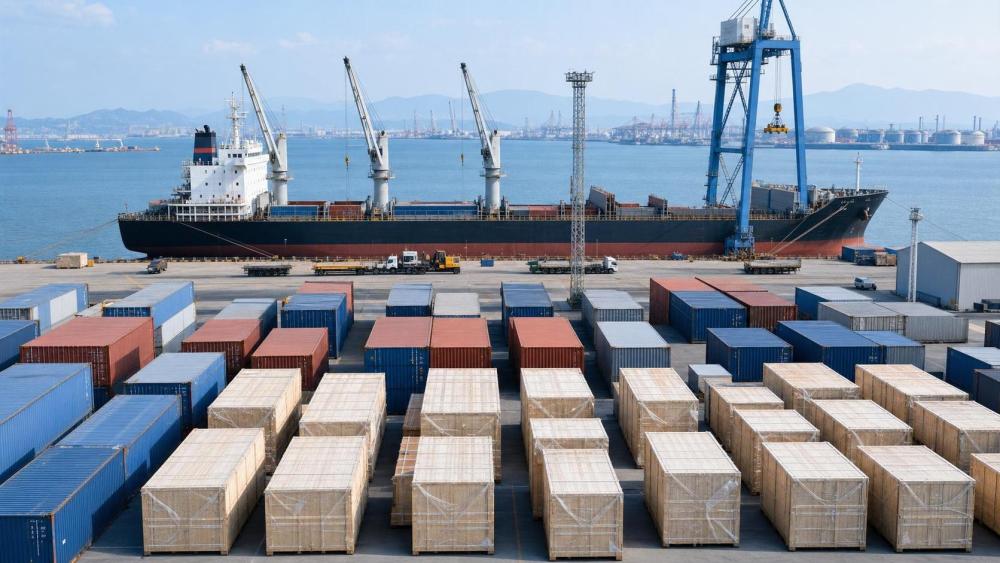
Ocean freight keeps global industry moving, yet delays rarely create the same damage twice.
A late container of steel coils affects planning very differently from a delayed shipment of control modules or temperature-sensitive inputs.
That is why reducing ocean freight risk starts with understanding the shipment context, not only the vessel schedule.
In practice, the real issue is usually the chain around the cargo.
Port congestion, transshipment rollover, customs inspection, weak packaging, and inaccurate lead-time assumptions often interact.
When these factors stack together, even a minor ocean freight disruption can become a contract, production, or installation problem.
GTIIN tracks these patterns across industrial sectors, linking freight velocity, customs latency, commodity characteristics, and regional compliance changes.
That broader view matters because shipment risk is rarely visible from freight rates alone.
Actual planning starts with the shipment’s operating scenario
A common mistake is treating all ocean freight as a simple cost and transit question.
More often, delay exposure depends on how the cargo will be used after arrival.
Project cargo tied to installation windows
For equipment linked to site construction or commissioning, time risk is usually more expensive than freight cost.
A one-week ocean freight delay can idle labor, cranes, permits, and downstream contractors.
Here, the key judgment is not the fastest route, but the most reliable sequence.
Direct sailings, earlier cutoffs, and stronger destination drayage coordination often reduce shipment risk more than marginal rate savings.
Production inputs with narrow inventory buffers
Bulk materials, components, and packaging supplies create a different pressure.
The main concern is continuity, especially when safety stock has already been compressed.
In this scenario, ocean freight delays should be judged against consumption rate, substitute availability, and supplier recovery speed.
A delayed shipment becomes critical when replenishment cannot catch up with daily usage.
High-value or compliance-sensitive goods
Some cargo carries additional regulatory or condition-control exposure.
Examples include electronics, specialty chemicals, engineered parts, and goods facing destination documentation scrutiny.
For these flows, ocean freight reliability depends on document accuracy, packing integrity, and handoff discipline at every node.
Where the pressure points differ across common shipping situations
The following comparison helps clarify why one ocean freight strategy rarely fits every shipment.
The useful insight is that ocean freight delays usually come from a combination of route design and business timing.
Risk falls when shipment planning reflects both.
Reducing ocean freight risk before the cargo leaves origin
The most effective decisions are made before booking confirmation, not after a vessel misses connection.
At origin, several checks have disproportionate impact on delay prevention.
- Match routing to cargo criticality, not only to the lowest rate on offer.
- Review port pair performance, especially transshipment reliability and blank sailing frequency.
- Validate export documents against destination customs rules before cargo cut-off.
- Confirm packaging against humidity, stacking, vibration, and handling exposure.
- Align Incoterms, handover points, and liability responsibilities across all parties.
In actual operations, packaging is often underestimated.
A shipment may arrive on time and still fail the schedule because corrosion, deformation, or moisture exposure creates rework.
For engineered materials and industrial equipment, physical protection is part of ocean freight risk control, not a separate issue.
GTIIN’s cross-sector mapping is useful here because it connects material behavior with route conditions and compliance realities.
Once cargo is moving, visibility matters more than raw tracking volume
Many teams collect more status updates than they can interpret.
That creates activity, but not control.
A better approach is to define decision checkpoints for ocean freight events.
Examples include gate-in completion, vessel departure, transshipment confirmation, customs release, and final inland appointment.
Each checkpoint should trigger a response if variance exceeds a defined threshold.
For project cargo, that threshold may be measured in days.
For production replenishment, it may be measured against inventory burn and shutdown risk.
This is where reliable trade intelligence becomes practical.
Macro signals such as port labor issues, weather disruption, policy changes, or regional capacity swings should feed shipment decisions early.
Without that layer, ocean freight planning remains reactive.
The most common misjudgments are usually avoidable
Several recurring errors make ocean freight delays more damaging than they need to be.
- Using a single average transit time for all lanes, despite seasonal and port-specific variability.
- Assuming similar cargo can share the same buffer, even when packaging or customs exposure differs.
- Optimizing purchase cost while ignoring detention, storage, site standby, or rehandling expenses.
- Treating documentation as an administrative detail instead of a shipment release condition.
- Waiting for confirmed delay before preparing alternate inland transport or substitute stock.
These mistakes usually happen when ocean freight is managed in isolation.
The stronger method is to connect freight data with production schedules, engineering dependencies, and regional compliance signals.
Building a practical response framework for future shipments
Reducing shipment risk does not require a perfect forecast.
It requires better scenario discipline.
A workable framework usually includes four actions.
- Map cargo by business impact, separating mission-critical shipments from routine replenishment.
- Set lane-specific buffers using actual carrier and customs performance, not static assumptions.
- Create exception triggers tied to inventory, project milestones, or compliance deadlines.
- Review post-shipment failures to refine routing, packaging, and document controls.
That is also why integrated trade intelligence matters.
GTIIN’s supply chain analysis model shows that ocean freight performance is shaped by industrial demand cycles, policy shifts, and cargo-specific constraints together.
The next useful step is to review current shipments by scenario, compare exposure points, and define where extra buffer, better visibility, or route redesign is justified.
That kind of disciplined review turns ocean freight from a recurring uncertainty into a manageable operational variable.
Weekly Insights
Stay ahead with our curated technology reports delivered every Monday.
Recommended News
 Global SourcingJun 24, 2026Fujia Expands Vietnam Capacity to Ease Delivery Pressure
 Supply ChainJun 24, 2026US Dollar Waiver Reshapes Iran Oil Trade
 Industry StandardsJun 24, 2026China Registration Rule Takes Effect for Imported Food Plants
 Market TrendsGlobal Industrial Outlook: 7 Supply Chain Shifts Manufacturers Should Track